


A club in Rotterdam re-rigged its truss last spring and cut its cable count by a third. Power and DMX used to travel on separate runs, which meant two coils per truss position, two bundle ties, and a load in time that everybody complained about. The new looms carry both in one jacket. Six weeks later the same crew was chasing a dead fixture that turned out to be a connector half that had been swapped with a different batch. That’s the trade you make with a combo cable. Fewer runs, and a connector pairing that has to be right or nothing works.
If you’re weighing a powerCON combo cable against two separate runs, the decision is mostly about how often the rig comes down. Fixed installs barely notice. Touring and event work notice every coil. Send the run lengths, the connector types and the environment through the contact page on our site with the phrase powerCON combo cable in the message, and it reaches the person who builds the looms.
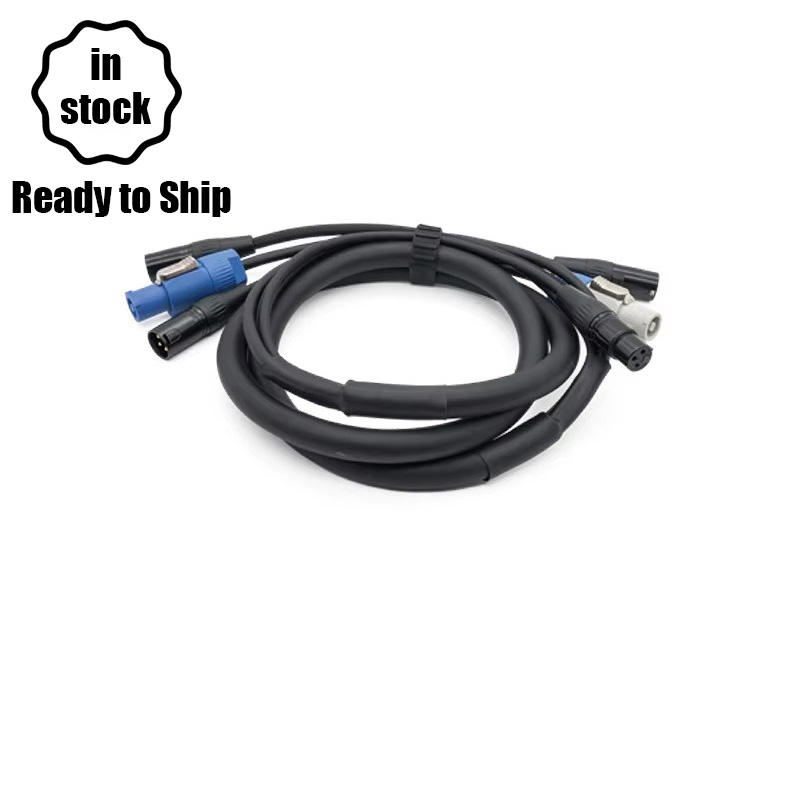
One run instead of two
The appeal of a combo is arithmetic. One cable drum, one pull, one coil to wrap at two in the morning. On a truss that’s flown twice a week, that arithmetic is the whole argument. On a wall mounted install that nobody touches for five years, it’s close to irrelevant, and a separate power run with a standard plug is easier for the building’s electrician to sign off.
Where the combo really wins is the middle case, the venue that re-patches every weekend. Lighting bars, small festivals, a church that turns the stage around between services. One loom per position means fewer things to lose and fewer things to plug in wrong at 8am when the crew is short.
There’s a third variant that covers the truss and the network drop at once. A powerCON and RJ45 combo cable puts mains and a CAT6A data pair in the same jacket, which is what a lighting position usually needs anyway now that fixtures take network control. One loom up the truss, one connector panel at each end, and no spare data coil lying on the deck waiting to be tripped over.
IP65 only counts when both halves match
Waterproof is the claim buyers ask about first, and it’s the one most often half true. The rating belongs to a mated pair. A sealed cable end plugged into an unsealed chassis gives you the weaker of the two, and that’s before anyone leaves a cap off. Our SNA62 and SNA63 sit at IP65 as finished assemblies, and the true waterproof locking powerCON is the mating part that keeps that claim alive at the panel end.
So the question to put in an enquiry isn’t only about the cable. It’s about the whole chain: cable end, chassis, and the gasket between them. If one link is a standard connector, write IP44 on your own quote and nobody gets surprised in October.

Input and output sets, not loose singles
A powerCON run has a direction. Power goes in one end and out the other, and if you order loose connectors without thinking about which is which, you end up with a loom that can only be used one way round, or worse, with two outputs facing each other. That’s why the powerCON connector input and output set exists as a pair rather than a single part number. It’s also why chassis connectors should be ordered with the panel cut dimension in hand.
The detail that gets forgotten is the gasket. A silicone sealing cover is a consumable. It compresses, it hardens, and after a few hundred mate and unmate cycles it stops sealing. If your customer’s crew is out four nights a week, put a bag of spares in the case rather than waiting for the first failure to order them.
Twenty amps and the connector body
The waterproof 20A version is the one specified for distro feeds and lighting bars, and it’s the one where the connector body does real work. Twenty amps through a small contact pair generates heat, and heat is what turns a slightly loose connection into a melted housing. That’s a mating discipline problem more than a parts problem. Train the crew to push and twist until the lock clicks, not until it feels tight.
What we won’t do is quote a current figure for a finished loom without knowing the conductor size and the run length. Voltage drop over a long truss run is a design question, and it belongs to whoever is signing off the rig rather than to the cable catalogue.
Coil, drum or fixed install
The same cable is packed three ways and the choice matters more than buyers expect. A coil with a tie is cheap and fast for short positions. A drum with a steel frame pays for itself on long multicore runs that get pulled weekly, because the cable leaves and returns without being dragged over a floor. A fixed install wants neither, since nobody is coiling it, and the money is better spent on proper strain relief at both ends.
Get that choice wrong and the cable dies early. A drummed run dropped off a truck lands on the frame, not the jacket. A coiled run dragged along concrete loses its outer sheath in a season, and a sheath that’s scuffed through is a shock risk between the power leg and anything metal it touches. When a buyer asks why two quotes for the same meterage differ by a wide margin, the answer is usually the copper, the jacket compound or the packing, not the length.
Where the run meets the truss
Mechanical support is the part of a combo order that gets decided last, usually on site by whoever has a hook in the van. On a flown truss, the loom should hang from a proper shackle or a rated hook at intervals rather than from its own connectors, because a connector taking the weight of ten metres of cable is a connector that will fail at the worst moment. On a ground supported bar, a simple tie every couple of metres is enough.
Ask the question before the order leaves, not after. How the loom is supported, whether it’s flown or dressed, and whether the truss moves while the rig is live all change the strain relief we’d build into the ends. It’s a two minute question that saves a return shipment.
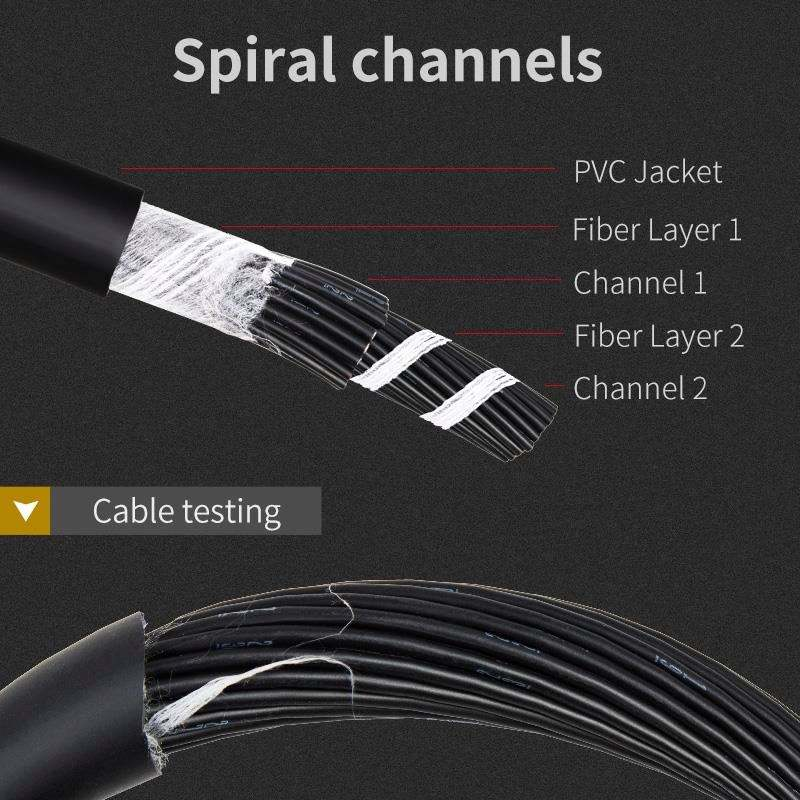
Five things to test on a sample
- Pin to pin continuity on every signal pair, with the shell and the earth pin checked separately so a shared earth doesn’t hide a broken screen.
- Mains polarity at both ends of the power leg, since a swapped live and neutral passes a continuity test and fails an electrician.
- Gasket seating, done by mating the pair and looking for an even line of compression all the way round the housing.
- Locking action after twenty mate and unmate cycles, because a connector that locks when new and slips when warm is a warranty claim waiting to happen.
- Flex at the boot, by bending the cable hard where it enters the connector and watching for the jacket pulling back from the moulding.
A sample loom and an afternoon settles all five. The failure that hurts is the one that appears in week three, after the container has been split between three venues.
Gaskets and the spare parts box
Every waterproof connector family has a short list of parts that die first: the gasket, the cable gland, the locking latch. None of them cost much, and all of them stop a show. When you plan a container, put a small spares box on the packing list. It’s the cheapest insurance in the order and it keeps your customer from cannibalising a working loom at midnight.
Packing stands and cables in one container
Most of our cable buyers also take stands, and the two pack well together because the cartons fill different shapes. Yinyu stands ship as flat packed tubes and bases that sit against the container wall, and the cable cartons fill the space in front of them. A dealer who orders Yinyu cables and Yinyu stands in the same shipment usually lands a lower freight cost per unit than two separate orders, and gets one set of documents instead of two.
Monitors for the front of house position travel in the same shipment often enough that we keep Audfine headphones on the same packing schedule, so a venue fit out can arrive as one delivery rather than four. A container holding Yinyu stands, Yinyu cables and Audfine headphones in the same load is an ordinary week here, and Ningbo Lesound Electronics packs each line so the cartons can be split by venue without reopening everything at the dock.

What buyers ask before a trial
Does one combo cable carry mains and audio without noise?
It can, because the power leg is a separate pair inside the jacket rather than a shared conductor. The usual noise source isn’t the cable, it’s a damaged screen or a connector that lost its earth. Test the sample before you trust the drawing.
What does IP65 cover on these cables?
It covers a mated pair that’s assembled correctly, including the chassis end. Leave a cap off or mate a sealed cable to an unsealed panel connector and the assembly drops to the weaker part’s rating.
Why buy connector sets instead of single connectors?
Because a powerCON run has a direction. A set gives you a matched input and output, so you don’t build a loom that only works one way round or end up with two outputs facing each other.
Can a combo cable run to a lighting truss?
Yes, and that’s the common use. The load is mechanical as much as electrical, so specify how the loom is supported along the truss and whether it’s flown or dressed to a bar.
How do you test a sample combo cable before a container?
Continuity pin to pin, mains polarity at both ends, an even gasket line when mated, locking action after twenty cycles, and a hard flex test at the boot. Half a day of work.
What information shortens a combo cable quote?
Run length, channel count, which signal types share the jacket, the environment, and the connector family at each end. Add the destination port and the packing style, coil or drum.

Post time: Nov-05-2026