


A drum throne gets ordered the way drum hardware usually gets ordered. Somebody in the shop points at a photograph, gives a weight figure off the top of their head, and a pallet turns up six weeks later. The weight figure is where most of the trouble starts, because the number a drummer quotes and the number a throne has to survive are rarely the same thing. A working drummer sits, stands, leans back and half rises through a set, and none of that shows up in a static rating.

Everything below comes from thrones we’ve built and sat on in our own workshop, not from a spec sheet. Where the answer depends on how your market sells the product, we’d rather say so than invent an average. If you’re comparing a Yinyu stands piece against a quote from somewhere else, the questions here are the ones that decide which of the two is really cheaper.
What the printed rating leaves out
A rating is a breaking figure, measured once, on a bench, with the load sitting still. A drummer is not a still load. The seat gets loaded unevenly, the column gets pushed off vertical, and the base takes the side force that never appears in the test. Two thrones with the same printed number can behave completely differently after an hour, and the difference comes down to where the load travels through the frame.
Ask the workshop what it tested against, and ask how long the test ran. A supplier who answers in one line has probably read the figure off a competitor’s website. A supplier who describes the rig is telling you that somebody in that building has actually done it.
Seat shape, and why drummers argue about it
Round, saddle and motorcycle seats all sell, and none of them is right for everyone. A round seat lets a player move freely and suits somebody who plays heel up and shifts around. A saddle gives thigh support for long sets. A wider motorcycle profile is what a heavier player usually asks for, because the load spreads across more of the leg.
Sell the shape that your customers already ask for by name, not the one that looks best in a product photo. If your market is made up of teachers and rehearsal rooms, the seat shape that wins is the one that survives being dragged across a floor for five years.
The threaded column, and the part that wears out first
Height adjustment is where a throne either earns its money or starts a returns problem. A threaded column with a long gripping collar holds a setting while a drummer moves around on it. A cheap pin drops a notch at exactly the wrong moment, and the customer blames the shop that sold it rather than the workshop that built it.
Look at how the adjusting collar grips. A short collar concentrates the crushing load onto a narrow band of tube and leaves a mark after a few months. A longer one spreads that load, keeps the finish intact and stays smooth through its travel. It costs the factory a little more steel and it’s the single easiest thing to check on a sample.
Threads carry the same story further up the frame. Where the seat meets the column there’s a thread that takes every sideways push the player makes. Ask whether that thread is cut straight into the tube or sits on its own insert, because an insert that unscrews can be renewed while a thread cut into soft tube cannot.
Feet, floors and the stage tilt
Rubber feet get specified last and blamed first. On a flat stage they quietly do their job. On the raked stages that touring bands meet, or on the polished floors of a hotel ballroom, the wrong foot lets the whole throne creep while the player is sitting on it. Ask what the foot is moulded from and how it’s retained on the leg.
A foot that pushes into the tube is a foot that can fall out in a van. A foot with a washer and a screw stays where it’s put. Ring your customers and ask which they’ve seen fail, and you’ll find the answer is always the push-in one.
The height people actually use
A throne’s usable height is narrower than its travel, because the top of the range leaves very little tube inside the collar and the bottom of it puts a tall player’s knees above the hip. Ask which part of the travel working drummers spend their time in, then make sure the seat and base you’ve chosen are steady there rather than at the extremes.
This is also where an order goes wrong quietly. A buyer picks the tallest version because it sounds more capable, ships it, and finds out that the bulk of the market sits two settings below the top. Tell us the working height your market asks for and we’ll answer against that.
Cushion, cover and the second year
The cover is the part a customer sees and touches every night, and it’s the first thing to look tired. Fabric weight, foam density and how the cover is stitched to the seat all decide whether the throne still looks presentable after a season of club work. A cover that’s stapled on will start to lift at a corner. A stitched one won’t.
Ask for a sample cushion and put it through a rehearsal week. Ten hours of actual use will tell you more about foam compression than any thickness figure. Fabric choice is yours to name, and we’d rather quote against the fabric you want than send a generic grade you’ll have to explain to a customer.
Cartons and the freight line
Before unit price comes up, get the master carton count and the loaded carton weight. Freight is billed on volume and mass, so two quotes that look identical on a unit basis can land very differently once the crates are measured. A throne is bulky, and a design that packs shorter saves money on every shipment, not just the first.
Ask whether the column ships assembled or broken down alongside the seat and base. Breaking it down adds handling work at the factory and it’s what keeps a column straight through the journey. Any dealer who has opened a carton with a bowed column asks for that layout forever after.
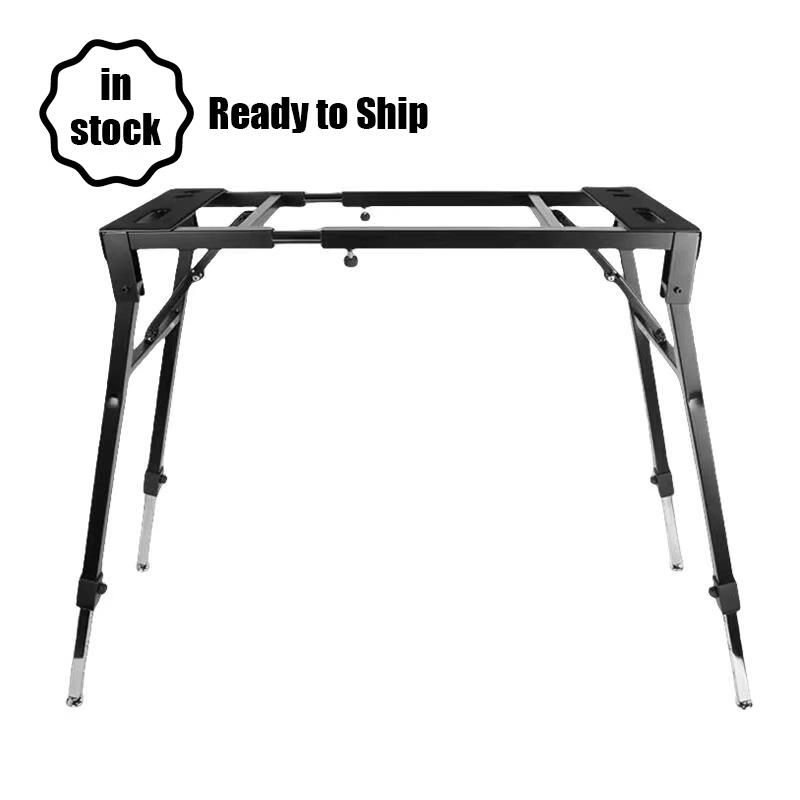
If a first order mixes thrones with other hardware, ask for it consolidated. Standing alongside the range are the detachable double X keyboard stand, the piano bench for touring bands and the conductor music stand, and all of them can leave in one shipment with one set of documents.
How to work the sample
A sample is the cheapest piece of information in the whole order, and most buyers waste it by opening the box and looking at the finish. Put it in front of a drummer instead. Have them set the height themselves, play a full set, then leave it loaded overnight in the position they chose.
- Height run through its full travel, with somebody sitting on it the whole way
- Collar checked for grip marks and for how much tube stays inside it
- Feet pushed sideways against a polished floor while loaded
- Cover inspected at the seams after a week of rehearsal use
- Column sighted against a straightedge once it’s been carried in a case
Do that exercise on our sample and on every other quote on your desk, then compare what you found rather than what you were told. Half a day of that answers more than a fortnight of email.
Spares tell you how the workshop thinks
Ask whether collars, feet and thread inserts can be bought on their own. A workshop that stocks spares has designed the product to be repaired, and a workshop that doesn’t has designed it to be replaced. For a dealer selling into schools and rental companies, that single answer decides whether the second order is a repeat or a complaint.
Ask the same question about the seat. Cushions wear out before frames do, and a customer who can buy a new cushion keeps the throne in service for years. Our apple shape drum throne is built so the cover, the collar and the feet can each be replaced without scrapping the seat.
Questions that arrive before a stage order
Can a throne hold more than the figure printed on the box?
Usually, and that’s not the useful question. A static rating tells you when something breaks. It says nothing about how the seat feels at minute ninety, or whether the column has started to tilt. Ask what the workshop tested the piece against, and for how long.
Do we need to order the seat and the base together?
The two travel as one unit because the column length, the seat thread and the base socket are cut for each other. Substituting a base from a different range is possible in some sizes and it changes the whole feel, so ask before you promise a customer a swap.
How much does a stitched cushion really change the cost?
More than buyers expect, because the cover is the part a workshop handles by hand. Fabric choice, foam density and stitch count move the labour figure more than the steel does. Send us the fabric you have in mind and we’ll answer against that rather than a generic grade.
What is the usual route for a first stage order?
One sample, worked hard for a week, then a trial run of a few cartons once your drummer has given a verdict. Nothing about this product rewards a fast first container, and the sample is where you find out which of the numbers you were quoted were real.
Is the column height set by a thread or a pin?
The threaded adjustment on our apple shape drum throne runs on a collar that grips the column over a long contact area, which is why it holds a setting under a moving drummer. Pins are cheaper and they let a seat drop when the drummer shifts. Ask which one is in the quote you’re holding.
Can the frame take a heavier drummer than your usual market?
Tell us the figure you need and we’ll answer against the base and the column we’d fit for it, rather than stretching a standard unit. Guessing here is how returns happen, and a return on a throne is a freight bill you pay twice.
Send us the drummer, the floor and the pack size
Tell us the figure your heaviest customer needs, the height your market works at, and the master carton count you can live with. Those three lines are enough for a proper answer. You can reach us through the contact page on our site, and mention drum throne stage pack so the reply comes back to the right person.
The same workshop also builds the Yinyu microphone stand range, so a band that buys a throne usually leaves with a stand and a lead as well. Staging a full kit position is easier when the hardware comes off one line.
Most rooms ordering drum hardware also order monitoring and cabling at the same time. Yinyu cables for the run to the desk and Audfine headphones for the person doing the checking come off the same production floor, so a mixed carton stays one shipment.
Yinyu stands carries this range, and each throne is assembled and loaded before it’s boxed by Ningbo Lesound Electronics in Zhejiang. The weight question is the one to settle first, because every other choice on this page hangs off it.
Post time: Oct-14-2026