


A school band room and a concert hall put music stands through very different kinds of punishment, but the procurement conversation usually starts the same way: a teacher, an orchestra manager, or a distributor sits down with a catalogue and has to turn dozens of similar-looking stands into one order that will survive years of daily use. The differences that matter are rarely visible in a product photo. They sit in the height mechanism, the desk material, the base design, and the way a stand folds for storage.
This guide walks through the checks that experienced buyers run before committing to a fleet of sheet music stands, using the current LESOUND music stand range as a reference point. The same logic applies whether you are equipping a single classroom or supplying a retail programme across a region.
Start With Who Actually Uses the Stand
The first question is not about the stand at all. It is about the players.
Seated students need a different height band than standing conductors
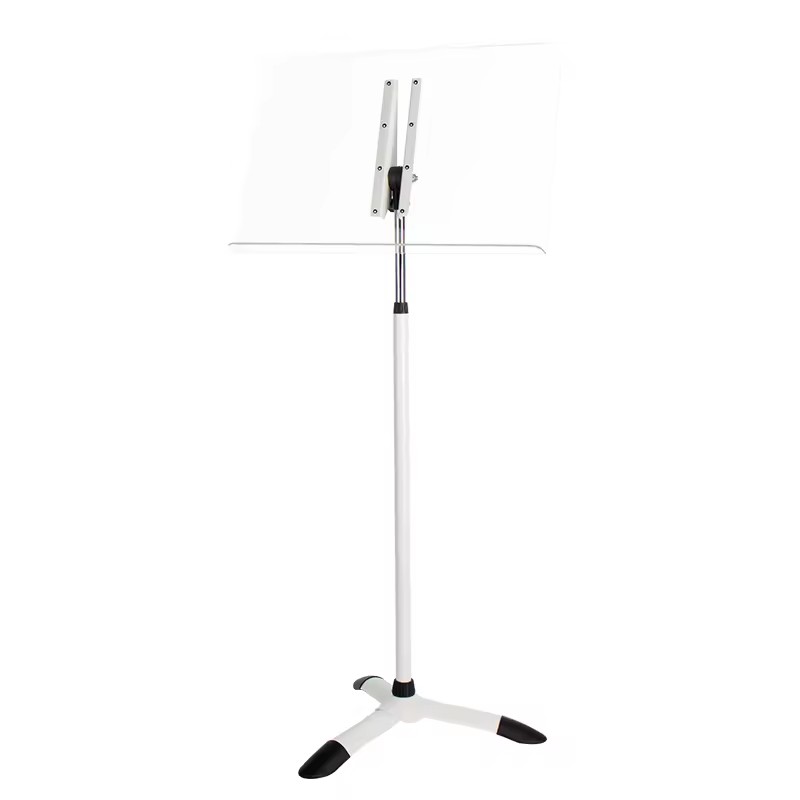
A standard orchestral stand adjusts roughly from just under one metre up to about 1.5 metres, which covers seated string and wind players comfortably. Problems appear at the edges of that band. Tall double bass players seated on high stools, standing percussionists, and above all conductors need more height than a classroom model can offer.
For those roles, LESOUND builds taller versions in the auto-lock series that extend up to 1.8 metres, along with a dedicated conductor version fitted with a wide dual-shelf desk of 75 × 40.5 cm. The extra width is not cosmetic: a conductor’s score is typically oversized, printed across multiple facing pages, and often annotated in pencil during rehearsal. A desk that holds the full spread without a page hanging over the edge solves a daily annoyance that conductors notice immediately.
These orchestral stands carry LESOUND’s house stand brand Yinyu, which also covers the microphone, speaker, keyboard, and guitar stand families — so a school that already runs Yinyu hardware can add music stands with matching finish and adjustment feel.
Portable programmes need a second kind of stand entirely
Music schools that send ensembles to festivals, community groups that rehearse in shared halls, and retailers serving gigging musicians all need a stand that travels. This is a separate category. A model such as the MUS023 uses a mini tripod, a pole that adjusts from 0.7 to 1.4 metres, and a compact desk of 46 × 29 × 3 cm. Folded, it is about the size of an A4 book and slips into a carrying bag. Its sibling, the MUS024, adds a foldable ABS desk so the entire stand packs flat into the bag alongside the tripod.
Buyers who serve both markets usually split the order: rugged full-height stands for the fixed rehearsal room, lightweight folders for the mobile programme. Trying to make one model do both jobs is the most common first-time-buyer mistake.
Check the Height Mechanism Before Anything Else
On a fleet of stands, the height mechanism is the part that fails first. It is also the part students touch every single lesson.
Auto-lock friction columns vs knob clutches
Traditional stands use a knob clutch: loosen, slide, tighten. On paper it works. In a classroom of thirty students, knobs get over-tightened, cross-threaded, or lost, and a stand with a missing knob becomes furniture rather than equipment.
The LESOUND auto-lock series takes a different approach. The column uses a friction slide with built-in damping: pull gently to raise, press down slightly to lower, and the column locks itself at whatever height you leave it. There is no knob to lose and no two-hand fumbling mid-rehearsal. For schools, the practical benefit is that a ten-year-old can adjust the stand one-handed and cannot strip a thread. For orchestras, the benefit is speed during seat changes and rehearsal breaks.
When you review samples, run the column up and down twenty times. A well-damped friction lock holds firm under the weight of a thick score and slides smoothly without clunking. A poorly executed copy of the idea will either slip under load or jam with every change.
Where the desk attaches matters just as much
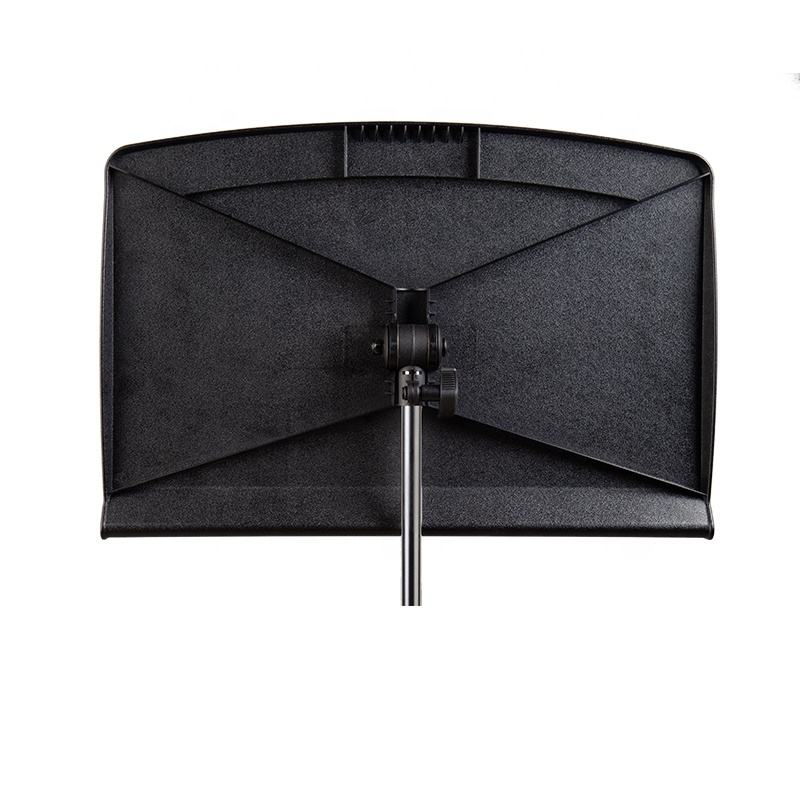
The desk-to-pole joint takes the bending force every time someone tilts the desk or taps the edge of a page. On the LESOUND orchestral stands, the aluminium desk is secured by a large metal joint rather than a small plastic hinge, which spreads the stress across a wider area. Plastic joints are the classic failure point on budget import stands: they crack at the pivot pin after a season of school use, and once the desk wobbles the stand is finished.
Desk Material: Match It to the Environment
Desk material drives both durability and market positioning, and the range deliberately offers several options rather than one.
Aluminium
The standard orchestral desks in the series are made of aluminium, typically 51 × 33 cm with a rolled lower shelf, fixed by that large metal joint mentioned above. Aluminium resists dents, does not rust in humid storage rooms, and keeps its shape when a student leans a stack of method books on the shelf. The lower lip doubles as storage for pencils, tuners, and small accessories during rehearsal.
ABS and polycarbonate for lighter duty
ABS desks appear on the travel models because they keep weight down and can be moulded with integrated features such as page clips. The polycarbonate desks in the range take this further: the material is tough, and the edges are passivated so they do not scratch hands or dent when knocked. For schools buying stands that will be carried between rooms every day, weight is a feature, not a compromise.
Acrylic, bamboo, and special editions
Where appearance matters — an orchestra’s front desk, a concert hall foyer, a premium retail line — the range includes acrylic desks for a clean translucent look and bamboo desks on foldable tripod frames for a natural finish. These are niche compared with aluminium, but distributors serving music academies and concert venues regularly ask for them, and having the option within one supplier’s catalogue simplifies the order.
Base Design and Floor Protection
Rehearsal rooms see more traffic than concert stages. Stands get knocked by instrument cases, dragged across floors between lessons, and crowded together during full-ensemble sessions.
The orchestral series in the LESOUND range uses a cold-rolled steel base with solid legs finished in powder paint, and every foot carries a skidproof rubber cap. Three checks are worth making on samples:
- Foot material. Hard plastic feet scuff wooden floors and slide on polished stages. Rubber caps grip and protect.
- Base spread. A wider footprint resists knocks from passing cases and chairs; a narrow one tips over in a crowded room.
- Fold flat. Bases should fold flat for storage trolleys and holiday storage. The folding base on the orchestral models folds slim enough that a class set stacks in a corner or on a trolley.
For programmes moving a whole classroom’s worth of stands between rooms, the catalogue also includes a dedicated steel-frame music stand trolley with EVA grip handles and lockable wheels, so a teacher can move a full set in one trip instead of making five. Ask for its specifications separately, because the right trolley capacity depends on how many stands your fleet runs.
Page Security: The Detail Players Notice Daily
Small desk details separate a pleasant stand from an annoying one, and none of them show up in a spec table:
- Curled or rolled desk edges. Pages release cleanly instead of tearing on sharp corners.
- Page clip. A clip at the top of the desk holds open a stiff new method book or a single loose sheet in a draughty hall.
- Accessory shelf. A lower shelf keeps pencils, capos, tuners, and rosin from migrating onto the floor mid-rehearsal.
- Desk tilt range. Percussionists and keyboard players standing behind their instruments need a steep tilt; a desk that only adjusts a few degrees forces them to hunch.
On the conductor’s dual-shelf desk, the shelf runs the full width, which means two baton pointers, a tuning fork, and a phone can all live on the desk at once. It is a small thing that conductors mention unprompted in feedback.
The Fleet-Level Questions Distributors Forget
Single-unit buyers judge a stand by feel. Fleet buyers — schools, academies, orchestras, and the distributors who supply them — should judge it by total ownership, which shifts attention to different questions:
- Uniformity. Can the supplier deliver a consistent model across a large order, so racks, cases, and student habits all match? Mixing stand styles in one room creates endless small friction.
- Spare parts. Feet, clips, and joint hardware wear out. A supplier that can supply replacement parts extends fleet life by years.
- Packaging. Flat-fold stands ship in compact cartons. For container-level orders, packaging density directly changes how many units fit.
- Mixed heights in one order. Most programmes genuinely need three types: full-height stands for the main room, taller or conductor models for the front, and folding travel stands for outreach. Ordering all three from one manufacturer keeps finishes and adjustment mechanisms consistent across the set.
LESOUND manufactures stands, cables, and headphone lines under one roof in Ningbo, and the Yinyu music stand range is built for exactly this kind of programme purchasing: one series covering standard, tall, conductor, travel, and storage roles with consistent hardware. Buyers working through OEM or wholesale programmes can review the full stand catalogue on the LESOUND music stands page.
A Compact Checklist to Take Into the Showroom
Condensed from the sections above, here is the checklist in the order that matters:
- Users first. Map who sits, who stands, who travels. Buy in three categories, not one.
- Height mechanism. Prefer a damped auto-lock column over knob clutches for school fleets; cycle it twenty times on the sample.
- Desk joint. Metal joint, not plastic. This is the durability ceiling of the whole stand.
- Desk material and size. Aluminium 51 × 33 cm class for rehearsal rooms; dual-shelf 75 × 40.5 cm for conductors; light ABS folders for travel.
- Base and feet. Steel base, folding legs, rubber feet.
- Page details. Rolled edges, page clip, accessory shelf, generous tilt.
- Fleet logistics. Uniformity, spares, packaging density, and a storage trolley if the set is large.
None of these checks requires lab equipment. They require a sample in hand and ten deliberate minutes. Buyers who run them consistently end up with stands that are still in service a decade later — which, on a per-seat basis, is where the real economics of school and orchestra equipment live.
To compare the models mentioned here side by side, browse the LESOUND music stand range, or see how the same manufacturing base supports microphone stands, keyboard stands, and speaker stands for a complete programme. Questions about OEM configurations or wholesale orders are welcome through the contact details on the site.
Post time: Nov-09-2026