


A studio in Leeds put a wall plate in the live room last winter. Four microphone lines, one network cable back to the rack, and a small metal box at each end to turn the RJ45 into XLR again. It worked for four months. Then a freelance engineer patched his own leads in and found channel two arriving on channel three. Nobody had touched the box. A latch had broken on one plug, someone re-terminated the RJ45 in a hurry, and the pairs went back in a different order.
Nothing in that story is a fault in the box. There’s no chip inside to correct it. Copper, a socket, four connectors and a shell, and it will pass whatever pair order you hand it.
The Yinyu SNA107P is an rj45 to xlr adapter we keep ready to ship, with four XLR combo ends going into a single RJ45 socket. If you’re replacing boxes on a system that’s already wired, send the pinout you’re working to before you order and we’ll tell you whether ours matches. Or start at the contact page on our site with the drawing attached to the message.
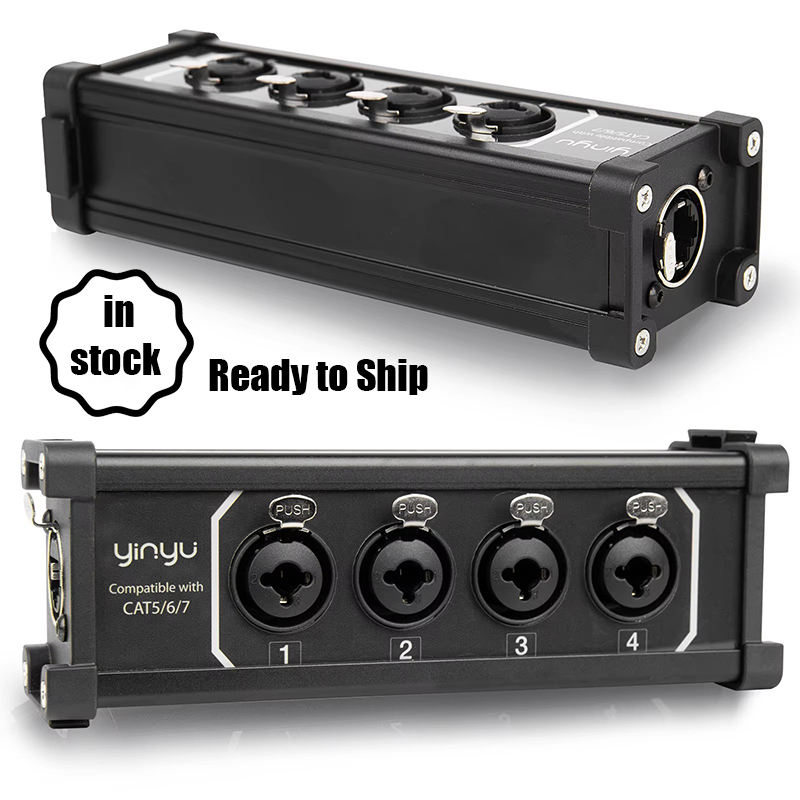
Four XLR ends on a box the size of a paperback
The shell is the part buyers underestimate. A box that lives on a stage floor gets stood on, kicked off a riser and dropped into a case at one in the morning. The aluminium versions, SNA101 and SNA105P, take that better, mostly because the socket can’t move relative to the connectors. On a plastic shell the RJ45 can develop a wobble after a season, and a wobbling socket is how an intermittent channel starts. It only shows up when the desk is at gain and the room is quiet.
Weight is the trade. Metal in a bag of adapters is a small annoyance at load-in and a real advantage in year three. Ours ship one to a PE bag inside a brown box, so the shells don’t rub the plating off each other on the way over.
Which sex you need is decided by the socket you can’t reach
A male XLR goes into a socket. A female XLR accepts a lead. That reads like a trivial distinction until you’re behind a rack at the point where the box has to meet the building, and the answer is fixed by hardware that’s already bolted down. In a live room the four lines usually start at mic positions that are already sitting on Yinyu stands, so this box is the last decision in a chain that began months earlier.
- Rack end where the engineer brings his own leads: female ends, SNA105P
- Straight into a console or stage box input: male ends, SNA106P
- Rooms where quarter inch jacks turn up: combo ends, SNA107P
If you’re building a pair for a wall plate, order a four female XLR adapter and its four male XLR adapter box in the same order. Check them against each other on the bench. Two boxes from two separate orders can each be right and still be wrong together.
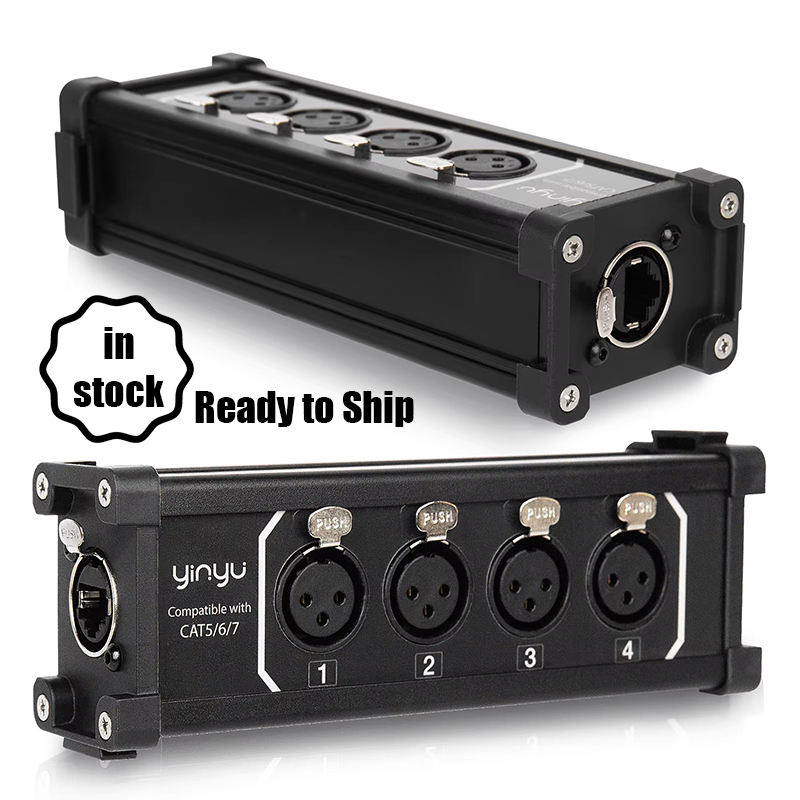
A patch bay turns channel order into a labelling job
Most of these boxes end up within a metre of a patch bay, which means four channels get patched by hand for the rest of the room’s life. The failure here isn’t electrical. Someone plugs channel four into whatever it was patched to last week, and nobody notices because both channels carry a similar source at a similar level.
Write the numbers the same way up on both boxes, in the same hand, before either goes in the wall. Photograph the rack with the labels readable and keep the photo beside the as-built drawing. Two minutes at the end of an install, an hour saved on a Sunday.
Keep one short male to male lead in the rack for testing. Patching a channel through a known lead is the quickest way to prove whether a fault sits in the box, in the run or at the desk. It’s also faster than walking back to the room to listen.
The pair swap that hides for a year
Cat pairs aren’t numbered in pin order. They sit on one and two, three and six, four and five, seven and eight. A plug re-terminated with the second pair landing on pins three and four looks tidy, passes a cheap continuity checker, and swaps two channels. It’s the most common fault we hear about on this product, and it isn’t a manufacturing one.
The symptom reads like a labelling mistake. One channel turns up on the wrong number, and its neighbour turns up too, just somewhere else. Plenty of rooms live with it until a session where the two sources actually matter.
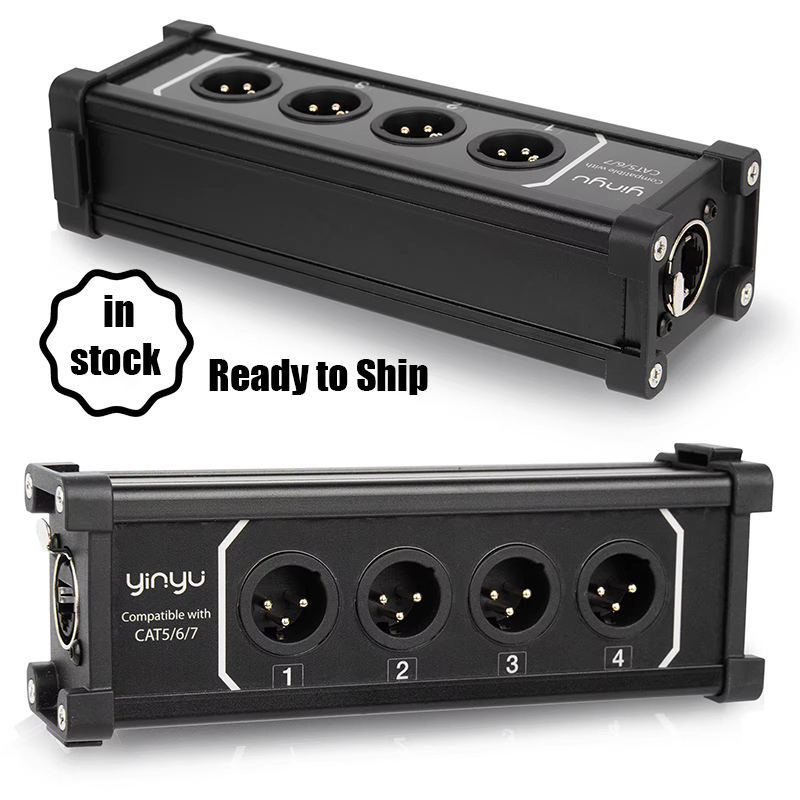
DMX in the fourth position, for rooms that need it
SNA107 is the same shell with DMX on the fourth line. You order it when a lighting desk has to reach a truss and pulling a second cable through a finished ceiling isn’t going to happen. If your rooms never hang movers, take the audio-only version. The extra port costs money and it’s one more thing to explain to a visiting engineer at three in the afternoon.
Forty eight volts, and the answer we won’t guess at
Phantom power is the question that decides whether this product fits a room at all. A condenser needs 48 V up the same pair as the signal. Whether that survives a passive adapter depends on how the box is wired, and on how pin one is bonded to the shell. Two boxes that look identical on a bench can behave differently here.
We won’t tell you it passes until we know which box and which microphone. Test a condenser through the pair before the session starts, and ask us with both model numbers in front of you.
One more thing worth checking while the pair is on the bench: whether the shell carries the audio ground. In a building with two mains boards, a bonded shell and a floating one behave differently, and the difference usually shows up as a hum somebody blames on the desk.
What we check before a box goes in the bag
Seven things, in this order, on every box:
- Continuity on all four channels, pin by pin, against the drawing
- Both boxes of a pair on the bench at once, so the pair order gets checked end to end
- Twenty insertions and releases on the RJ45 socket, watching the latch
- Shell bonding on the aluminium versions, because a floating shell is a hum waiting for a dimmer pack
- Labels printed the same way up at both ends, one to four
- Combo ends seated properly, so an XLR plug doesn’t stand proud of the shell
- One box per bag, shells not touching, then the brown box
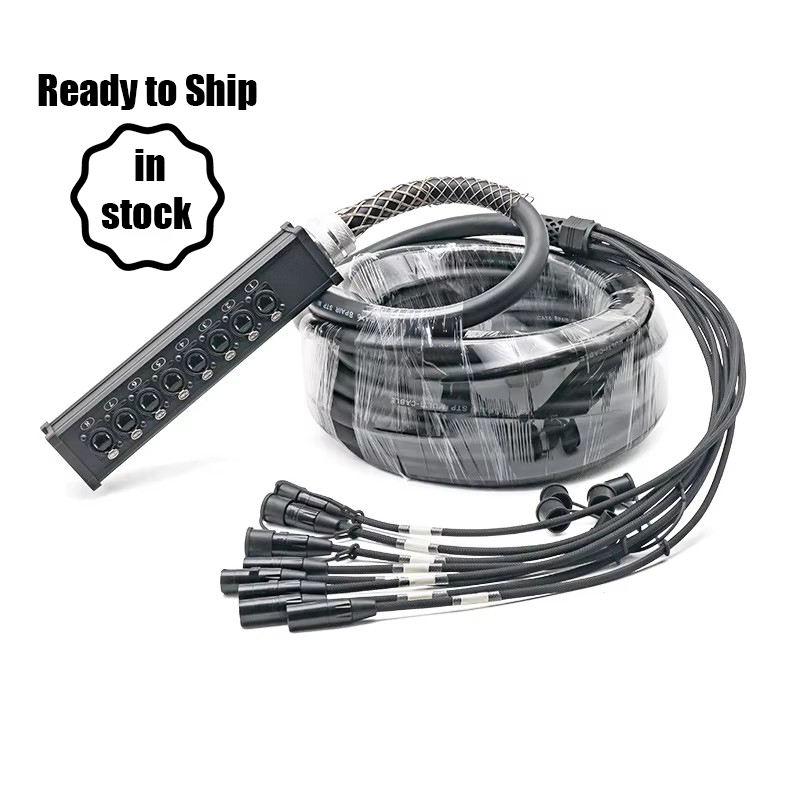
The cable between the boxes decides the rest
The two boxes are only the ends. What joins them is one network cable, and it has to be long enough for the route rather than the straight line on a plan. The Yinyu cables side of the range covers this in fifteen, twenty, thirty and fifty metre runs. Those come in four, six and eight channel versions, which suits most rooms without a splice anywhere in the middle.
A splice is where these installs go wrong two years later. Two couplers and a short patch in a ceiling look fine on the day, and then somebody unplugs one half while dusting a shelf. If the route needs more than fifty metres, order the longer cable rather than two shorter ones joined together.
Aluminium, plastic, and the bottom of a case
Buyers ask which one is better. Neither. A plastic shell is lighter and cheaper to replace when a case lid lands on it. Aluminium holds the socket geometry through a few hundred load-ins and looks like the rest of the rack. If the box goes into a wall plate and never moves again, plastic is fine. If it travels with a stage package four nights a week, beside Yinyu stands and a cable trunk, pay for metal.
What rides in the same carton
Adapter orders rarely travel alone. A four channel box usually pairs with a four channel RJ45 snake cable, because the box is only half the run. Crews fitting out a room at the same time add Yinyu stands for the new mic positions. They add Audfine headphones for the cue checks at the desk. The pallet ends up carrying rather more than adapters.
That changes the packing. Cartons of adapters go on top, stands get strapped to the side of the pallet, and nothing heavy rests on a box of shells. It’s a small thing that decides whether you open a carton of bent connector barrels on site.
Adapters and cable also leave from the same address in Zhejiang, at Ningbo Lesound Electronics, so a matched pair can ship on one pallet instead of arriving as two shipments a week apart.
Questions that arrive with an adapter enquiry
Will your adapter match the one already in our wall?
Not necessarily. Pair order isn’t universal between factories, so a box that matches ours may not match the one installed two years ago. Send a photo of the plug and the pinout drawing and we’ll check before anything ships.
Does it pass phantom power to a condenser?
That depends on the wiring and on how pin one is bonded to the shell, so we won’t promise it in a message. Test a condenser through the pair before the session, then tell us the box and microphone models.
Why are there four XLR ends instead of two?
Four pairs, four balanced lines. Each pair carries one channel, hot and cold, so one network cable does four channels and nothing more. Eight channels means two runs.
Can audio and DMX share the same box?
The SNA107 is built that way, with the fourth line given to DMX. Order it as a combo at the factory. Splitting a line in the field to carry both is how a lighting fault turns into an audio fault.
Do the RJ45 plugs come fitted?
The box has a socket rather than a lead, so the cable is a separate item. If you’d rather buy the whole run as one part, the RJ45 snake cable arrives with plugs on both ends in fixed lengths.
Can we put our own brand on the shell?
OEM and ODM are both offered. Marking method, colour and packaging get agreed before the run starts, so send the artwork with the enquiry and we’ll come back on what’s practical.
If you’re ordering a matched pair for a patch bay, put the word patchbay in the first line of your message. It reaches the right person faster than a general enquiry, and it tells us to ask about pair order before anything else.
Post time: Nov-03-2026