


Walk behind any PA rig and you will find two connector families sharing the same job: feeding amplified signal from the power amp to the passive loudspeakers. One is the familiar 6.35mm (1/4 inch) phone plug that grew up in the instrument and patch-bay world. The other is the locking Speakon-style connector, drawn specifically for loudspeaker-level runs. Both pass audio. They are not interchangeable in practice, and the difference is mostly mechanical. This guide walks through what each connector was designed to do, where each belongs in a working system, and how to specify them when you are sourcing cables or planning an OEM programme.

Two Connectors, Two Original Jobs
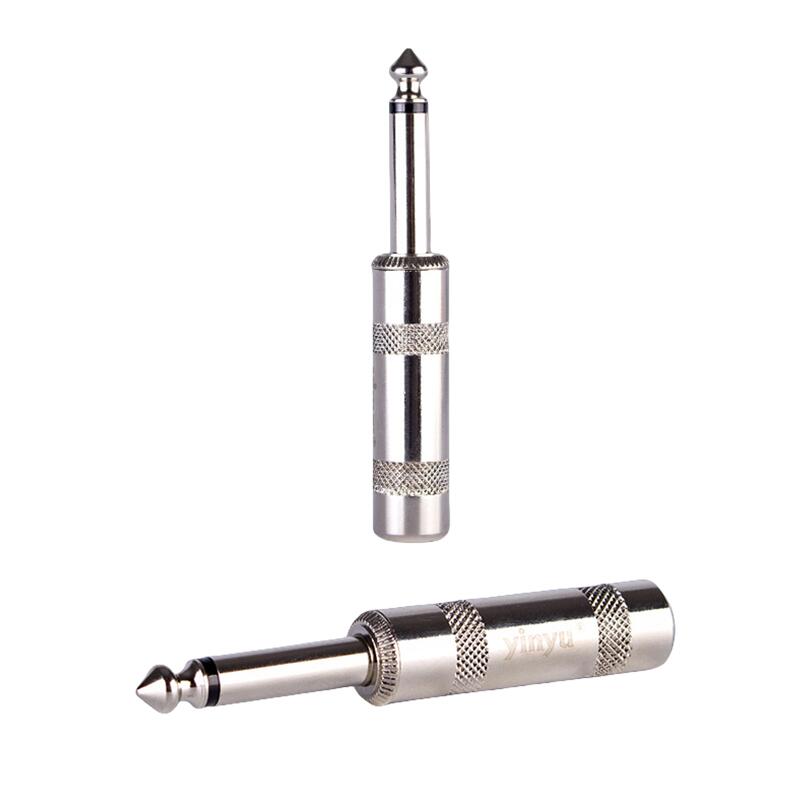
The 6.35mm phone plug predates modern PA systems. It was drawn for telephone switchboards, adopted by electric instruments, and carried into every recording studio as the default line-level and patch connector. It is compact, cheap to produce, and universally understood — which is exactly why amp manufacturers kept fitting 6.35mm speaker outputs long after better options existed. You will still see TS jacks labelled “SPEAKER” on the rear panels of many powered mixers and compact amplifiers.
The Speakon-style connector arrived in the late 1980s with a narrower brief: loudspeaker runs only. Its designers addressed the specific complaints touring engineers had about phone plugs — accidental pull-out, exposed live contacts, and contacts that were never dimensioned for speaker-level current. The result is a round connector with a rotating locking collar, recessed contacts, and a housing sized for the heavier gauges used between amp racks and passive cabinets.
That origin story explains most of the practical differences. The 6.35mm plug is a generalist that happens to work on speakers. The Speakon-style plug is a specialist that only does one job, and does it with a deliberate mechanical design.
Inside the Locking Design
The most visible difference is the latch. A 6.35mm plug relies on friction alone: the tip and sleeve springs inside the jack press against the plug, and nothing stops a road case, a foot, or a bouncing cable from tugging it partially out of the socket. On a speaker run, a half-seated plug is not just an audio problem — an intermittent contact on an amplified line audibly pops and can stress drivers.
A Speakon-style plug locks instead of gripping. You insert it, twist roughly a quarter turn, and a chuck latch inside the housing grips the socket. To remove it, you retract the latch and twist back. On stage this design does three things:
- It resists pull-out. A straight tug on the cable cannot unseat a locked plug, which matters when speaker runs cross walkways or hang from amp racks.
- It keeps contacts recessed. The conductive pins sit inside the housing, so fingers and metal objects cannot bridge live contacts while the system is running.
- It makes the connection deliberate. A locked connector signals “this is a speaker run”, which reduces the classic mistake of patching a line-level source into an amp output.
Contact Layout and Pole Counts
The second difference is inside the barrel. A 6.35mm TS plug carries two contacts — tip and sleeve — which suits a single amplified channel. A TRS version adds a third contact, but TRS on a speaker run is a legacy arrangement rather than a modern recommendation.
Speakon-style connectors are built in multiple pole counts. Two-pole versions carry one amplifier channel, matching the simplest passive setups. Four-pole versions are the industry workhorse: they carry two channels through one connector and one cable, which is how many engineers run a two-way passive cabinet from a single stereo amplifier, or loop signal between cabinets with fewer runs on the deck. Eight-pole variants exist for specialised multi-way systems. In our own CS range, for example, the family spans straight and right-angle plugs, an eight-pole version, and a metal-shell option — one mechanical standard covering most speaker-run scenarios.
The larger housing also accommodates heavier cable. A typical speaker run uses conductors in the 1.5 to 4.0 mm² class; our FC series bulk speaker cable, for instance, spans exactly that range so the conductor can be matched to run length. A Speakon-style boot accepts these gauges without a fight. A 6.35mm plug, designed around instrument-cable diameters, needs a bulkier strain relief to do the same, and the solder cups inside are smaller than the conductor ideally wants.
Where Each Connector Belongs
Choose Speakon-style when the run is amplified
For any permanent install or touring rig where you control both ends of the cable, the locking connector is the deliberate choice. Typical homes for it include:
- Amp rack to passive PA cabinets, especially with four-pole wiring to a two-way box
- Subwoofer runs, where long cables and heavy conductors are the norm
- Fixed installations using panel-mount sockets in rack panels or custom backplates, keeping the internal wiring tidy and the external connection locked
- Any stage where speaker runs cross traffic and a kicked cable is a certainty
Choose 6.35mm where the ecosystem demands it
The phone plug remains correct in plenty of places, and pretending otherwise complicates an otherwise simple system:
- Compact powered mixers and practice amps fitted with 6.35mm speaker outputs
- Passive monitors and small cabinets that ship with TS or TRS jacks
- Line-level patching between processors, crossovers, and amplifiers — where the 6.35mm plug is still the dominant standard
- Short link cables between adjacent equipment where locking hardware adds little value
Hybrid cables — Speakon-style on one end, 6.35mm on the other — occupy a legitimate middle ground. They exist to connect modern amp racks to older cabinets with phone-plate inputs. Our own speaker cable assemblies include exactly this termination, and the factory photo above shows one. Treat them as adapters between generations of equipment rather than a default for a new build.

Specifying Connectors for an Order
If you buy cables rather than build them, the connector decision is mostly a stock-keeping question. A few points from our own manufacturing side are worth putting in your specification sheet.
First, define the pole count per application and keep it consistent across your inventory. Mixing two-pole and four-pole assemblies without labelling invites miswiring in the field; a roll of tape and a marker are not a specification. Second, decide your stance on metal shells. A metal-shell Speakon-style plug survives rough handling and looks the part on premium touring stock, while polymer shells keep weight and unit down for high-volume rental fleets. Third, for panel-mount points in fixed installs, order chassis sockets with the same pole count as your cable plugs so a four-pole run never dead-ends in a two-pole plate.
Fourth, check the cable exit. Right-angle exits (available in both connector families — the CS range includes a right-angle Speakon-style plug, and the CP range has right-angle 6.35mm plugs) solve clearance problems behind rack panels and inside compact combo amps. Straight exits suit open runs. Specifying exit direction per SKU removes the most common assembly complaint.
Finally, match the connector to the conductor. The termination method — solder, crimp, or set-screw — should suit the gauge you specified in the cable section, and the strain relief should close around the finished jacket rather than around heat-shrink. These are the details a cable factory checks before an assembly leaves the line, and they are worth confirming with any supplier you qualify.
A Short Buying Checklist
- Speaker runs between racks and passive cabinets: locking Speakon-style, four-pole as the default, two-pole for simple feeds
- Legacy amp or cabinet with phone jacks: 6.35mm TS, or a hybrid Speakon-to-6.35mm assembly
- Line-level patching: stay with 6.35mm — locking speaker connectors are not for patch bays
- Fixed installs: panel-mount chassis sockets matched to cable pole counts
- Tight rack clearances: right-angle exits on either family
- Label every assembly with its pole count and application; treat connectors as part of the specification, not an afterthought
The Short Answer
On paper, both connectors pass amplified signal to a passive speaker. In the working world, the difference is security and intent. The 6.35mm plug is the universal interface of the audio world and stays correct wherever the equipment dictates it. The Speakon-style connector takes the same job and adds a positive lock, recessed contacts, and a housing built around heavy conductors — which is why nearly every modern amplifier and passive cabinet standardised on it. If you are specifying new stock for speaker runs, the locking connector is the safer default; keep 6.35mm for the equipment that still expects it, and let hybrid assemblies bridge the two worlds.
LESOUND manufactures the full chain behind this decision: bulk speaker cable in the FC series, finished speaker runs in the SC series terminated with Speakon-style plugs from the CS range and 6.35mm plugs from the CP range, plus panel-mount sockets for fixed installs — all under our Yinyu cable and connector brand, with OEM and small-batch programmes handled by the same factory floor. If you are planning a cable programme and want the connector mix matched to your customer base, tell us what your amps and cabinets look like and we will spec the runs accordingly.
Related reading on this site
- Audio cables overview — the cable families and where each one fits
- Instrument cables — where the 6.35mm plug does its original job
- Snake cables — multi-channel runs between stage and amp racks
- Speaker stands — positioning passive cabinets safely at height
- DJ booth setups — compact systems where both connector families meet
- Microphone cables — the line-level side of the signal chain
Post time: Oct-21-2026