


Every stage has one cable that nobody wants to think about. It runs from the back of the mixer to a box parked on the deck, and once the doors open there’s no replacing it. That’s the multicore. Get it right and nobody notices it for years. Get the channel count wrong and you’re running single lines across the front of the stage while the band waits. We build these, so we see which decisions come back to bite a buyer later.

Here’s what most first time importers miss. They’ll spend days arguing about cone size or cabinet finish on a speaker order, then specify their stage gear with two fewer channels than they need because that’s what the old venue had. Read through the checklist below before you send us a spec.
The fanout is where the money actually goes
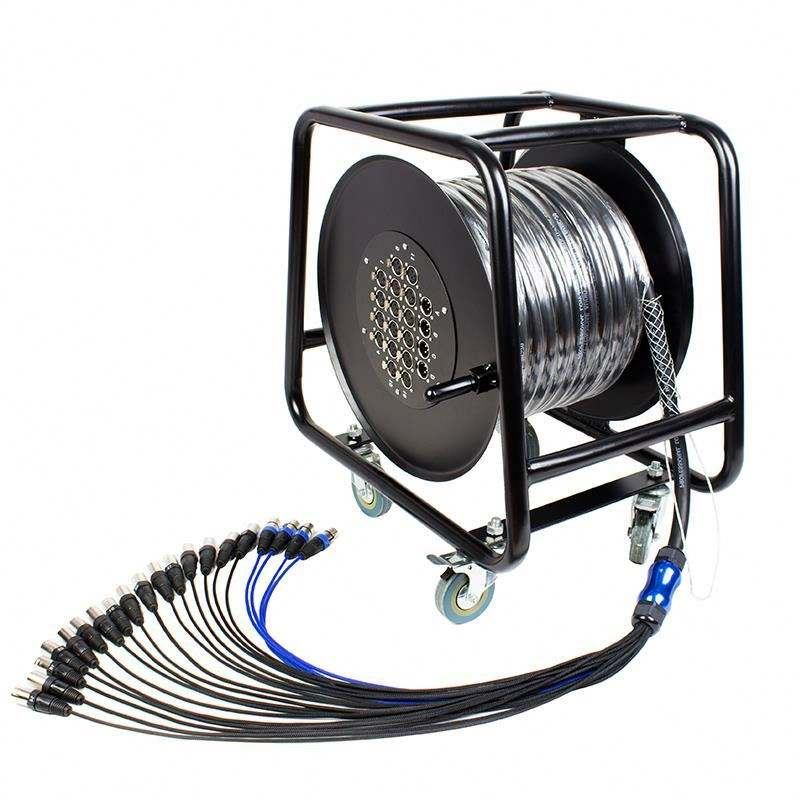
Ask any crew what breaks on a multicore and they’ll point at the fanout. That’s the end where twenty or so tails spread out of one jacket, and each one has to survive being stepped on, coiled badly and yanked out of a mixer in the dark. Our SNB01 runs XLR male to female, so one end lands in the stage box and the other fans out at the desk.
Which gender sits on which side isn’t something you should guess at. Tell us where your mixer lives and whether the box will be sending signal to the stage or bringing it back, because reversing it is a rewire job rather than a return job. We’ll confirm the orientation with you before anything gets built.
Decide early whether the tails arrive labelled too. A crew pulling into a festival slot with forty minutes to patch doesn’t want to buzz out twenty channels with a battery tester. Numbered sleeves cost very little during assembly.
Counting channels before you count metres
The number you need today isn’t the number you should order. A working stage eats channels in a fairly predictable order: drums first, then vocal lines, then the amp feeds and the DI somebody forgot, then whatever the headline act insists on in their rider.
- Eight channels covers a small acoustic room and nothing else
- Twelve handles a standard four piece plus two vocal lines
- Sixteen leaves room for monitor sends once the crew grows
- Twenty four is where you stop renting in a second box
- Always hold two live channels spare for the thing that goes wrong
That last point isn’t padding. If a channel dies during soundcheck, having spare pairs already running to the box is the difference between a five minute fix and a thirty minute re-patch. Buyers who order tight always come back wanting more.
Twenty thin strands instead of one thick core
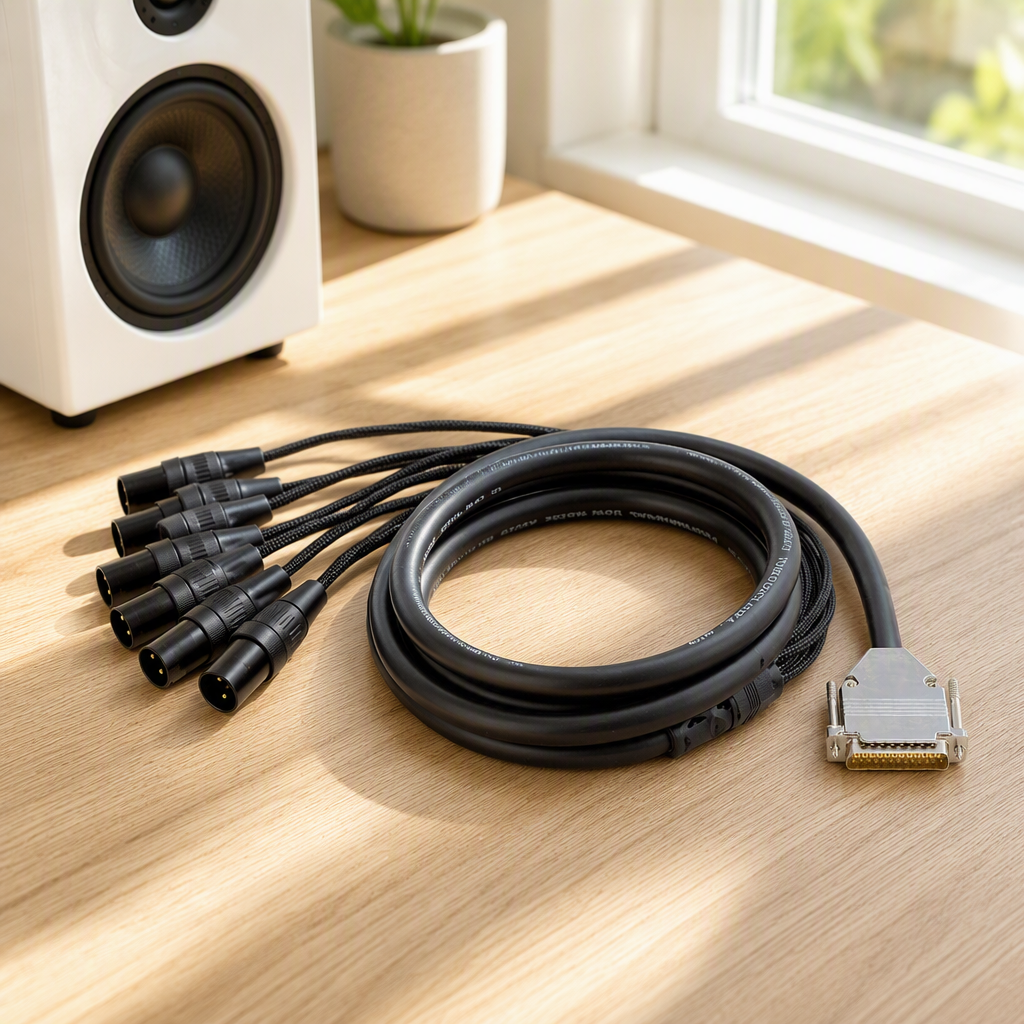
SNB01 uses an OFC conductor built as twenty strands of 0.10mm with PE1.1 insulation. Stranded construction like that exists for one reason. A single thick core carries current perfectly well and then cracks after it’s been coiled a few hundred times, usually somewhere in the middle where you can’t see it.
Stranded cable flexes instead. It takes the punishment of being dragged over a stage edge and coiled into a van night after night. For anything living on a rental truck that’s not a nice to have. It’s the whole specification.
The trade off is that finer strands are more fragile at the solder point. If your own tech terminates these, tell them to strip carefully and tin before twisting. Most premature failures on decent cable happen because someone rushed the joint, not because the copper was bad.
Foil plus drain wire, and why hum shows up anyway
The SNB01 shield is aluminium foil with a 7/0.15mm drain wire. Foil gives you near complete coverage against radio frequency, which matters when the lighting dimmer rack is running alongside your run. That’s a common layout, and it’s where most mystery hum comes from.
Now, here’s what we tell people who call complaining about noise. Nine times out of ten it isn’t the shielding. It’s the cable running parallel to a power line for thirty metres, or a ground lift elsewhere in the system. Foil can’t fix bad routing.
If the box has to sit within a metre of dimmer cabling, cross power runs at ninety degrees and keep the multicore on the deck rather than up a truss leg. You’ll get further from a routing change than from spending more on shielding.

A 2.7 millimetre jacket is thinner than it sounds
SNB01 uses RoHS compliant PVC with an outer diameter of 2.7mm on each individual core. Be clear about what that number covers. It’s the single core inside the bundle, not the outside of the finished cable. Buyers who read it as the whole thing are surprised by what turns up.
RoHS compliance itself is worth planning for. A European distributor will ask for the paperwork at some point, and if you haven’t requested it before production, getting it afterwards is slow. Mention the documents when you enquire and they’ll be in the carton.
Five metres or a hundred, and how it gets coiled
The SNB01 range runs from five metres up to a hundred. What changes isn’t the signal, it’s how you transport it. Anything past roughly thirty metres wants to be stored on a reel, because coiling a long multicore by hand is how twist damage appears eighteen months later.
Teach whoever uses it the over under method and half your failures disappear. Anyone wrapping cable around their elbow is putting a half twist into every loop, and that twist accumulates until the internal cores start fighting each other.
For long runs we generally point buyers toward drum mounted versions. Steel drums take the abuse of load ins far better than a soft bag ever will, and they stack in a truck without being crushed.

Aluminium box or steel drum, and who is buying
An aluminium box such as SNB03 keeps weight down and won’t rust. It suits a church, a school hall or a fixed install where the gear moves maybe twice a year. The box sits at the end of a multi-core XLR snake cable run and nobody thinks about it again. In a permanent install you’ll often see it tucked against the base of Yinyu stands, out of the aisle but still within arm’s reach.
A steel drum version suits rental companies doing fifty turnarounds a season. It’s heavier and costs more to ship, but it’ll still be square in five years when the aluminium boxes have been kerbed one too many times. Nothing annoys a rental buyer more than being sold an install grade box that lasts one tour.
Where the box sits changes everything else
Placement drives more complaints than any specification. Put the box too far upstage and vocalists run to it between songs. Too far downstage and it sits in the sightline for the front rows and every photographer in the building.
The usual answer is stage left or right, close enough for the vocal line to reach and far enough out of anyone’s photos. If you sell into houses of worship, remember it may need to be disguised or moved for a wedding, so shorter runs from the wings help.
You’ll often see one taped down beside the leg of a stand so nobody trips over the tails. When the order also includes Yinyu stands, ask us about matching the packing across both.
Mixing cable with other lines in one order
Lots of buyers refitting a whole venue want the lot together. Practically, it comes down to three things. Confirm every connector orientation before production, get any custom labelling agreed on paper, and book enough lead time that we aren’t rushing a hundred metre build to hit a ship date.
Yinyu cables go into plenty of these mixed orders, alongside whatever else the rig needs. It’s also worth quoting monitoring at the same time, since crews commission the room in Audfine headphones before anything goes through the house system. One enquiry is easier to schedule than three.
Checking a sample before you book the container
When a sample lands, don’t just plug it in and call it done. A short test tells you nothing useful. What you want is abuse testing, because that’s what the real job looks like.
- Flex each tail where it leaves the box, pull gently and listen for crackle
- Coil and uncoil the whole run twenty times, then check continuity
- Leave it coiled in a hot vehicle for a day and see if the jacket kinks
- Wipe the labels with a wet cloth, since venues clean their own gear
- Measure supplied length against what you ordered before packing it away
Small hurt noises in testing usually mean handling needs a tweak rather than the cable being bad. Anything involving heat, smell or a dead channel straight from the carton is a real defect, and you should send it back.
If you’d rather walk a build with us first, use the contact page on our site and quote the phrase stage box multicore so we can pull up the right options.
How far can one of these multicores run before the signal gives up?
Length is rarely the thing that kills a balanced mic run. Connector condition and shielding quality fail first. Our SNB01 build covers five metres to one hundred metres, and every length in between gets made to order. If your venue needs more than that, tell us the route and we’ll talk about a digital stage box instead, since analog lines that long are more trouble than they’re worth.
Can the fanout tails be numbered to our own channel system?
Yes, and most rental houses want exactly that. Numbered sleeves, printed heat shrink or coloured rings at the box end all work. Send a channel list with your enquiry and we’ll quote it with the numbers already applied. It costs little at the build stage and saves hours of tracing during a load in.
What lead time should we plan around for a custom length?
That depends on conductor availability and how many channels you need, so we confirm it against your actual spec rather than quoting a generic figure. Short building runs move faster than hundred metre drums with twenty four channels. Ask us with the length and channel count in hand and you’ll get a real date.
Does the aluminium box take a printed channel strip on the lid?
It does, and that’s worth asking for if the box travels between crews. A printed strip under a clear label panel outlasts marker pen and tape. We can screen your own branding on the box end as well, which matters when several companies are sharing a stage.
Can we buy spare fanout tails instead of replacing a whole run?
You can. Damage concentrates at the fanout end where the tails get stood on and pulled, so keeping a spare block of XLR tails on the shelf beats binning a hundred metres of cable. Tell us the wiring standard you use and we’ll match it.
How is a hundred metre drum packed for sea freight?
It goes on a reel inside a five ply brown carton, with the drum supported so the flanges can’t take the load in a stack. If you’re mixing cable with other goods in one container, ask us to quote palletised packing, since loose cartons at that weight tend to arrive deformed.

Ningbo Lesound Electronics Co., Ltd. builds these to whatever you specify, and we’d rather talk the details through than guess what you meant. Send your channel count, your longest run and how the crew will treat it, and we’ll come back with something that survives a second season. If you’re quoting a whole venue, Yinyu stands travel in the same container and we’ll pack them to match. Start on the contact page on our site with stage box multicore, or browse the heavy duty steel drum version if your customers tour with it.
Post time: Nov-09-2026