


Every audio brand eventually reaches the same fork in the road. One path is to buy finished, unbranded goods from a trading catalogue and put a logo on the box. The other is to work with an original equipment manufacturer — a factory that builds the product around your specification, your market and your name. The second path produces a range that actually belongs to the brand, but many buyers have only a vague idea of what the factory side of that relationship involves day to day. This article walks through the work an OEM audio accessories factory does behind the scenes, using the product families we know best: stands, cables and headphones.
The Short Version: From Your Sketch to a Shelf-Ready Product
Strip away the jargon and an OEM programme has six stages: translating your requirement into an engineering specification, selecting materials and processes, building samples, running production with in-process checks, packing to your retail requirements, and communicating with you at every step so that nothing is decided in your absence. A factory that only does the third and fourth stages is really just an assembler. A factory that owns the first two is the one that can change a tube diameter, a connector shell or a headband cushion without sending you back to square one.
That distinction matters most in pro audio accessories, where the product has to survive loading docks, tour vans and nightly setups. The OEM work is less about decoration and more about making hundreds of small engineering decisions that the buyer never has to think about again.
Design and Engineering Translation
The first job of an OEM factory is to turn a commercial requirement into a buildable specification. A buyer rarely arrives with engineering drawings; more often the brief sounds like this: “a boom stand for podcast studios that packs shorter than our current model”, or “a snake cable for mobile DJs with a stage box that survives being stepped on”.
Translating that brief means deciding things like tube gauge and wall thickness for a stand, clutch mechanism type for a boom arm, conductor size and shielding style for a cable, or driver housing stiffness for a headphone. Each decision cascades: a thicker wall adds durability but also shipping weight; a braided shield adds flexibility but changes the tooling. An experienced factory presents these trade-offs early, in plain language, instead of discovering them in the sample round.
This is also where a factory’s own product range becomes an asset. When the OEM team already designs and builds its own microphone stands, speaker stands and DJ furniture under the Yinyu brand, the buyer’s project starts from proven structures rather than a blank page — which shortens the path from brief to sample.
Materials and Process Selection
The second stage is choosing what the product is actually made of and how it is made. For stands, that means steel versus aluminium sections, the finish applied to them, and the plastic compounds used in joints and feet. For cables, it means conductor material, insulation, shielding construction and jacket type. For headphones, it means housing material, headband construction, and the cable and connector system at the cup.
Good OEM factories document these choices. When a buyer asks why a stand uses a particular steel section or why a cable jacket is the thickness it is, the answer should be a written rationale tied to the product’s use case — stage use, studio use, install use — not a shrug. Documentation at this stage is what makes every later production run repeatable, because the specification, not the memory of one engineer, defines the product.
Samples: Where the Specification Becomes Physical
The sample round is where an OEM relationship is really tested. A serious factory builds samples from the documented specification, measures them against it, and sends them with notes about anything that deviated and why. The buyer’s feedback — a clutch that is too stiff, a connector shell that catches on bag lining, a headband that sits wrong — goes back into the drawings, and the cycle repeats until the product is right.
Detail-level craftsmanship shows up exactly here. The machined clutch and threaded fitting on a microphone stand, for instance, is the difference between a boom that stays where you set it and one that drifts mid-performance.
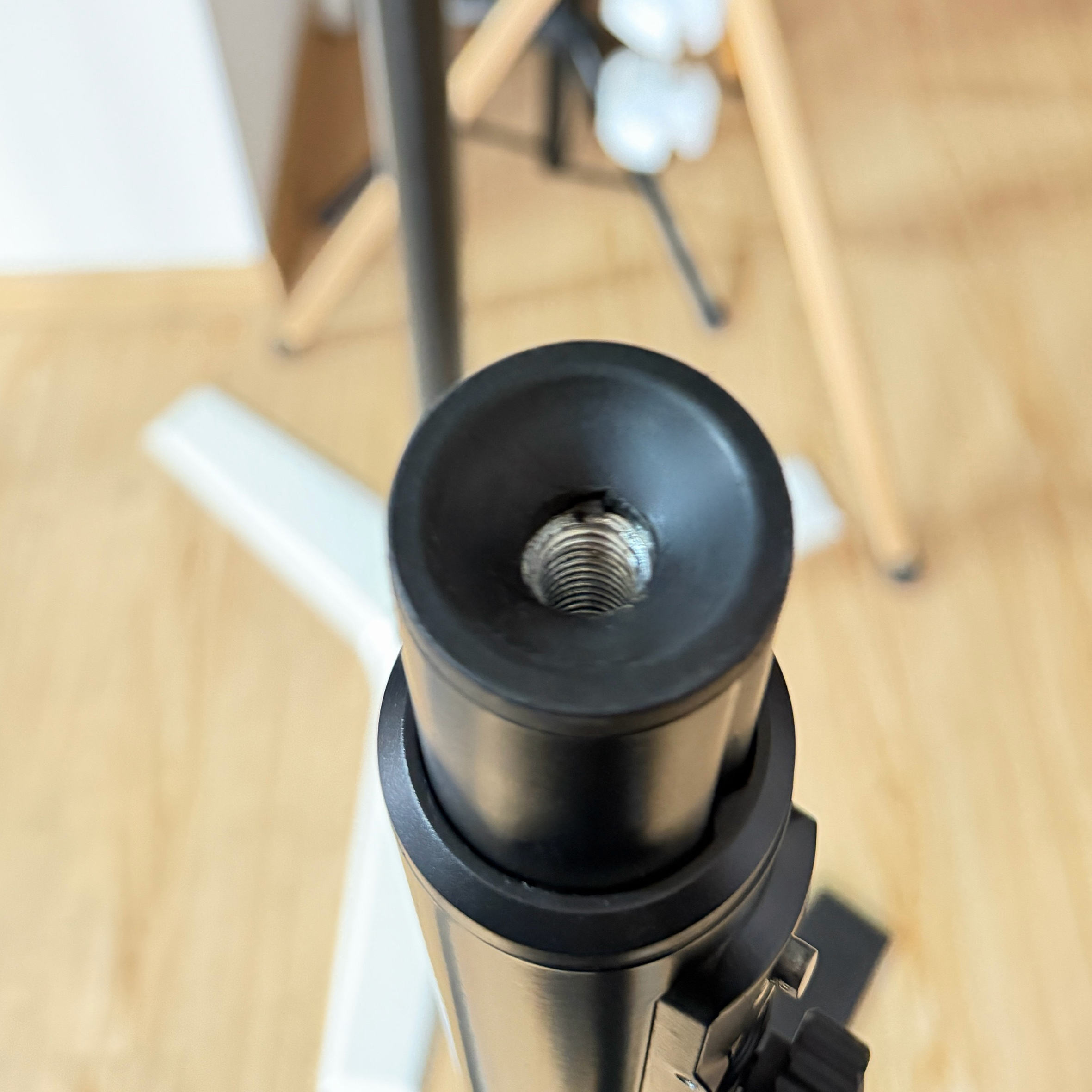
Buyers should treat the sample round as a two-way audit. The factory is proving it can build to spec; the buyer is proving its feedback can be turned into drawing changes. Teams that write feedback precisely — with measurements and use conditions rather than adjectives — move through this stage in one or two rounds.
Production: Consistency Is the Real Product
Once samples are confirmed, the factory’s job shifts from making one good product to making every unit match it. In a vertically organised factory this happens under one roof: cable conductors are drawn and insulated, braiding and jacketing run on dedicated lines, steel sections are cut and formed, and assembly cells put the finished components together.
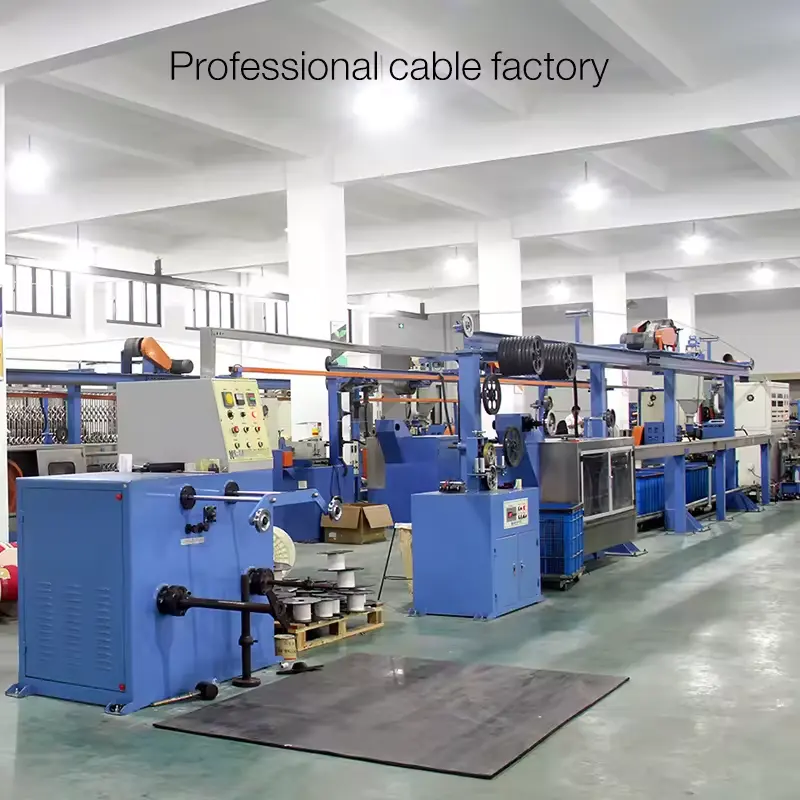
What In-Process Checks Look Like
The checks that matter most happen on the line, not at the end. For cables that means watching insulation concentricity and braid coverage as the line runs. For stands it means checking welds and thread fits on first-off parts from each setup. For headphones it means matching left and right channels against a reference and verifying that headband tension stays within the range set at the sample stage. Final inspection then samples the finished goods against the agreed specification — the same document the buyer signed off at sample stage, which is why that document matters.
Why Vertical Production Helps OEM Buyers
A factory that makes its own cable, forms its own metal and moulds its own parts can trace a problem to its source and fix the process, rather than arguing with a sub-supplier. It also means customisation requests — a different jacket colour, a branded ferrule, a specific connector — are changes to a process the factory controls, not a negotiation with someone else’s factory. For a brand, that is the difference between a quick revision and a stalled project.
Packing, Labelling and Retail-Ready Details
OEM work ends at the loading dock, not at the assembly bench. Packing design is part of the specification: how a folding stand collapses into its bag, how a cable is coiled and tied, how a headphone is presented in its retail box. Colourways, logo placement on product and packaging, barcodes and carton markings are all defined in the same document that governs production.
Buyers who think about the shelf early get better outcomes. A DJ booth that ships flat saves the distributor warehouse space; a mic stand that packs in its own carry bag sells itself in retail; headphone boxes that show the ear cushions clearly answer the first question a buyer picks the box up to ask. The factory has seen hundreds of packing solutions and can bring those examples to the table — use that experience.
The Communication Layer: What a Good OEM Partner Asks You
The least glamorous part of OEM manufacturing is also the most predictive of a good outcome: communication. A capable factory asks the questions a buyer has not thought of yet — which markets the product is aimed at, how it will be transported, what competing products at that level are doing structurally, and what the buyer’s own service commitments require from the product. It also pushes back when a request would compromise the product, and explains why in engineering terms.
Beware of any supplier that agrees with everything instantly. A factory that never pushes back is usually planning to discover the problem later, when changing course is hardest.
How the Product Families Fit Together at LESOUND
LESOUND, the manufacturer behind this site, runs OEM programmes across three product families. Stands and DJ furniture — microphone stands, speaker stands, keyboard stands, lighting stands and DJ booths and tables — carry the Yinyu brand in our own range and are the core of our in-house design and metalwork capability. Cable products, from instrument and microphone cables to snake and speaker cables, are produced on our own lines, which is what allows conductor, shield and jacket specifications to be tailored per programme. Headphones for studio and monitoring use are built under the Audfine brand, with cable, headband and housing configurations open to customisation for partner brands.
For a buyer, the practical value is coordination: one engineering team, one documentation standard, and one point of accountability across accessory categories that end up sold side by side. A distributor building a branded accessories range does not have to reconcile three different suppliers’ tolerances and packing standards.
Conclusion: OEM Is a Process, Not a Sticker
An OEM audio accessories factory earns its role long before the logo goes on the box. It translates a commercial brief into an engineering specification, selects materials that match the product’s real working life, turns samples around until they are right, keeps production consistent through in-process checks, and packs the result for the shelf the buyer is aiming at. When you evaluate a potential partner, ask to see the specification document, ask how sample feedback gets into drawings, and ask which production steps happen in-house. The answers tell you whether you are buying a sticker or a manufacturer.
If you are planning a branded range in stands, cables or headphones, browse our microphone stands and speaker stands to see the stand structures we build in-house, review the cable range and audio snake cables produced on our own lines, or look at the headphone range built under the Audfine brand. Contact LESOUND to discuss an OEM programme tailored to your market.
Post time: Sep-30-2026