


A customer called me last week. He'd bought fifty pairs of headphones from a trading company, paid a 25% markup, and when the shipment arrived, the impedance stamped on the box didn't match what was inside. 32Ω on the label, 45Ω measured. Not a huge difference on paper, but plugged into his audio interface, the volume was all over the place. Some units were louder than others. That's the kind of inconsistency you get when you buy from someone who doesn't actually build the product.
We build ours. Model DH‑1772, part of our Audfine line at LESOUND ELECTRONICS. I'm going to tell you what's inside, what customers keep asking about, and why we keep these in stock for same‑week shipping.
The Impedance Question – Why Three Versions?
The DH‑1772 comes in 32Ω, 80Ω, and 250Ω. Same housing, same drivers, different voice coils. And the question I get is always the same: "Which one should I pick?"
Depends entirely on what you're plugging into.
32Ω – this is the one I recommend for laptops, phones, small audio interfaces, DJ controllers. You don't need a separate headphone amp to get reasonable volume. It's efficient. Most of our Amazon seller clients take this version because their customers are podcasters, streamers, or home recordists who don't own dedicated headphone amplification.
80Ω – this is the sweet spot for studio monitoring. Plug it into a mixing console, a decent audio interface like a Focusrite or Universal Audio, or a live sound digital desk. You get cleaner transient response. The bass doesn't bloat. The damping is tighter. If you're mixing, this is the one I'd personally grab.
250Ω – you need real power for this. High‑end studio gear, dedicated headphone amps, patch bays. The upside is better dynamic range and lower distortion at high levels. The downside is it won't get loud enough on a phone. So unless your customers know they have the gear to drive it, I usually steer them toward 80Ω.
We test each batch across all three. The PCB is the same, the driver housing is the same – only the voice coil changes. That's what makes this a flexible SKU for buyers looking for a headphones manufacturer China that can serve different markets from one tooling.
The 50mm Driver – Why Size Matters
There's a reason we put 50mm neodymium drivers in this model instead of the more common 40mm.
A 40mm driver is fine for spoken word. Audiobooks, voice calls, basic podcasting. But for music – for hearing the low end of a kick drum, the attack of a snare, the sizzle of a high hat – 50mm moves more air. It pushes more low‑frequency energy. And because the magnet is neodymium rather than ferrite, the response is faster. The driver stops and starts cleanly, which means you hear transients as they are, not smeared across the next beat.
I had a customer in Germany who bought samples of four different headphones from four different China suppliers. He measured the frequency response of each. Ours was the flattest from 20Hz to 5KHz. Not boosted in the bass like consumer headphones, not hyped in the treble like cheap monitoring brands. Flat means honest. And honest means your mixes translate to car speakers, phone speakers, club systems.
The Frequency Range – 10Hz to 35KHz
You can't hear 10Hz. Nobody can. But if the driver is rated down to 10Hz, it means the suspension and the damping are tuned so the driver isn't struggling at 30Hz or 40Hz. The low end stays tight. And 35KHz on the top end? Again, you can't hear it, but it indicates the driver can reproduce high frequencies without breakup. The roll‑off is gentle. The response in the audible band – 20Hz to 20KHz – is what matters, and this driver handles that without peaks or dips that fool your ears.
Sensitivity – 99±3dB
Sensitivity tells you how loud the headphones get with a given amount of power. 99dB is efficient. You don't need to crank your interface to near‑maximum to get usable monitoring levels. And the ±3dB tolerance is what we actually measure across a batch. Some manufacturers claim ±1dB but they don't test every unit. We do. The spread on a typical batch is tighter than ±2dB, but we publish ±3dB to be honest.
Power Handling – 400mW Rating, 1800mW Max
This matters if your customers push volume. A 400mW rated power means the driver runs cleanly at normal listening levels. The 1800mW maximum means when a transient spike hits – a drum hit, a synth stab, a loud guitar – the driver doesn't bottom out or distort. There's headroom. That's the difference between a headphone that lasts years and one that blows out after a few months of studio use.
The Ear Cups and Comfort – A Real Concern for Long Sessions
If you've worn headphones for three hours straight, you know the problem: your ears get hot, the pressure points start to hurt, and you end up taking them off long before you're done working.
The DH‑1772 is circumaural – the pads wrap around your ears, not on top of them. The ear pads are soft, skin‑friendly, and they create a seal that blocks out some room noise. Not active noise canceling – we don't claim that – but enough passive isolation that you can work in a practice room with drums without cranking the volume to dangerous levels.
The headband is adjustable. Not the flimsy plastic type that snaps after a few adjustments – it's metal-reinforced. And the clamping force is balanced. Too tight gives you a headache; too loose breaks the seal and you lose bass. We tuned this over a few iterations and landed on a pressure that works for most head sizes.
The Cable – Detachable, Braided, 3 Meters
Here's a question that comes up in almost every call: "What if the cable breaks?"
On most cheap headphones, the cable is hardwired. If it breaks – and it will – the whole headphone is garbage. On the DH‑1772, the cable is detachable. You unplug it from the earcup and replace it. The cable is braided OFC (oxygen‑free copper), 3 meters long, which is enough to reach from your desk to your interface without stretching. And the anti‑loss design on the connection means it doesn't pull out accidentally when you stand up or lean back.
The Adapter – 6.35mm to 3.5mm Gold Plated
The headphones come with a 6.35mm plug. The adapter converts to 3.5mm. Gold plated, so the connection doesn't corrode over time. Small detail, but it matters for rental companies that plug and unplug multiple times a day.
Carrying Cases and Customization
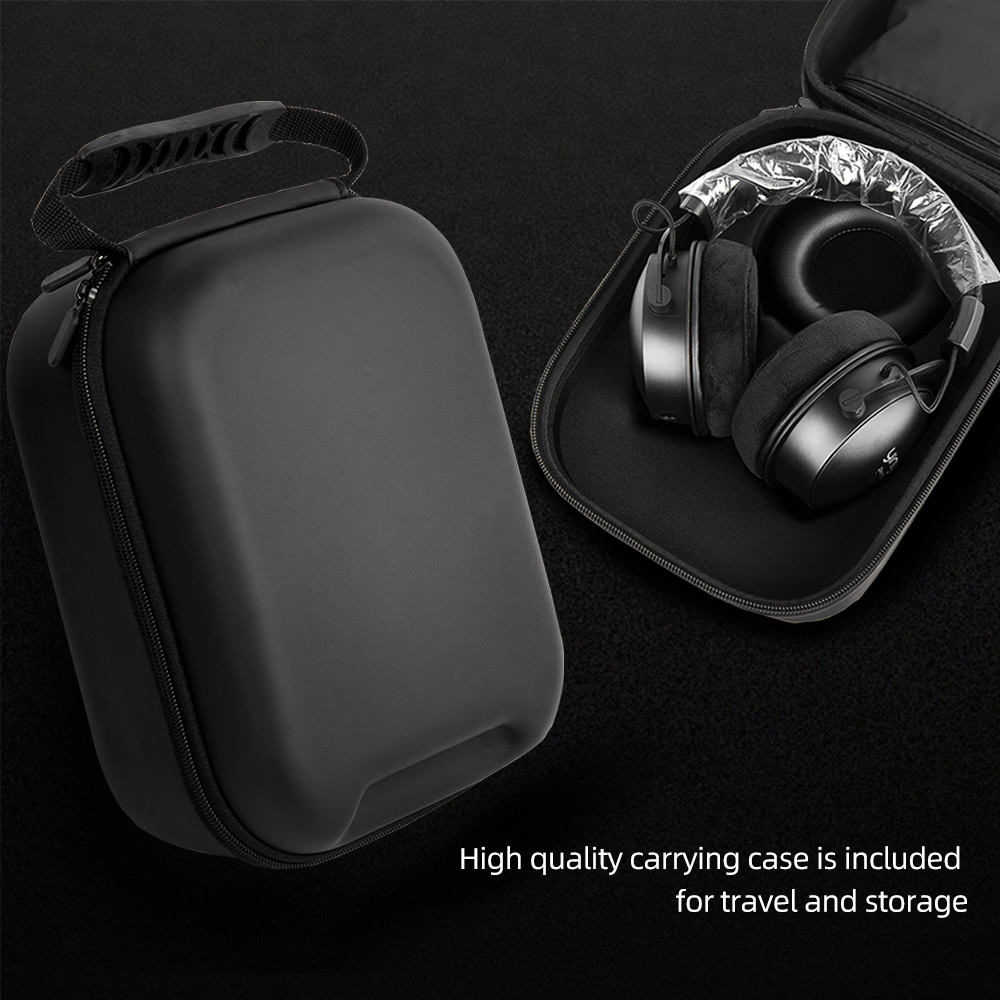
We offer a solid carrying case and a soft bag. The solid case is rigid – protects against drops in a road case. The soft bag is lightweight for everyday carry. Both are options, not standard.
And because we're a custom music headphones factory, we do a lot more than that. Custom logos printed on the headband. Custom ear cup colors. Custom packaging for your Amazon FBA. Custom cables with your connector specification. We've done all of these. Minimums vary depending on what you need.
Stock and Shipping – In Stock, DDP Available
The DH‑1772 is in stock in all three impedance versions. We keep inventory specifically because buyers ask for sample orders with fast shipping. If you're in the US, UK, Germany, Australia, or Japan, we offer DDP – duties and taxes paid upfront. Your warehouse gets the shipment, no customs paperwork, no surprise charges.
Most samples go out within 2 working days. Bulk orders depend on quantity and custom requirements, but we're a factory with production lines ready.
OEM and Private Label – What We Actually Do
We manufacture under our own brand Audfine, and we also manufacture for clients who want their own brand on the product. That's the OEM side.
Here's what OEM looks like:
You tell us you want 500 pieces. 80Ω. Black earcups, but with a silver ring around the outside. Your logo on the headband in white silk‑screen. Custom color box with your brand name and product description. Extra set of ear pads included in each box.
We make a drawing, send it to you for approval, run a pre‑production sample, ship it to you for confirmation, then run the full order.
We can also do just the headband logo and keep everything else standard. Whatever works for your budget and timeline.
What Customers Ask Before They Order
I've been answering these exact questions for the past few months:
"Can I mix 32Ω and 80Ω in one container?" – Yes. Just give us the quantities per impedance.
"What's the sample lead time?" – 2 days for standard sample. 10‑20 days for custom color or logo sample.
"How many pieces for custom packaging?" – Depends on the box type. Send me your requirement and I'll give you a number.
"Are the 250Ω units actually in stock?" – Yes. All three are in stock right now.
"Can I get a price list?" – Yes, but tell me your quantity, destination, and impedance preference first. Prices vary with shipping and customization.
We've Shipped to Amazon Sellers, Studios, and Rental Companies
Our Audfine headphones are in use across the US, UK, Germany, and Australia. Some buyers start with 50 units, test them with their customers, and reorder by the pallet. Others order one sample, do their own testing, and come back with a full container order.
Let's Get You a Sample
If you're looking for reliable studio headphones or monitoring headphones that deliver consistent specs, ship fast, and let you brand them as your own – the DH‑1772 is a solid option. We have stock. We have DDP shipping. We have custom capabilities.
Drop us a message. Tell me your target market, your preferred impedance, your quantity, and any special requests. I'll reply with a quote and a clear timeline within 12 hours. No automated replies, no fluff – just straight answers from someone who builds these things for a living.
Because at the end of the day, you need headphones that let you hear the truth. And that's exactly what we're selling.
Post time: Jul-17-2026