


A foldable DJ table with laptop stand is judged on two things at once, and buyers usually only test one of them. The table has to be rigid when it’s up, and it has to fold into something one person carries without a fight. A sample that passes the first test often fails the second.
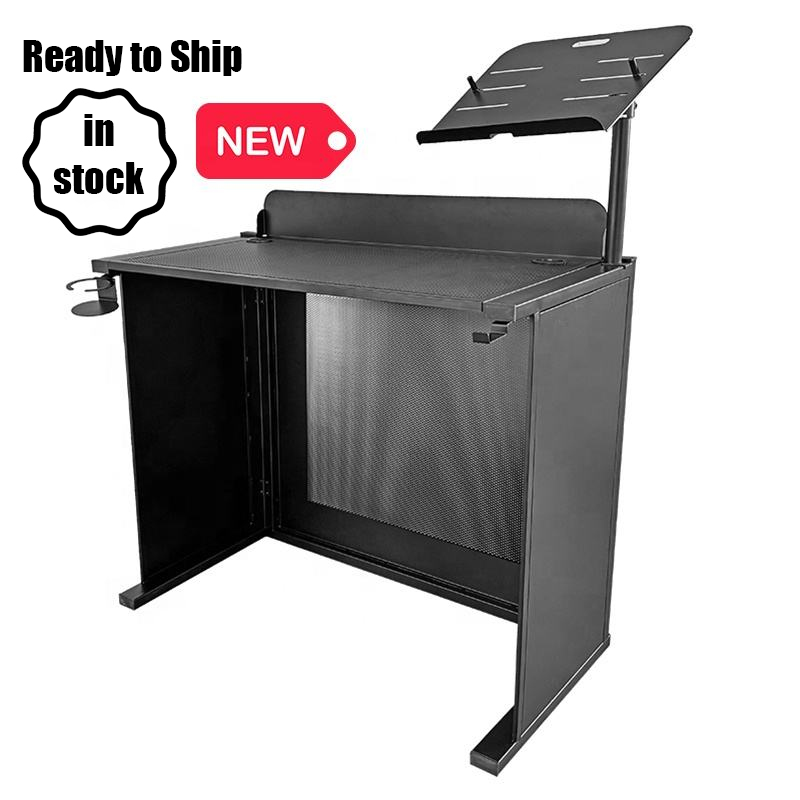
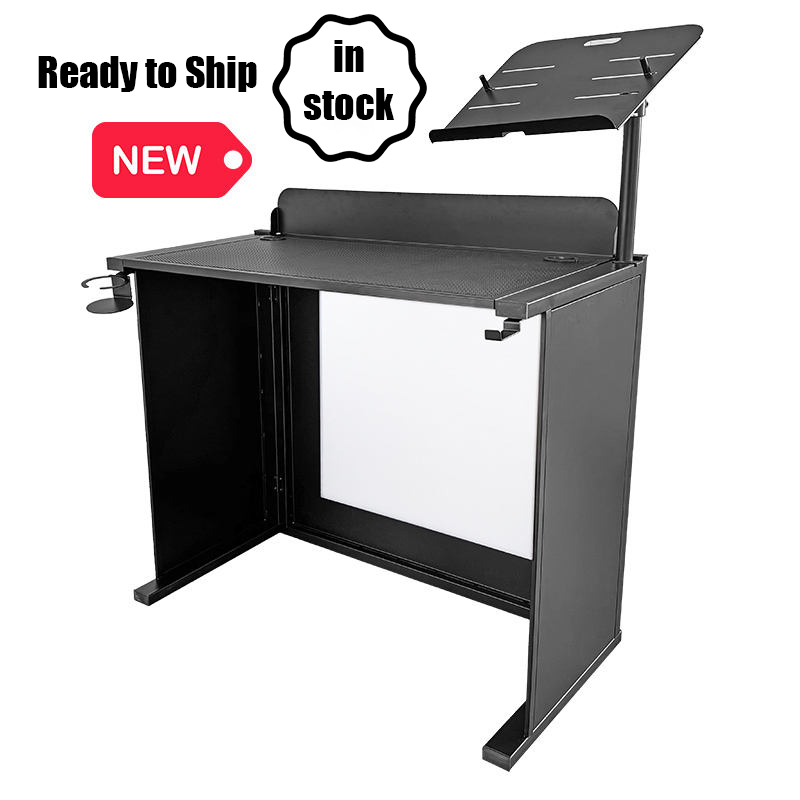
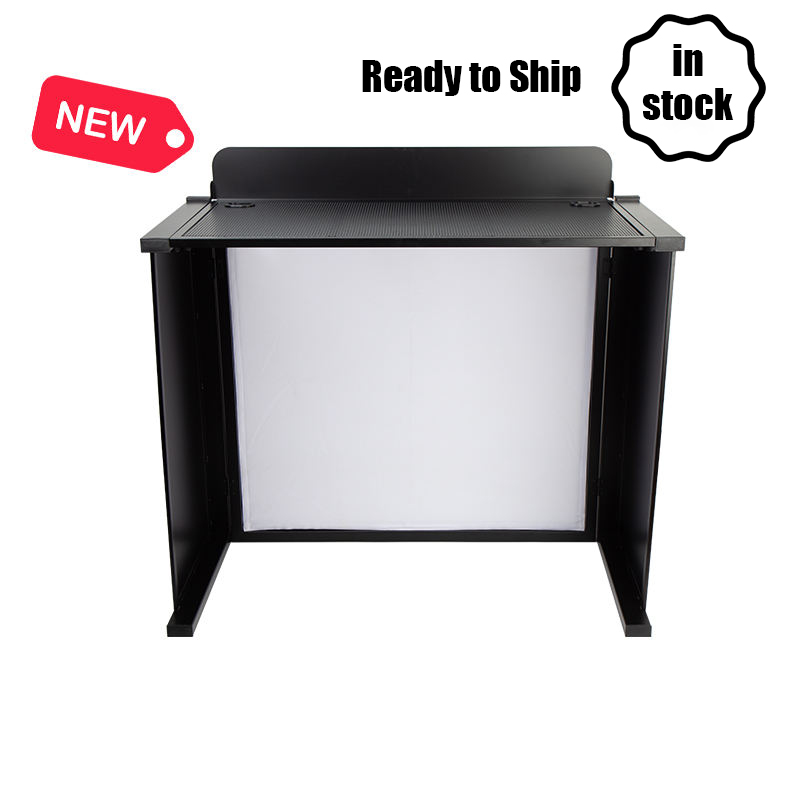
The laptop stand, the cup holder and the headphone hanger are the parts that make the difference in use, and they’re the parts most likely to be missing from the drawing.
The hinge, and the joint that decides everything
Every folding table lives or dies on its hinge. Ask whether it’s a piano hinge, a pair of brackets or a cam lock, and ask what stops it over travelling when it opens. A hinge that opens past its stop puts the load on the fastener rather than the frame, and that’s where a folding table breaks.
Attachments, and where they fix on the top
A laptop stand, a cup holder and a headphone hanger all need somewhere to attach, and that somewhere is decided at the drawing stage. Ask whether the attachments bolt on or clamp on, whether the holes are already in the top, and whether a customer can add one later. A table that can’t take an accessory gets replaced by one that can.
Weight, and the number a DJ actually cares about
Ask what the table weighs in its bag rather than on its own. A DJ carries one bag, and the bag is the figure that decides whether the table gets used. A table that’s two kilos lighter but packs into a bag with no handle is heavier by the time it’s been carried up a fire escape.
One person, one trip, one bag
Ask whether the folded table, the accessories and a controller all fit one bag. That question decides the whole product, because a folding table that needs a second trip is a table that gets left in the van.
Height, and whether the table should move
Some markets want a fixed height and some want an adjustable one. Ask which the customer sells more of, because an adjustable mechanism costs money and it can also introduce a wobble a fixed table never has. The two are different products wearing the same name.
What to fold and unfold on a sample
- Fold and unfold it ten times and listen for a change in the hinge.
- Fit every accessory the order includes, not just the table.
- Carry the packed bag up a flight of stairs.
- Check the top for flex under a controller and two hands.
- Look at what the hinge does when the table sits on uneven ground.
Spares that go missing from an accessory bag
The cup holder, the hanger and the small screws all vanish. Ask whether they can be bought as a set, and whether the set is bagged with the table or packed loose. A spare set that arrives loose ends up at the bottom of a box within a month.
Packing a folding table without a scratch
A folding table scratches itself when the frame rubs the top in transit. Ask whether there’s a foam pad, whether the legs are held open or closed, and whether the bag has a divider. A table that arrives marked looks used, and a table that looks used doesn’t sell at a full margin.
What ships with a folding dj table
A DJ buying one table usually wants the matching ones soon after. The same order often includes a Yinyu foldable dj table with the bag, a OEM dj table with tv bracket for a spare position, and a OEM adjustable dj table where the venue already has a fixed booth.
Audfine headphones go out with almost every table order, because a DJ buying a table is a DJ who’s on stage.
Five answers worth having before the tooling
What stops the hinge when it opens?
Ask how the stop is made. A hinge that opens past its stop loads the fastener instead of the frame.
Can accessories be added later?
Ask whether the holes are already in the top, because a table that can’t take a hanger gets replaced.
What does it weigh packed with the bag?
Ask for the packed figure. That’s the number the customer carries, not the table on its own.
Does one bag take the table and the controller?
Ask, because a folding table that needs a second trip doesn’t get used.
The top, and what it’s expected to hold
Ask what the top is rated for and what it’s made of. Two laptops, a controller and a drink is a normal load, and a top that flexes under it gets blamed for a jog wheel that skips. A braced top costs more and it ends the complaint before it starts.
Materials, and what the top is made from
Ask what the top is made of and how thick it’s. A steel top is rigid and heavy, an aluminium one is lighter and costs more, and a board core is cheapest and it swells if it gets wet. A DJ table lives in a van, so the material question is really about water and dents rather than about weight alone.
Ask about the finish too, because a textured finish hides scratches and a smooth one shows every one. A table that looks tired after a season sells badly on the used market, and the used market is where a lot of these tables end up.
The bag, and the handles that fail
The bag is the part customers replace first and complain about most. Ask what the handle is sewn into, whether the zip is covered, and whether the base has a stiffener. A bag whose handle pulls out of a single layer of fabric takes the table with it.
Ask whether the bag is included or optional. Selling it separately is honest and it also tells you what the factory thinks of it, because a manufacturer who believes in a bag tends to include one.
Folding geometry, and why some tables don’t pack flat
A folding table only packs flat if the legs fold into the footprint rather than beside it. Ask what the folded size is and compare it against the boot of a small car. Two tables that pack flat are worth more to a working DJ than two that fold neatly but need a van.
The accessory that sells the table
Ask the factory which accessory their other buyers order most. Usually it’s the laptop stand, and usually the stand is what makes a customer choose one table over another. Knowing which part does the selling tells you where to spend money on the build.
Setting it up on a stage that isn’t flat
Ask what the legs do on a raked or sprung stage. Independent legs are the answer, and a table with linked legs will rock. It’s a detail a DJ notices in the first minute, and it’s decided at the drawing stage rather than on site.
Handling a return from a DJ
Returns on a folding table are almost always the hinge or the bag, and both are visible in a photograph. Ask the factory what they’d want to see if a table came back, because a supplier with an answer has handled one before.
What a reorder tells you
When a customer reorders the same table six months later, the second run has to match the first. Ask how the hinge and the top are held between runs, whether the bag comes from the same supplier, and whether the colour is matched to a reference.
What the table does when it’s full
A folding table holds more than the drawing suggests. Ask what the top is rated for and what happens at the edges, because a laptop stand puts its load where a table is least braced. A top that flexes at the corner gets blamed for a controller that skips.
Ask whether there’s a brace under the front edge. It’s a small addition at the factory and the difference between a table that lasts and one that doesn’t.
The legs, and where they meet the top
Ask how the legs attach and whether the joint can be tightened by the customer. A folding table gets bumped around, and a joint that needs a workshop to tighten is a joint that stays loose.
What the folded table looks like in a van
Ask for the folded footprint as numbers and lay it out on a floor. A van is packed in rectangles, and a table that folds into an awkward shape wastes the space a second table would have used.
The accessory a venue adds first
Venues usually add the headphone hanger first and the cup holder second, and the laptop stand comes with the order. Ask the factory which they see most, because it tells you which accessory to hold alongside the table.
Two tables, one DJ
Many working DJs buy two of these and set them either side. Ask whether the tops line up when they sit side by side, because two tables at different heights are worse than one. It’s a question about the leg positions rather than about the tops.
Send the gear list and the venue
Tell us what sits on the table, whether it has to travel, and whether the accessories are part of the sale. Those three lines settle the top, the hinge and the bag.
Ask for a sample with the accessories fitted, because the table on its own isn’t the product the customer is buying.
This range is badged Yinyu and produced by the team at Ningbo Lesound Electronics in Zhejiang, with the frame, the hinge and the bag checked as one item.
Post time: Oct-13-2026