


A metal microphone pop filter is bought by people who’ve already tried a fabric one and watched the fabric sag. Metal holds its shape, it can be wiped down, and it looks like equipment rather than like a bag of cloth.


For a retail buyer the pack matters as much as the filter, so the quality conversation starts before the first unit is made rather than after.
Why metal, and where it still fails
A metal screen doesn’t sag and it can be cleaned with a wipe, which matters in a studio running sessions back to back. What it does instead is dent. Ask what gauge the metal is and whether the hoop is formed in one piece. A hoop welded from two pieces shows a seam under a light.
The perforation, and what the holes do
Ask what the hole pattern is and how closely the holes sit. A screen with fine holes and wide gaps does less than one with a denser pattern, and the two look identical at a glance on a shelf.
Cleaning, and the finish that survives it
Ask what the finish is and whether it survives a solvent wipe. A painted screen loses patches of paint where it’s handled most, and the customer reads that as wear even when the metal underneath is perfect.
What retail quality control actually asks for
A retail buyer wants a unit identical to the last one, a pack identical to the last one, and a documented check that says so. Ask what the factory’s inspection routine is, whether it’s written down, and whether they keep a record for every batch.
Ask what AQL they work to. A supplier who recognises the term has dealt with retail before, and one who doesn’t is a supplier you’ll have to teach on your own time.
The pack, and where retail fails first
Ask what the retail pack looks like, whether it hangs or stands, and whether the barcode is printed or applied. A shelf pack with a sticker barcode gets refused by a chain store, and the refusal lands on the customer rather than on the factory.
Ask about the carton as well, because a retail pack that survives the factory and fails the distributor has only ever been tested once.
Drop and transit testing for a retail pack
Ask what drop height the pack is tested to and whether the test is on the pack or on the product. A filter that survives a drop loose in a carton can still fail inside a hang pack with a plastic window holding it off centre.
What to inspect on a pre production sample
- Compare the sample against the artwork and the pack drawing.
- Weigh ten units and check the spread across the batch.
- Wipe the finish and look for patches where the print lifts.
- Scan the barcode from the shelf height a shopper uses.
- Ask for the inspection sheet that’ll ship with the batch.
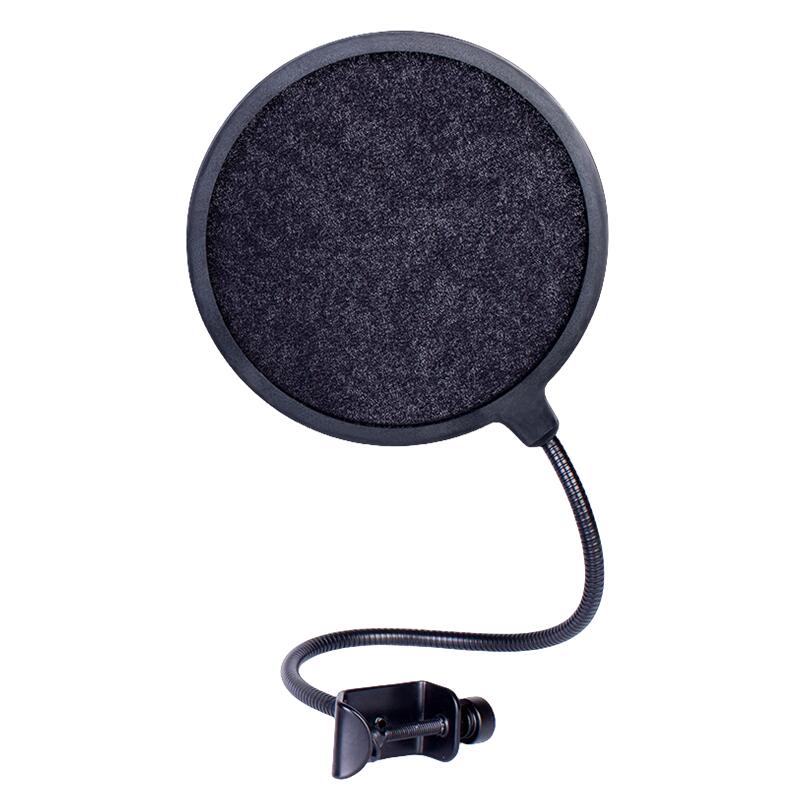
Where a metal filter sells best
Studios, hire kits and broadcast rooms buy metal because it survives. Consumer channels buy it because it looks like equipment. Ask which channel the customer sells into, because it changes the pack far more than it changes the product.
Cartons that protect a hoop
Ask how the hoops are nested in the carton and whether they’re separated. Metal hoops in a carton will mark each other, and a marked hoop fails a retail inspection that a consumer would never even notice.
What ships with a metal pop filter
A studio buying metal usually buys the rest of the mount at the same time. The same order often carries a Yinyu recording pop filter where a u shape suits the position, a OEM foldable microphone isolation shield for a backup, and a OEM u-shape pop filter where the microphone needs isolating from the floor.
Audfine headphones travel with most of these orders, because the person buying filters is the person tracking.

Five checks a retail buyer will run
Is the pack identical to the last shipment?
Ask how the print is held between runs. Retail fails on the pack far more often than it fails on the filter.
Does the barcode scan from the shelf?
Ask where the barcode sits on the pack and test it at the height a shopper would hold it.
Does the finish survive a wipe?
Ask for the finish and test it. A patch that lifts is a product a retailer sends back unsold.
Is the hoop round to the eye?
Ask how the hoop is formed and whether it’s checked for roundness, because an oval hoop reads as a defect.
Is the inspection record available?
Ask for the record per batch rather than a description of the process.
Labels, and the paperwork retail wants
Ask what’s printed on the pack and whether the factory prints it. A pack that needs a local label applied after arrival costs the customer a step in their own warehouse, and that step shows up in their margin rather than in yours.
Metal against fabric, and the honest trade
Metal costs more, lasts longer and it dents. Fabric is cheap, it sags and it can be washed. Ask the customer which failure they can live with, because there isn’t a version that avoids both. A studio that runs sessions back to back wants metal, and a school that stores twenty of them wants fabric.
The hoop, and how it’s formed
Ask whether the hoop is bent from a single length or joined. A joined hoop has a seam and a weld, and both are places where the finish fails first. A single piece hoop costs more in tooling and it’s the version a studio notices when it picks the filter up.
A studio that wipes its filter
Sessions run back to back and nobody has time to take a screen off. Ask what the finish is and whether it stands up to a wipe with a damp cloth, because that’s the whole reason a studio pays more for metal. A finish that goes patchy in a month undoes the argument for buying it.
What a chain store checks on arrival
A chain store checks the pack, the barcode, the carton count and the artwork, and it checks them before it checks the product. Ask the factory whether they’ve shipped into retail before and what the customer asked for. A supplier who has done it once knows the list already.
Packing for a distributor, not a shop
A distributor takes cartons onto pallets and moves them again before a shop sees them. Ask how many units fit a carton, what the carton weighs, and whether it stacks. A carton that’s the wrong size for a pallet costs the distributor money and colours the whole conversation.
Volume, and where the tool changes
Ask what quantity the price steps at and why. A step usually means a different tool or a different process rather than a discount, and knowing which one tells you whether the quality changes at the same moment. Buyers who ask this question get fewer surprises.
What a retail reorder looks like
Retail reorders are short and frequent, and they need the pack to be identical every time. Ask what the factory’s minimum is for a repeat and how quickly they turn one around. A supplier whose minimum is high will push a retail customer into overstocking, and overstocking kills the next order.
What a dent means to a studio
A dent in a metal screen doesn’t change how it works much, and it changes how it looks entirely. Ask how the factory forms the hoop and whether it’s thick enough to survive being dropped on a stage floor. A filter that looks damaged still works and still gets replaced.
The bag or the box
Ask whether the filter ships in a bag or a box and whether the mount comes with it. A bag is cheaper and it protects less, and a box costs more and it gives the retail channel somewhere to put a barcode. Ask which channel the customer sells into before settling this.
Warehouse handling, and the pallet
A distributor handles the carton more often than the shop does, and it handles it on pallets. Ask what the carton dimensions are and how many fit a pallet layer without overhang. A carton that overhangs gets crushed in the rack and the damage lands on the customer’s account.
Returns, and the number retail watches
A retail buyer tracks returns as a percentage and treats anything above a small figure as a problem with the supplier. Ask the factory what their return rate is and how they’d prove it. A supplier who can’t answer that has never shipped into a channel that measures.
Two finishes and one tool
Ask whether the finish is applied after forming and whether the same tool serves both a black and a chrome version. A second finish off one tool is cheap and a second finish off a second tool is an order you place once and never repeat.
The insert that holds the screen
Ask how the screen is held inside the hoop and whether it can be replaced. A screen that’s crimped in place can’t be serviced, and a metal filter with a replaceable screen is a product a studio will maintain rather than throw away.
What a chain store asks for second
After the pack and the barcode, a chain store asks about consistency across shipments. Ask how the factory holds the finish and the pack between runs, because a store that receives two slightly different packs treats it as a supplier problem rather than a cosmetic one.
One number a factory should know
Ask what the factory’s own reject rate is on this line. A supplier who knows the figure runs an inspection process and a supplier who doesn’t is checking after the fact. It’s one question and it sorts the two kinds of supplier faster than a factory visit.
Send the channel and the pack
Tell us whether the customer sells online, into shops or into studios, and whether the filter goes out in a hang pack or a plain bag. Those two lines settle the packaging, the barcode and the inspection routine.
Ask for a pre production sample in the retail pack, not a loose unit. A loose sample tells you about the filter and nothing about what the customer is actually buying.
Metal filters in this range carry the Yinyu name and are produced by Ningbo Lesound Electronics in Zhejiang, where the hoop, the finish and the pack are inspected as one item.
Post time: Oct-13-2026