


A DJ facade and a DJ table can look like two versions of the same idea in a product photo, and plenty of buyers treat them as interchangeable. They are not. A facade is a front panel with a job: it hides what sits under the table and gives you a surface you can light. A table is a structure with a job: it holds the gear at working height and keeps cable runs from turning into a trip hazard. Buyers who understand that split order the right thing once. Buyers who do not end up with a facade and nowhere sensible to put the mixer.
This article separates the two, then runs through the questions that actually decide which one a given setup needs — or whether it needs both.
Start With the Job, Not the Shape
Both products stand on the floor in front of a performer, both are usually steel, and both are often photographed against a white background. The similarity ends there.
Ask a simple question: if you took the panel away, would the performer still have somewhere to work? If the answer is no, you are looking at a DJ table. If the answer is yes and the panel was only there to tidy the view, you are looking at a DJ facade.
What a DJ Facade Is For
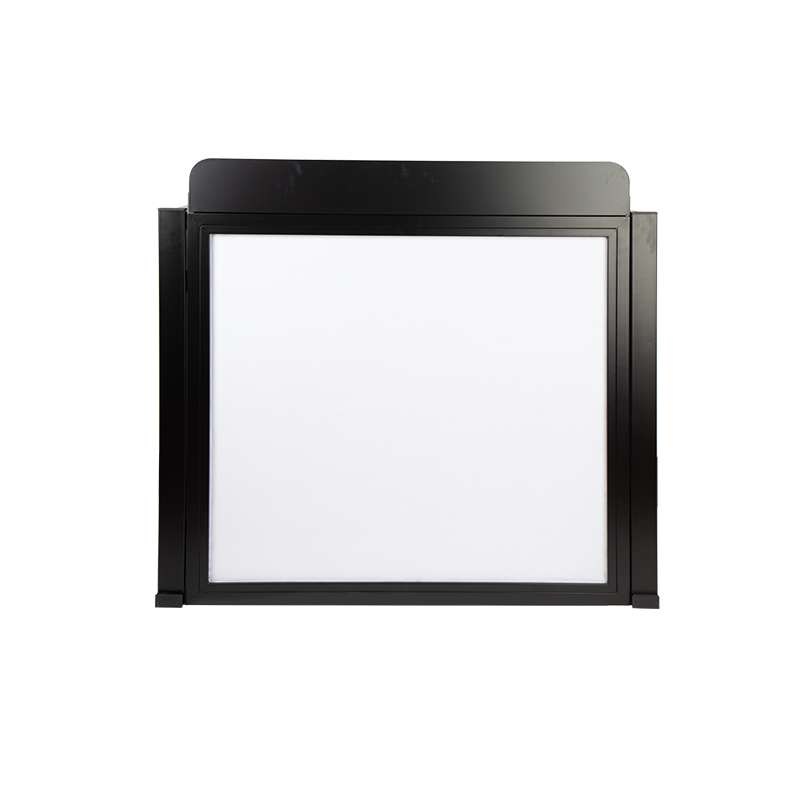
A facade is a frame with a scrim panel stretched across the front. Its value is visual and organisational:
- It hides the working area. Cable coils, spare adapters, laptop bags and the underside of the table all disappear behind the panel. What the audience sees is a clean rectangle instead of a nest of leads.
- It gives the lighting somewhere to land. An uplight aimed at a white scrim produces a soft, even wash. Aim the same fixture at a black scrim and you get a graphic, high-contrast look. Either way the fixture is hidden.
- It defines the stage footprint. A facade marks the front edge of the performance area, which matters in venues where the dance floor creeps forward as the night goes on.
What a facade does not do is hold anything up. It is a screen, not a work surface, which is why a facade on its own leaves a gap right where the equipment needs to go.
What a DJ Table Is For
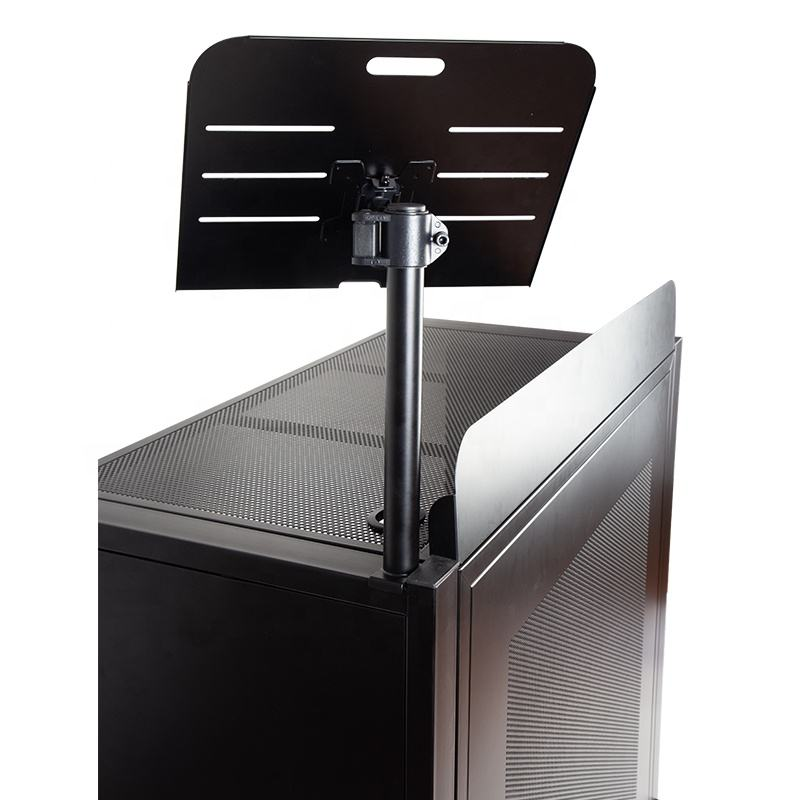
A table is the working surface. In a professional rig it carries three responsibilities:
- Height. Mixer, controller and laptop need to sit at a height the performer can operate without stooping. A fixed coffee-table height does not work for a two-hour set.
- Load spread. A sturdy top distributes the weight of the gear across the frame rather than concentrating it on one point, which is what keeps a folding structure feeling solid rather than springy.
- Cable management. The better tables give cables a route in and out — a cut-out, a gap behind the back rail, or a shelf underneath — so leads are not draped across the top where hands and drinks live.
Some tables also carry a raised rear rail or a second tier for a monitor or a small light. That tier is worth having when the performer works standing, because it lifts a screen to eye level.
Where the Two Overlap
Several products in this category are sold as a facade table: a folding steel table with a scrim panel built into the front. That combination is the practical answer for most mobile setups, because it removes the alignment problem. When the facade is a separate panel, the table has to be positioned behind it precisely enough that the panel does not lean on the legs — and in a dark room at load-in, that is one more thing to get right.
An integrated unit also travels as one item instead of two, which matters when the vehicle is already full.
Six Questions That Settle It
1. How does it travel?
If the rig moves weekly, folding behaviour matters more than anything else on this list. Look at how the frame folds and whether the folded shape is flat enough to slide behind a seat. A flat-fold unit that stacks against other cases will save more effort over a season than any other single feature.
2. Which scrim colour?
White scrim is the flexible choice: it accepts colour from an uplight and reads as a bright surface when lit. Black scrim disappears into a dark stage and produces a graphic silhouette when lit from the front. If the venue lighting is unpredictable, white is the safer default; if the look is deliberately dark, black avoids a grey panel glowing at the front of the stage.
3. What working height do you need?
Height should follow posture, not style. Standing performers generally want a taller surface than seated ones, and a table with an adjustable or multi-position frame covers both. For a fixed-height table, measure from the floor to the natural resting position of the forearms and work back from there.
4. Where do cables enter and leave?
Count the runs in advance: mains, audio out to the speakers, lighting control, and anything going to a monitor. A table with a rear gap or a cut-out lets those runs drop straight down behind the panel. A solid top forces them over the edge, where they will eventually be caught by a hand or a foot.
5. How long does setup take?
Setup time is a design outcome, not a matter of practice. Frames that open in one motion and lock with a single trigger are faster than frames that need two people and a pin at each corner. If the same rig is used in a different room every night, put setup time near the top of the list.
6. What sits on top?
Mixer, controller, laptop, and possibly a second screen. Write the list down and check that the top is deep enough for all of it with the performer’s hands still able to get to the back row. A top that is wide but shallow pushes the laptop forward until it overhangs the front edge.
Common Buying Mistakes
Buying a facade first and a table later. The facade is the more visible product, so it often gets ordered first. The result is a setup that looks finished and does not function.
Assuming all folding tables fold the same way. Two tables with the same footprint can differ completely in how they behave at load-in. Check the folding action specifically, not just the folded dimensions.
Ignoring the rear rail. The rear rail is where a monitor, a small light or a device holder goes. On a table without one, that equipment has to go on the main surface and compete with the mixer for space.
Forgetting the panel in the transport plan. A stiff scrim panel needs to travel flat and protected. If it is folded into a bag with hardware, it will crease, and a creased panel is visible from the audience all night.
How LESOUND Builds Both
Ningbo Lesound Electronics has been manufacturing professional audio and music accessories since 2009. Our DJ tables and facade panels are built under the Yinyu brand, the same brand that covers the microphone stands, speaker stands, keyboard stands and audio cable lines that make up the bulk of our production. Folding steel DJ tables, facade panels with white or black scrim, lighting stands for DJ use, and the microphone, speaker and snake cables that connect the whole rig are all made in the same facility.
Because the Yinyu DJ range shares tooling and materials with the stand and cable lines, a mixed order of tables, facades, stands and cables can be assembled from one source rather than four. For brand owners, that also means one artwork sign-off, one packing specification and one shipping schedule.
We work with both OEM programmes and small-batch wholesale orders — under the Yinyu brand or your own label — which suits dealers and rental companies who need to restock a specific item without committing to a container of one product.
FAQ
Is a DJ facade the same as a DJ booth?
In everyday use the two terms overlap. Strictly, a booth is the whole performance position — table, facade, lighting and the space behind it. A facade is the front panel of that position. When a supplier lists a “portable DJ booth”, it is usually a facade table combination rather than a full enclosure.
Can a facade be used without a table?
It can stand on the floor, but then nothing has changed except the view: there is still no working surface. A facade without a table only makes sense when the venue already provides a fixed counter or stage riser to work from.
Do I need a facade if the venue already has a stage?
Often yes, for a different reason than looks. A stage edge does not hide cable runs. If the audience can see under the working surface, a facade is doing the same job it does on a floor-level setup.
Next Step
If you are specifying a DJ position for a rental fleet, a venue install or your own brand’s range, send us the setup you have in mind — standing or seated, how the rig travels, and which scrim colour you are working with. We can tell you which combination fits and what it would look like packed for transport.
Post time: Sep-15-2026