


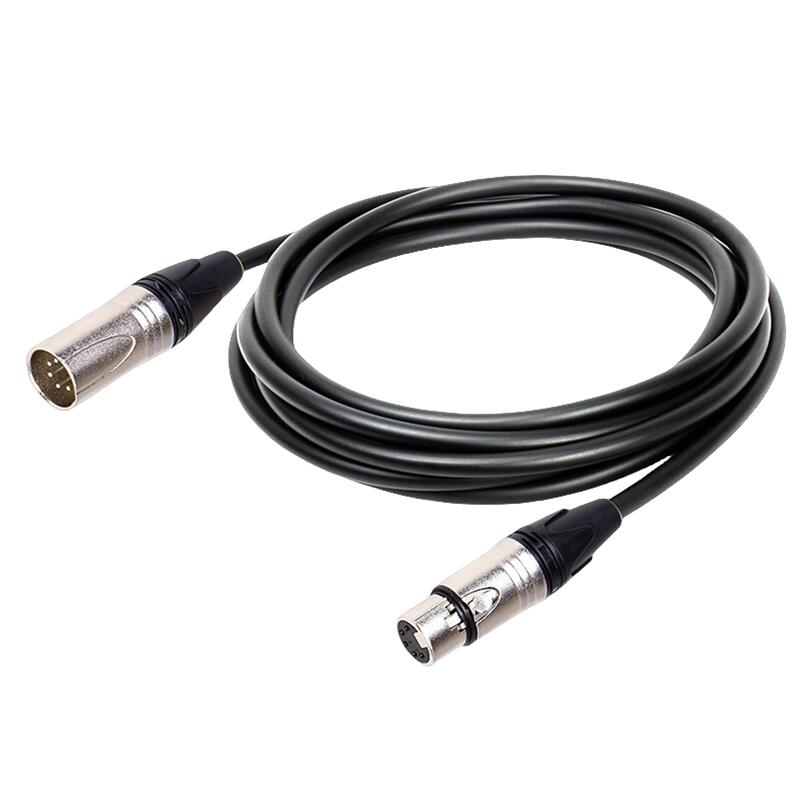
The name of this product causes more confusion than the product itself. A pin dmx cable male is a data lead, and it’s called male because of the connector on one end rather than because of what travels through it. Buyers who treat it as an audio cable order something that works on the bench and misbehaves on a long chain.

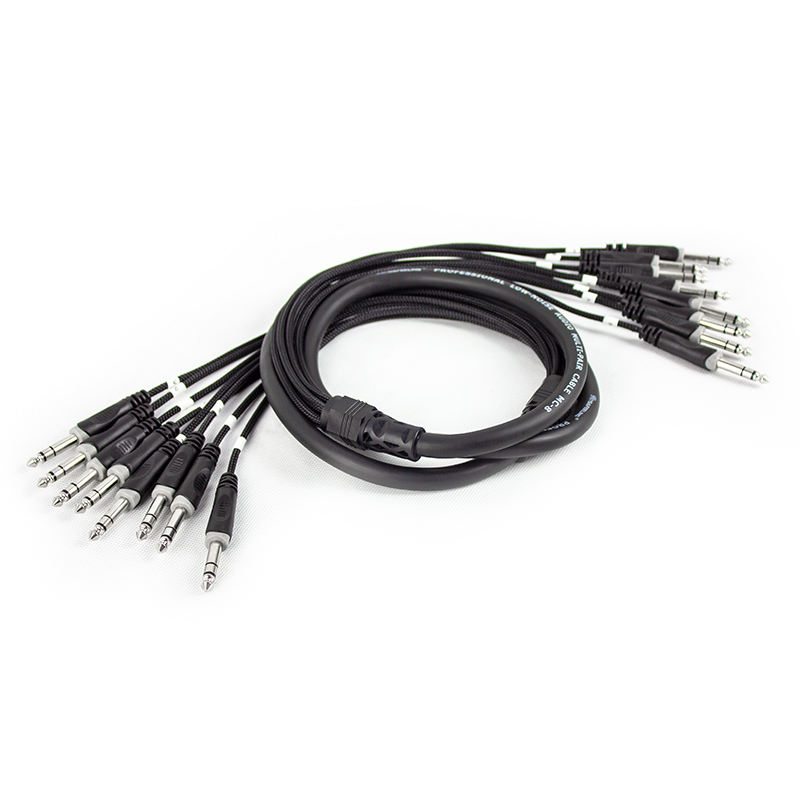
The difference is the cable rather than the shell. Data has its own requirements, and nearly all of them are about how the run behaves once it gets long.
DMX is data, and the cable has to admit it
Lighting control sends a stream of digital information down the line, and a cable built for audio doesn’t match it electrically. The screen, the impedance and the twist all matter more than they do on a mic line. Ask the factory what the cable is designed to carry, and expect them to say data rather than audio.
Male, female, and which way the run goes
Every lead has one male and one female end, and the direction of the run decides which goes where. Get it wrong across a fleet and every cable is backwards at once. Ask whether the market follows the audio convention or the lighting one, because the two don’t always agree.
Three pin or five pin bodies on a data cable
Data travels on one pair, so a three pin body is enough. Five pin bodies exist so a venue can standardise, and they’re the safer choice for a market that runs audio and lighting through the same stock. Ask which the customer’s fixtures use, and ask whether the factory builds both from the same inner assembly.
Characteristic impedance, and the number that matters
Data cable has a characteristic impedance, and the figure has to match what the fixtures expect. A cable built for audio doesn’t have it, which is why a microphone lead sometimes controls a light across a short bench run and drops the chain at twenty metres. Ask for the figure and ask how they hold it.
Termination, and the plug nobody fits
A long data chain needs a terminator at the far end, and it’s the part that gets left in a drawer. Ask whether the factory supplies one and whether it can be ordered alongside the leads. A customer chasing a fault that a small plug would fix is a customer who blames the cable.
Run length and what a long chain does
Ask the factory what run length they’d stand behind, and ask what happens past it. A chain that works at ten metres per link can fail at thirty even with good cable, and the failure looks like flickering rather than silence. Knowing where the limit is lets you advise a customer instead of replacing a lead twice.
What to check on a sample before the container
- Ask for the impedance figure in writing, not as a brochure line.
- Ask for a sample at the length the market actually uses.
- Check the male and female ends click together and release cleanly.
- Ask whether a terminator is supplied and whether it matches the fixtures.
- Ask who builds the inner assembly and whether it changes between runs.
Spares a lighting crew actually uses
Crews lose terminators, boots and the small collars that hold the shell together. Ask whether those can be bought in a bag rather than one at a time. A spare that has to be ordered singly is a spare that gets improvised on site, and improvised terminations are how a data fault starts.
Coiling a data cable without a kink
Data cable dislikes tight coils more than audio does, because a sharp bend changes the geometry of the pair. Ask how the factory recommends coiling it and whether the bag or drum supports that shape. A lead that arrives with a hard kink near the plug is a lead that’ll be blamed for a fault it didn’t cause.
What ships with a dmx lead
A lighting order rarely stops at one lead. The same buyer usually takes a Yinyu braided trs to ts cable for the audio side and a OEM low noise microphone cable for the stage run, and often a OEM low noise instruments cable for the speaker cabinets in the same rig.
A venue that runs both audio and lighting will often add Audfine headphones on the same shipment, because the same person services both systems.

Answers to settle before the drum is booked
Is this cable built for data rather than audio?
Ask outright. The answer decides whether the run holds at length, and it’s the first thing to confirm on a new supplier.
Three pin or five pin, and can we’ve both?
Ask whether both come off the same inner assembly, because that decides whether mixing them in one order is safe.
Is a terminator included?
Ask before the order. A chain without a terminator is a chain that flickers, and the customer will blame the leads.
What run length will you stand behind?
Ask for a figure and treat it as the honest limit. It tells you more about the cable than the impedance figure alone.
The male end, and the socket it has to match
A male connector has to mate with a female socket on a fixture, a splitter or a wall panel, and the two come off different tools even in the same factory. Ask whether the supplier makes both ends, because a factory that only builds one can’t tell you whether the pair actually locks.
Where dmx leads end up
They turn up on stages, in clubs, in churches and on touring rigs, and each one stresses the lead differently. A club runs a short chain and never touches it. A tour coils the same leads every night and replaces them every season. Ask which of those you’re supplying, because it decides how much the connector is worth.
Splitters, and the one that needs power
A chain that fans out needs a splitter, and some splitters are optical rather than passive. Ask the customer which kind they use, because it changes how many leads they need and where the termination goes. A passive splitter and an active one look identical on a shelf and behave nothing alike.
The screen, and the pin it lands on
Ask how the screen is connected and to which pin. On a data lead the screen has a job and a place, and a lead wired for audio puts it somewhere else. A cable that works on a bench and fails on a chain is very often a lead where the screen went to the wrong contact.
Connector bodies that survive a road case
A moulded body is light and cheap and it cracks at the collar when a case lid closes on it. A metal body survives that and it weighs more and it costs more. Ask which the market already buys, then ask the factory whether they build both from the same inner assembly.
Adapters, and mixing pin counts on one chain
Venues end up with a mix of three pin and five pin fixtures, and the answer is an adapter rather than a second set of leads. Ask whether the factory supplies one, and ask where in the chain it should sit. An adapter at the wrong end of a long chain can undo the screening the cable was bought for.
What a long chain tells you about a cheap lead
A cheap data lead works perfectly on a short run and spoils a long one, and the symptom is flicker rather than silence. That’s worth telling a customer before they buy, because a lead that gets blamed for a fixture fault costs more goodwill than the lead costs to make.
Flicker, and the three things that cause it
Flicker is the classic data fault and it has three usual causes. A lead that’s too long for the chain, a terminator that’s missing, and a screen tied at both ends. Ask the factory which of the three they see most, and you’ll learn more about their line than any specification sheet will tell you.
Cable diameter, and the plug that won’t fit
A data lead can use a heavier screen than an audio lead, and a heavier screen makes a thicker cable. A thick cable needs a bigger boot, and a bigger boot won’t pass a tight grommet or sit beside its neighbours on a fixture’s socket panel. Ask for the outer diameter as a number and check it against the panel the customer uses, because this is the detail that only shows up on site.
It’s worth asking whether the factory offers a slimmer build at the same impedance. Sometimes the answer is yes and the customer gets both the screening and the fit, and sometimes the answer is that you choose one. Either way, knowing early beats finding out at the first gig.
A note on the word male
Buyers lose time on the naming, so put the direction in writing on the order. Say which connector goes to the fixture and which goes to the controller, and leave the words male and female out of it. A direction is unambiguous in a way that a gender word isn’t, and it’s the difference between one shipment and two.
Send the fixture count and the run length
Tell us how many fixtures are on the chain, how far apart the ends sit, and whether the venue mixes audio and lighting on one stock. Those three lines settle the pin count, the impedance and the terminator.
Ask for a sample at the longest link in the chain, not the shortest one the factory finds easy.
Leads in this range carry the Yinyu badge and are made by the team at Ningbo Lesound Electronics in Zhejiang, where the cable and the connectors come off the same floor.
Post time: Oct-13-2026