


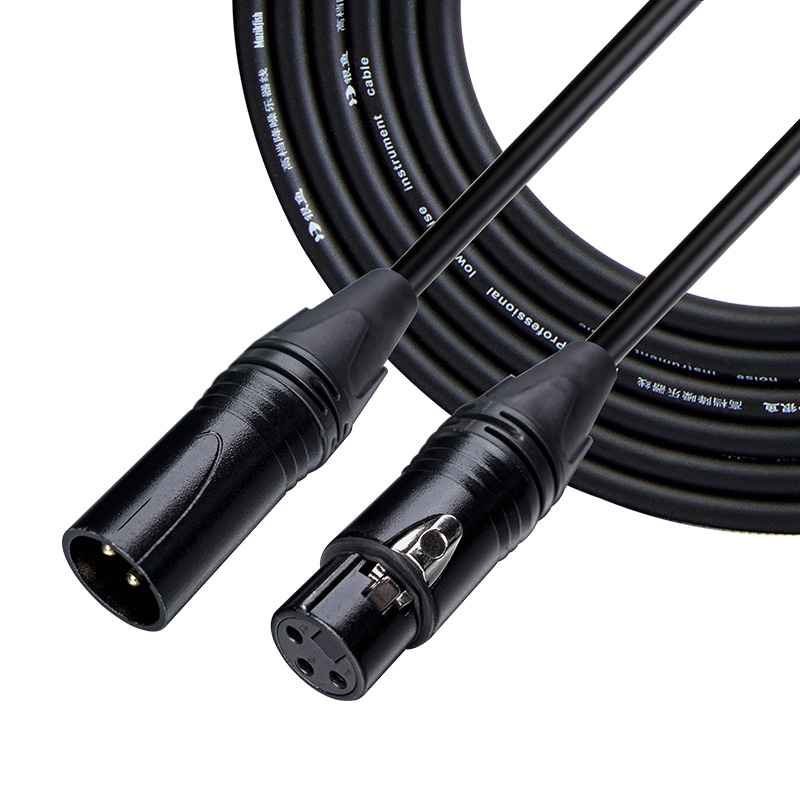
Buyers approach a balanced microphone cable xlr male as a commodity and they’re mostly right, because a microphone cable is a solved product. What isn’t solved is the consistency of the copy, and the differences show up as noise on one lead out of a hundred.


So choosing a supplier here’s mostly about the screen, the joints, and whether the hundredth lead behaves like the first.
What balanced actually means on a lead
A balanced lead carries the signal twice, once inverted, and the receiving end subtracts one from the other. Anything that arrives on both conductors equally, like noise picked up along the run, cancels. That only works if both conductors stay identical, which is a question about the cable rather than the connector.
Ask whether the pair is twisted and whether both conductors are the same gauge. A lead built from two unequal conductors destroys the balance and the customer hears it as a lead that hums in one room and not another.
The screen, and where it’s tied
Ask how the screen is connected and at which end. A screen tied at both ends makes a loop with the mains earth and turns the cable into an antenna. A screen tied at one end is the quieter build in most rooms, and it’s the answer a supplier should give without hesitating.
The male end, and the socket it enters
A male connector goes into the female socket on the equipment. Ask whether the supplier makes both ends, because a factory that only builds one can’t confirm the pair actually locks. Ask for the latch to be tested rather than described.
Gauge, and the run it has to cover
Ask what the conductor gauge is and whether it holds across the length ladder. A thin conductor is fine at two metres and marginal at twenty, and the customer who buys the long one is the customer who complains. Ask for the figure at the top of the range rather than one number for the range.
Soldered or crimped at the connector
Ask how the contacts are terminated and whether the same method is used on every unit. A soldered joint is reliable when it’s done well and variable when it isn’t, and a crimped joint is consistent and needs the right tool. Ask which one the factory uses and how they check it.
What to test on a sample
- Run it at the longest length the market sells, not the shortest.
- Check the latch releases cleanly on a female socket.
- Flex both ends and listen for a crackle.
- Compare two leads from the same run against each other.
- Ask what the factory does about a lead that fails the noise test.
Where these leads end up
Studios, schools, hire kits and live stages all buy them, and each one stresses a different part. A school loses and breaks them, a hire kit replaces them in batches and a studio keeps one for years. Ask which one your customer serves before you settle the build.
Spares and the repair a school needs
Ask whether the connectors can be bought separately and whether the cable is sold by the metre. A market that repairs its own leads needs both, and a supplier who sells only finished cables will lose that customer to one who sells parts.
What ships with a microphone cable
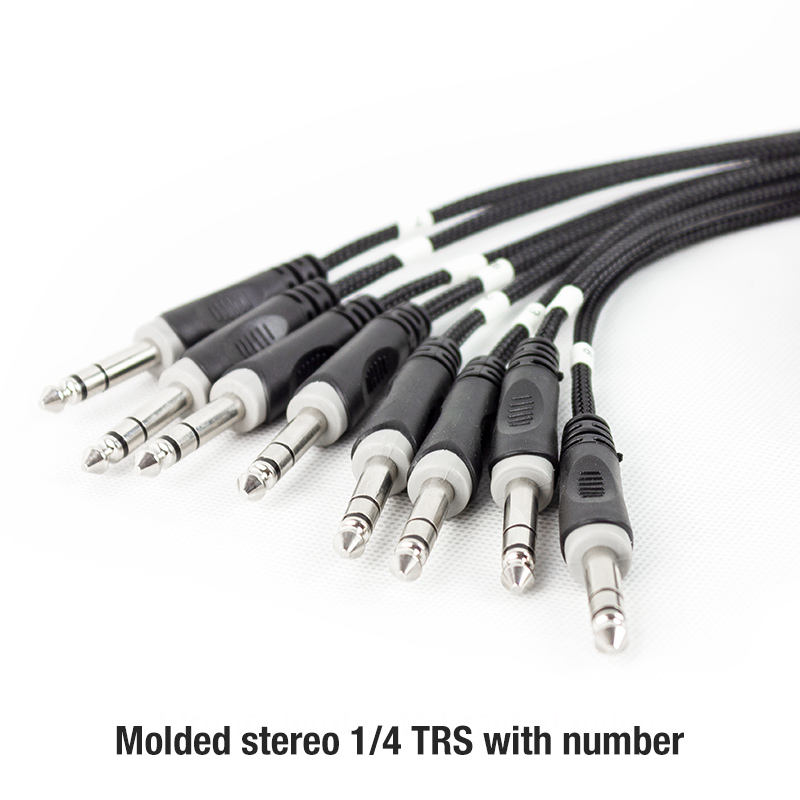
Anyone buying microphone leads is usually wiring a whole room. The same order often includes a Yinyu low noise xlr cable for the instrument lines, a OEM audio snake cable for the desk side, and a OEM dual audio cable for mixer where several lines travel together to the stage.
Audfine headphones travel with most of these orders, because the person wiring a room is the person listening in it.
Four answers worth having in writing
Which end is the screen tied to?
Ask for it in writing. A screen tied at both ends turns the lead into a hum complaint in the wrong room.
What’s the conductor gauge?
Ask for the figure and ask whether it holds at the longest length in your ladder.
How are the contacts terminated?
Ask whether they’re soldered or crimped and how the joint is checked before the lead leaves.
Can the connectors be bought separately?
Ask, because a repair market needs parts and a supplier who only sells finished leads can’t serve it.
Handling noise, and the test that finds it
Ask the factory what test finds a noisy lead and how often they run it. A continuity check passes a cable that hums, so a supplier relying on continuity alone is a supplier who ships noise and hears about it later.
How a lead is coiled for shipping
A lead that arrives kinked gets blamed for a fault it doesn’t have. Ask how the coil is formed, whether it’s tied with a reusable tie, and whether the bag has room for the coil at its natural diameter. A tight coil and a tight bag is the combination that produces a complaint.
The connector finish and the stage light
Ask whether the connector body is nickel, black chrome or something else, and ask how it wears. Black chrome looks better under a lighting rig and it shows scratches sooner, so a hire kit and a studio want different finishes from the same cable.
What a hire kit does to a lead
A rental lead is plugged in, coiled, thrown in a box and used again a week later. Ask what the factory would change for that market, because a studio lead and a rental lead can come off the same line with a different connector and a different tie.
Ask how many the factory expects a rental to keep in circulation. A supplier who’s supplied hire before will have a view, and it’s usually more than a studio buyer expects.
Two gauges, one ladder
Ask whether the same gauge runs across the whole length ladder or whether it steps up at the long end. A ladder built on one gauge is simpler to sell and worse at the top, and a ladder that steps up is more honest and needs two stock lines.
Where the screen stops and the connector begins
Ask how far back the screen is stripped and how the drain is dressed. A screen cut back too far leaves the pair exposed next to the joint, and that’s where a lead becomes noisy after a year of being coiled. Ask for the strip length to be part of the drawing.
The bag of ten
Schools and small studios buy leads in tens and lose them in ones. Ask whether the factory supplies a bag of ten with a single part number, because a reorder that needs a phone call is a reorder that happens twice and then stops.
What a tester finds that a listen doesn’t
Ask whether the factory has a tester and what it checks. A continuity check passes a lead that hums, and an impedance check across the pair finds the lead where one conductor has broken down. The difference between the two is the difference between a complaint about a dead lead and a complaint about a noisy one.
Ask how often the tester is run and whether a record is kept, because a supplier who tests every unit and a supplier who tests the first one both describe themselves as testing.
Colour coding a stage full of leads
Ask whether the connectors come in colours or whether a coloured sleeve can be added near each end. A stage with forty identical leads needs a way to tell them apart, and a colour at the plug saves a crew ten minutes on every changeover.
What a reorder has to match
Ask how the gauge, the screen and the connector are held between runs. A second batch of leads that’s slightly different from the first turns into a support conversation that sounds like a quality problem and is really a sourcing one.
What a customer means by a quiet lead
A customer who reports a quiet lead usually means one of three things: a broken conductor, a screen that’s come loose, or a connector that’s dirty. Ask which one before replacing anything, because two of the three are a repair rather than a scrap.
The tie, and why it matters
Ask what the lead is tied with. A reusable tie keeps the coil tidy on a stage and a plastic one gets cut off and thrown away, after which the lead lives loose in a box and the connectors take the damage.
How a lead is labelled at each end
Ask whether the leads carry any marking and where. A sleeve near each connector is enough for a crew to tell a long lead from a short one in a box, and it’s the cheapest thing a buyer can ask to be added.
What the carton weighs for freight
Ask for the packed weight and the carton count before comparing landed figures. Leads are heavy for their size and the packing is a real part of the cost, which is why two suppliers at the same unit figure can land very differently.
Send the length and the room
Tell us the longest run the market sells, what sits at each end, and whether the leads travel with a lighting rig. Those three lines settle the gauge, the screen and the connector.
Ask for two samples from the same run, because one sample tells you what the factory can do and two tell you what they actually do.
This line carries the Yinyu name and comes out of Ningbo Lesound Electronics in Zhejiang, where the cable, the screen and the connectors are handled in one workshop.
Post time: Oct-13-2026