


Lighting does more for a DJ set than most of the gear on stage. Moving heads and PAR cans set the mood, but the structure that holds them — the lighting stand — decides whether the rig goes up in ten minutes, whether it stays steady through a four-hour show, and whether the front of the booth reads as a designed system or a collection of tripods. For mobile DJs, rental houses and venue owners, the stand decision usually comes down to three things: the T-bar you hang the fixtures on, whether one stand is enough or a truss span is needed, and how high the rig has to go. This guide works through those three choices using the lighting stand range we build at LESOUND under the Yinyu name, so the trade-offs are described from the manufacturing side rather than a catalogue.
Why the Stand Decision Matters More Than It Looks
A lighting stand is the least glamorous purchase in a DJ system and one of the most consequential. It carries fixtures worth far more than itself, it stands directly behind or beside the performer, and it is handled more often than any other piece of support gear — loaded, unfolded, raised, lowered and re-packed at every gig. A stand that is awkward to raise, or that needs two people and a set of tools, quietly adds time to every setup. A stand with a vague locking feel adds something worse: doubt.
The good news is that the decision space is small. Once you have matched the T-bar type to your fixtures, chosen between a single stand and a truss span, and set a working height, everything else is detail. Get those three right and the same stands will serve a bedroom practice rig, a wedding schedule and a small-venue residency alike. Browse the full lighting stand range to see the models referenced below.
T-Bar Choices: Round Tube, Square Tube and Light Locations
The T-bar is the horizontal bar at the top of the stand where fixtures clamp on, and it comes in two structural families.
Round-tube T-bars. A portable lighting stand usually carries a round steel T-bar, commonly around 35 mm in diameter, with pre-drilled mounting points and fixing bolts for four fixtures. This is the lightest option, it folds with the stand, and it suits the classic mobile-DJ loadout: four PAR cans or effect lights, two per side, angled across the booth. On our portable models the T-bar detaches from the pole, so the whole kit packs into a carry bag that fits a hatchback next to the DJ table.
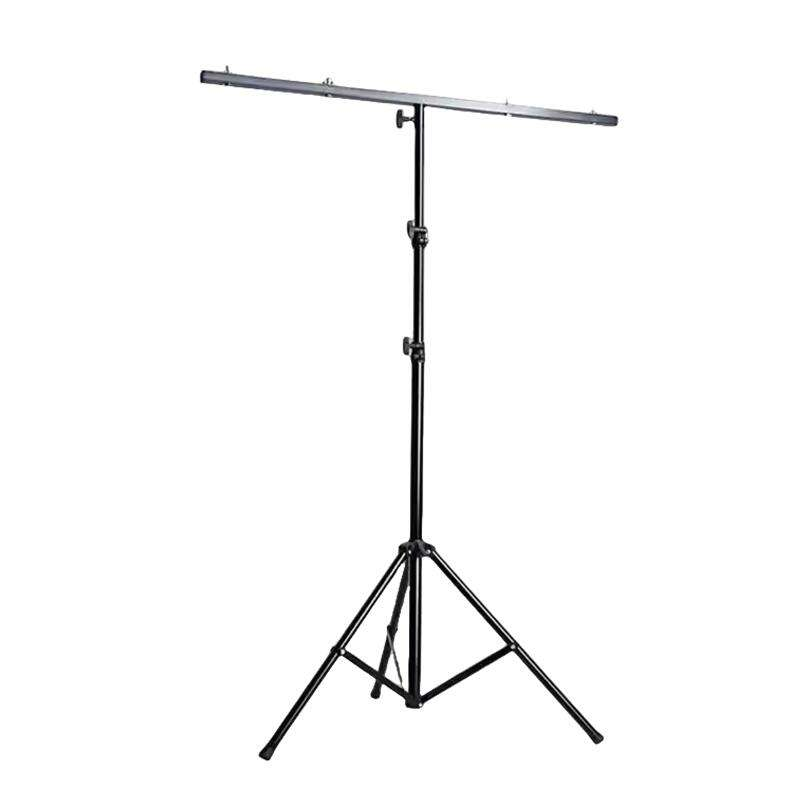
Square T-bars. Where the rig is heavier or more permanent, a square-section bar changes the behaviour of the whole stand. A 30 × 30 mm square T-bar resists twisting, so fixtures hold their aiming angle instead of drifting down through a long set. Our heavy-duty full-steel models use square T-bars in 1.2 m and 1.5 m lengths with four or six light locations, and a foldable dual-tier version doubles the mounting points to eight for DJs who run wash and effect fixtures together. The trade-off is weight and bulk, which is why square-bar stands tend to live in house rigs and rental stock rather than a one-car mobile kit.
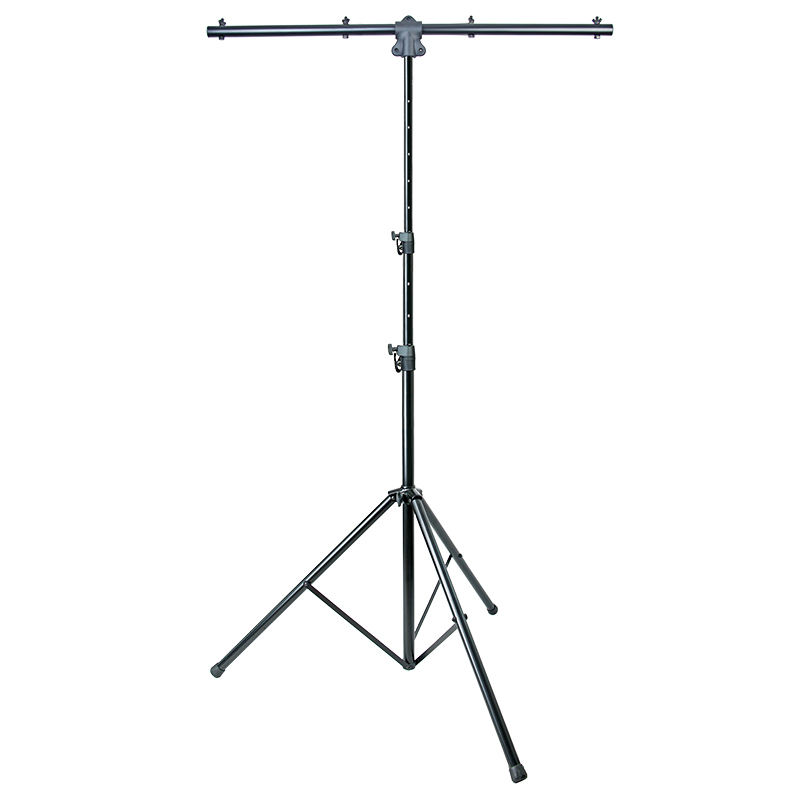
One more detail worth checking: the clutch. The fitting that locks the inner pole at a given height is the part that wears first on a cheap stand. A metal clutch with a broad knob keeps its grip season after season; a thin plastic collar does not, and it announces itself the night the bar slides down a few centimetres mid-show.
One Stand or a Truss Span?
A single T-bar stand lights from one point. Two stands with a truss between them light a stage evenly from both sides and give the front of the room a proper frame — which is why the truss span setup has become the default look for mobile shows.
The simplest way to get there without sourcing separate truss is a matched set. Our LS008 system, for example, pairs two folding tripods with a 3-metre all-metal triangle truss span and two 1.2 m foldable T-bars, standing 3.5 metres tall when assembled. Each side works as an independent lighting stand when the gig calls for it, and the two tripods plus span pack into carrying bags for transport. For a DJ running a DJ booth with facade panels, the truss sits cleanly above the booth line and keeps all fixtures inside one visual footprint.
The alternative is buying two single stands and a separate truss section, clamping them together with clamp fittings matched to the tube diameters in your rig — our clamp range covers the common 38, 50 and 54 mm pole sizes. That route offers more layout freedom but more parts to track. Rental operations usually standardise on the matched set for exactly that reason: fewer loose fittings means faster changeovers and fewer missing pieces at the end of the night.
How High, and How You Get There
Height requirements split into three practical bands.
Around 2.5 metres. Portable stands in this band suit effect lights and PAR cans above a booth, and they are the fastest to raise. This is the height most mobile DJs actually use, because fixtures sit close enough to wash the booth and the performer without spilling into the audience’s eyes.
Around 3 metres. The step up covers small stages and venue rigs where lights must clear the heads of a standing crowd. Our flat-tripod models in this band use long legs with a wide, low footprint, an auto-locking pin that clicks into position as the pole is raised, and a metal clutch for fine adjustment — the stand nearly sets its own height as you lift.
Around 3.5 metres. This is truss-span territory. At this height the fixture bar sits well above the booth and the rig reads as a small stage system rather than a DJ setup. Crank-up mechanisms appear in this band for good reason: winching the mast up by handle beats hand-lifting a loaded bar, and models with an internal air cushion soften both the stop at the top and the controlled descent, while a push-button release brings the pole down without a second person steadying it.
Whatever the band, treat the locking hardware as part of the height decision, not an afterthought. Pins that seat automatically, clutches that hold under a firm knob turn, and legs that lock open are what make height a spec you can use rather than a number on a page.
Totem Stands: The Low-Profile Alternative
Not every lighting position needs a tall mast. Totem stands put fixtures, speakers or monitors on a slim vertical column behind scrim fabric, which is why they have become a fixture of modern DJ booth layouts. A totem rises from the floor rather than over it, so it defines the edge of the performance space instead of crowding above it.
Our totem sets, built around the same adjustable stand platform as our speaker stands, adjust continuously from 100 cm to 175 cm — and a taller variant runs from 135 cm to 250 cm. Assembly is tool-free: knobs and a spring-loaded turn-and-lock mechanism handle the height change, frame support bars add stability at full extension, and integrated handles in the base and top plate make the column a one-person lift. Each set ships with black and white scrims so the column matches the booth dressing, plus travel bags for the pair. A 35 mm pole adapter on top accepts standard speakers, which is what makes one piece of hardware do two jobs across a show day.
Fitting the Stand Into the Rest of the Rig
Lighting stands rarely work alone, so plan them as part of the system. Keep fixture cabling in mind when you position tripods: runs that drop straight down the stand pole stay out of the walkway, and a stand placed on the cable side of the booth hides the loom instead of crossing it. Our overview of pro audio cables covers the power and signal separation habits worth copying from fixed installs.
Heights should also be coherently staggered — booth surface, totem tops, truss bar — so the rig looks designed from the door. Where the show includes announcements or a second performer, the same logic applies to the microphone stand: one consistent hardware family across the stage reads as professionalism long before anyone hears a note.
What to Confirm Before Ordering
Whether you buy branded or under your own label as OEM, four checks separate a stand that lasts from one that rotates through your stock:
Locking hardware. Ask what the clutch and pin are made of and how the pin engages. Metal on metal, with an auto-locking detent, is the configuration that survives rental duty.
T-bar attachment. A detachable, foldable T-bar with bolted fixture locations packs smaller and replaces easier than a welded top. Confirm the mounting bolts are captive so none vanish into a gear bag.
Transport. Carry bags, folding legs and integrated handles are not accessories; they are the difference between a two-minute pack-down and a careful balancing act across a car park.
Rated figures in writing. Any responsible manufacturer will state the rated capacity of a given stand model on request. Ask for it in writing for the specific model and match it to your heaviest fixture configuration before purchase — structure and locking design tell you how honestly that figure was earned.
Conclusion
T-bar type, span and height cover most of the lighting stand decision. Round-tube T-bars on portable tripods serve the one-car mobile rig; square T-bars and dual-tier bars hold aiming angle for heavier fixtures; a matched truss-span set such as the LS008 frames the booth and lights the stage evenly at 3.5 metres; and totem stands extend the booth line with a dressed, low-profile column. LESOUND builds the full Yinyu lighting stand and support-gear line in-house, which means T-bar configuration, height range and finish can be specified for your market rather than taken off a shelf — including OEM programmes under your own brand. Confirm the structure, get the rated figures in writing, and the stands will disappear into the show, which is exactly what good support gear should do.
Post time: Sep-28-2026