


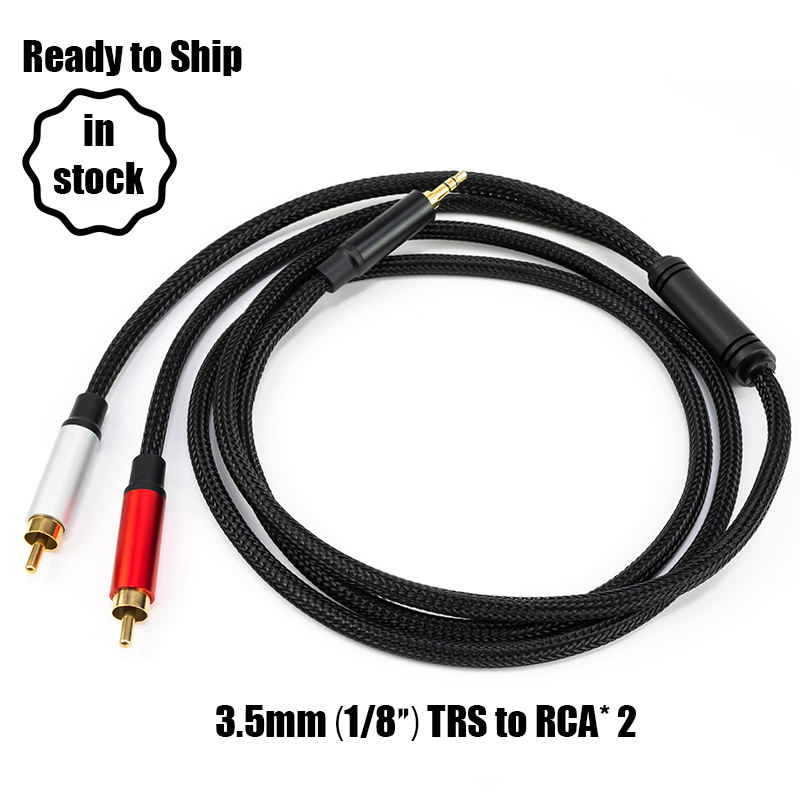
The awkward part of sourcing a TRS to RCA cable is that the jack end does two completely different jobs and looks identical either way. One build is a mono link between balanced and unbalanced gear. The other is a stereo breakout that feeds two RCA plugs from one jack. Buyers order the wrong one often enough that it’s worth putting the question first.
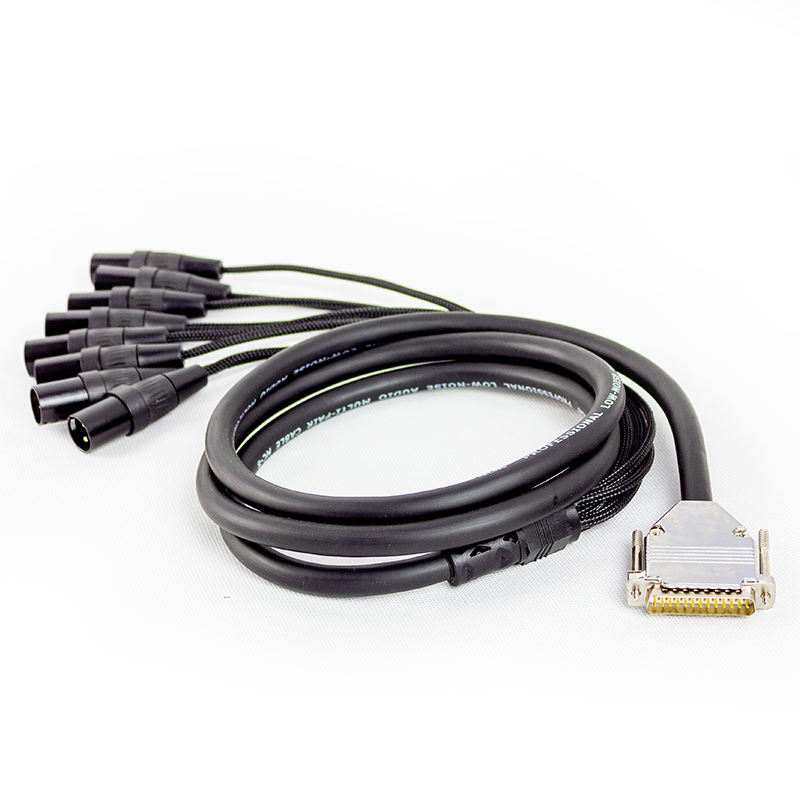
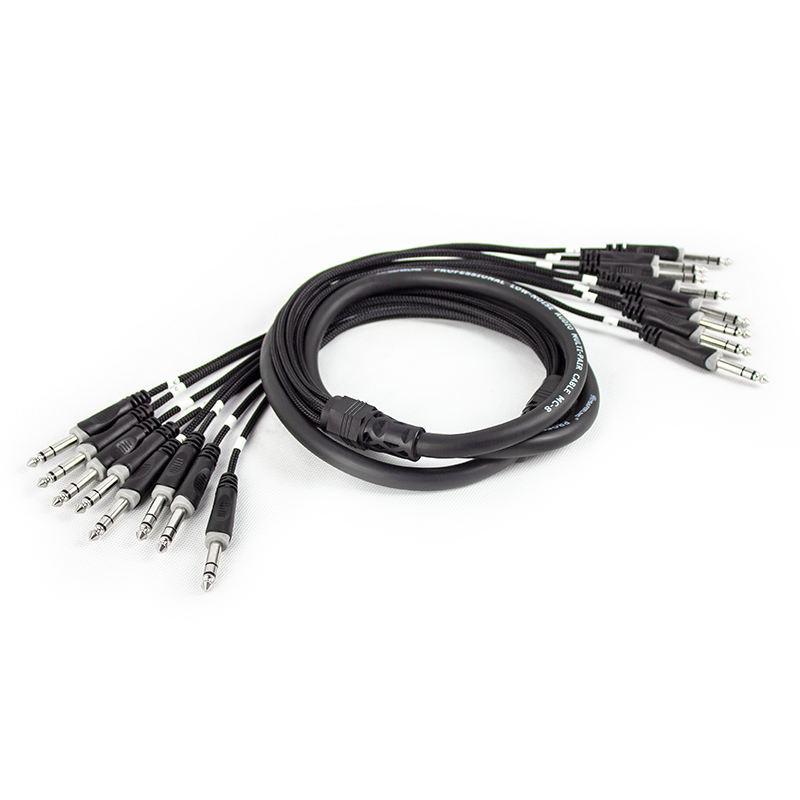
Nothing about the outside of the cable tells you which one you’re holding. The difference is inside the plug, in how the three contacts are wired, and that’s exactly why the spec has to be agreed before the sample is built.
A jack isn’t a format
People treat the quarter inch or the small jack as if it described the signal. It doesn’t. The connector describes how many contacts the plug has, not what travels on them. A three contact plug can carry a balanced mono signal, an unbalanced stereo pair, or an insert send and return, and the cable only makes sense once you say which.
Ask the factory which of those three the sample is built as, and ask them to say it on the drawing. A factory that answers with the plug size rather than the signal hasn’t understood the question.
The two jobs this cable can do
The first job is a mono link. A balanced output on a small jack feeds an unbalanced RCA input, and the cable folds the pair down the way any balanced to unbalanced lead does. The second job is a stereo breakout, where one jack carries a left and a right channel and the cable splits them into two RCA plugs.
Both are sold as a TRS to RCA cable, and both are built on the same plug. Order the wrong one and the customer gets one channel, or gets both channels summed into mono, and neither fault is obvious until somebody listens.
Which one does your market need
Ask what sits at each end. If the source is a single mono output and the destination is a single RCA input, it’s the mono link. If the source is a stereo output on one jack and the destination is a pair of RCA inputs, it’s the breakout. Most home studio markets want the breakout, and most installation markets want the mono link.
This is the single question worth settling before anything else, because it changes the wire count, the number of plugs on the far end, and the price of the sample you’re about to order.
Sleeve, ring and tip, and the order they go in
The three contacts run from the sleeve at the base to the tip at the end. Which one carries the signal, which carries the return, and which is left unconnected is the whole design, and it changes with the job. A breakout puts left on one contact and right on another with the sleeve as the shared return. A mono link puts the signal on the tip and the return on the sleeve and the ring.
Ask for the wiring written down, contact by contact, and compare it to the device the customer owns. A cable that’s wired correctly for one interface can be wrong for a near identical model from the same brand.
Small plugs and the stress they take
The small jack plugs see more abuse than the quarter inch versions, because they sit on desks and get pulled sideways by whoever walks past. Ask how the boot grips the jacket, how much of the plug body is moulded rather than assembled, and whether the cable exits straight or at an angle. An angled exit survives a desk far better than a straight one on a heavy cable.
For a market selling into schools and home studios, a lighter cable in an angled boot outlasts a heavier one in a straight plug, and it costs less to make. That’s a rare case where the cheaper build is genuinely better.
Cable choice for a run that sits near power
Most of these leads live behind a desk, which is where the mains adaptors live too. Ask what shield the cable carries, whether the pair is twisted inside the jacket, and whether the factory can supply a heavier gauge at longer lengths. A thin cable beside a switched mode supply will pick up noise that a heavier twisted pair won’t.
Proving a sample before the run is booked
- Ask which of the two jobs the sample is built as, and get the wiring in writing.
- Ask for the same build at two lengths from a single run.
- Ask what the conductor gauge is and whether it changes with length.
- Ask how the boot is formed and how it grips the jacket.
- Ask whether the plating on the plug is nickel or gold, and why they chose it.
Spares and the parts that go missing
On a moulded plug there are no spares, and that’s the trade off worth naming out loud. A moulded plug is cheaper and tougher in the short term. An assembled plug costs more and can be repaired. Ask which one the factory builds by default, and which one the market is actually prepared to pay for.
Packing, and the coil that comes back
Short leads are usually bagged, and a bag that’s too small forces a coil that kinks the jacket at the plug. Ask for the bag size relative to the coil, and ask whether the two RCA plugs are separated inside so their shells don’t mark each other on the way over.
What ships with a TRS to RCA cable
A shop fitting out a small studio usually adds cable across the whole desk. The Yinyu cable for guitar amp mixer often goes out with it when the runs are long, the OEM hifi speaker cable covers the keyboard to mixer side, and a OEM ac063mb braided ts instrument cable is a common add on for the controller bag.
The same buyer will often take Audfine monitor headphones at the same time, because the desk that needs cables is the desk that needs a pair of headphones.

The answers worth having in writing
Is this one channel or two?
Settle it first. It decides the wire count and the number of plugs on the far end, and it’s the mistake that gets a whole run returned.
Is the plug moulded or assembled?
Moulded survives harder use and can’t be repaired. Assembled costs more and can be opened. Ask which one your market expects.
Does the gauge change with length?
It should, or the long versions will behave worse than the short ones. Ask for the figure at each length rather than one number for the range.
Which contact carries the signal?
Ask for the wiring contact by contact, then check it against the device it has to feed. The drawing is the only place this can be caught early.
Length, and where the run ends up
A cable that lives on a desk is a different product from one that crosses a room. Ask for the run length in metres rather than a range, and ask whether the factory holds the same electrical figures at the top of that length. A lead specified at one metre and shipped at five isn’t the same cable with more copper.
You’ll also want to know what they’d build for the longest length your market sells. It’s often a heavier gauge rather than the same lead cut longer, and that’s a question worth asking before the first order rather than after the first complaint.
Insert leads, and the third job
There’s a third job this plug does, and it’s the one that causes the most returns. An insert lead takes one socket on a mixer and splits it into a send and a return on two plugs, so one jack carries a signal out and a signal back. It’s built on the same plug as the other two and it’s wired differently again.
Ask your customer which mixer they’re feeding. If it has an insert socket, they need the insert version, and you won’t find that out from a photograph.
Gold or nickel on a small plug
Small plugs get plugged and unplugged far more often than the quarter inch ones, because they sit on desks rather than in racks. That’s where gold earns its cost, since it resists the film that builds up on nickel and it keeps a clean contact through a lot of cycles.
It doesn’t suit every market. If the leads are fitted once and left alone, nickel is fine and cheaper, and you’re better off spending the difference on a better cable.
Where these leads sit in a signal chain
Most of them sit at the end of the chain, between a device that’s balanced and a device that isn’t. A home interface feeding powered monitors, a keyboard feeding a mixer, a controller feeding an amplifier. The lead isn’t the interesting part of any of those, and that’s exactly why it has to be right.
Where the parts of a lead come from
Ask the factory where the plug, the cable and the moulding come from, because a supplier assembling from three sources can’t hold a build the way one that makes two of the three can. For a market that reorders the same lead, that difference is the whole relationship.
Send the device and the distance
Tell us what sits at each end and how far apart they’re. Those two facts decide the job, the gauge and the plug, and they’re cheaper to give than a returned container.
Ask for a sample built as your market’s version, not as the factory’s default, because their default is the one their bigger customers order.
These leads are badged Yinyu and made by Ningbo Lesound Electronics in Zhejiang, where the plugs, the cable and the moulding run on one floor.
Post time: Oct-13-2026