


Mobile DJs live and die by their setup time. A club resident can leave gear in place between nights, but anyone working weddings, corporate events, or one-off parties carries everything in and out for every single show. When you are the third act on a tight changeover, a booth that folds and unfolds predictably is worth more than any single cosmetic feature. The good news: a well-designed foldable workflow gets a complete DJ booth standing and cabled in under ten minutes, with no tools and no second pair of hands.
This guide walks through a repeatable setup routine built around foldable hardware. It assumes a standard mobile rig — a facade, a folding DJ table, a controller or laptop, and the cables that tie it together. If you are still deciding what belongs in the booth itself, start with our overview of the complete DJ booth setup before you build the routine below.
Why a Foldable Workflow Matters for Mobile DJs
Speed is only one benefit. A consistent fold-and-deploy routine also reduces damage, because every piece has a known place and a known motion. Gear that travels in cases and opens the same way each time is gear that survives a long season of weekend gigs. It also lowers the mental load on show day: you are not solving a puzzle at 9 p.m. with a crowd waiting.
The core idea is simple. Choose components that collapse flat or fold, learn one sequence, and practice it until it is muscle memory. The Yinyu foldable DJ range from LESOUND is built around exactly this principle — facades and tables that pack down small and open without hardware, so the booth comes together the same way in a barn, a ballroom, or a bar.
What a Complete DJ Booth Actually Includes
Before the timer starts, be clear about the parts. A working booth is more than a table with a laptop on it.
The Facade
The facade is the front panel system that hides cables, cases, and the DJ’s legs from the audience. A foldable facade uses hinged panels that store flat and stand on their own once opened. Many mobile rigs pair the facade with a lighting stand or T-bar mounted above, so the same footprint carries both the visual front and the overhead light.

The DJ Table
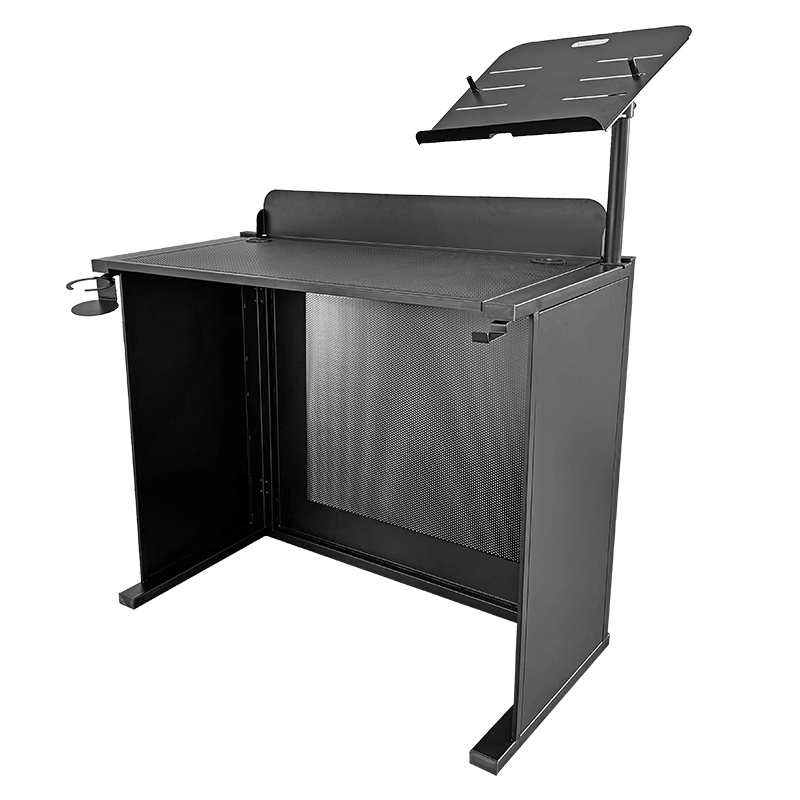
The table holds the controller, laptop, audio interface, and any outboard gear. A purpose-built folding DJ table differs from a generic banquet table in two ways: it sits at a comfortable performance height, and it usually includes a front panel or mesh that continues the facade line so the setup reads as one unit. You can compare dedicated designs in our DJ table guide.
Cable Management
Cables are where most setups lose time. A booth without a plan ends with the laptop power brick dangling and the XLR runs snaking across the floor. Build the cable path into the routine, not after it. For larger rigs, a single audio snake replaces a handful of loose mic and signal cables with one tidy loom from stage box to mixer.
The 10-Minute Setup, Step by Step
This sequence assumes the booth travels in two trips: one case for the facade and table, one bag for cables and electronics. Adjust the order to your own gear, but keep the logic — structure first, electronics last.
Step 1 — Unpack and Position (0–2 min)
Set the facade and table cases where the booth will live, leaving roughly a metre of clear floor in front for the scrim to sit proud of the table. Decide your facing direction now; moving a half-built booth wastes more time than it saves. Drop the cable bag beside the table, not behind it.
Step 2 — Open the Foldable Facade (2–4 min)
Unclip or unzip the facade case and let the hinged panels fall into their fan shape. Most foldable facades stand on their own once the last hinge locks, so you can step away without holding anything. If your model carries a scrim, fit it now while the frame is empty and simple to get to. A flat-packed facade that opens in one motion is the single biggest time saver in the whole routine.
Step 3 — Deploy the Folding DJ Table (4–6 min)
Open the table behind the facade and lock its legs. Check that the table height lines up so the front panel of the table meets the bottom edge of the facade with no gap. A purpose-built folding DJ table does this by design; a mismatched table leaves a visible seam you will spend the night hiding. Place the controller and laptop on top, but do not plug anything in yet.
Step 4 — Route Cables Before You Play (6–8 min)
Now, not after sound check, is the moment for cables. Run power first, keeping the brick off the floor and the excess coiled at the back of the table. Then connect audio: laptop or controller to interface, interface to mixer, mixer to the system. If you are using a snake, lay it from the stage box at the table to the floor box in one straight path. Keep signal and power on opposite sides where the booth allows. A tidy cable plan is what separates a two-minute teardown from a ten-minute untangle.
Step 5 — Final Visual Check (8–10 min)
Step back and look at the booth from the audience side. The facade should meet the table with no gap, the scrim should hang straight, and no cable should be visible below the front edge. Tuck the last few centimetres of loom behind the table legs. That is the booth — structure, surface, and signal — standing and ready inside the window.
Choosing Gear That Folds the Same Way
The routine above only stays fast if every component shares the fold-and-lock logic. Mixing a tool-free facade with a table that needs bolts, or a scrim that velcros on four sides, breaks the rhythm. When you spec a rig, prioritise parts that open in one motion and close the same way. The Yinyu line from LESOUND is designed so the facade, table, and accessories all pack and deploy on the same principle, which is what keeps the whole booth inside the ten-minute mark.
Pack-Down Is Part of the Workflow
A fast setup is only half the value. Run the sequence in reverse at the end of the night and the booth comes down just as quickly, which matters when the venue wants the room back. Fold the scrim, collapse the facade, drop the table flat, and coil cables by type so tomorrow’s setup starts organised. Gear that is packed correctly is also gear that shows up undamaged.
Explore the Yinyu DJ Booth Range
Whether you run a steel-frame facade for a heavier look or a lighter aluminium frame for tighter load-ins, the workflow is the same: structure, surface, signal, check. LESOUND supplies the full Yinyu foldable DJ booth range — facades, tables, and the stands and cabling that complete them — for mobile performers who measure a good gig by how cleanly it starts and ends.
Building a permanent install instead of a touring rig? The same foldable parts scale up with fixed lighting and a dedicated snake, so the booth you learn on the road is the booth you specify for the venue.
Post time: Sep-23-2026