


Every speaker stand catalogue looks similar at first glance: a height range, a pole diameter, a base style, and one headline capacity figure. Many buyers compare stands on that single number and move on. In practice, the capacity figure only means something when you read it together with the rest of the spec sheet — the clutch mechanism, the shaft diameter, the base geometry, and the conditions under which the figure was established. This guide walks through how professional buyers read a speaker stand specification line by line, so the number you rely on matches the way the stand will actually be used on stage or in an install.
What a Capacity Figure Does — and Does Not — Tell You
A rated capacity on a stand’s spec sheet describes the maximum intended load under defined conditions. It is not a universal number that transfers from one stand to another, and it is not a property of the stand alone. The same cabinet can be safe on one stand and marginal on another that shares a similar figure, because the operating conditions differ: working height, extension of the legs, whether the pole is fully raised, wind and crowd exposure outdoors, and how the cabinet sits on the mount.
Three distinctions matter when you read the figure:
- Static versus working conditions. A figure quoted for a static, fully assembled stand says little about a stand being wheeled across a stage at partial height or set up on uneven ground.
- Point of measurement. Figures are normally defined for the mount point with the pole at its working height. Raising or tilting changes the forces on the clutch and the leg joints.
- Test basis. Reputable manufacturers establish figures through their own structural testing. If a supplier cannot explain how a figure was established, treat the whole spec sheet with caution.
Because of this, professional buyers rarely ask only for the number. They ask what the number covers, and they ask for it in writing against the specific model they are ordering. A stand programme built on that habit avoids most of the disputes that otherwise appear later between importers and their own customers.
Read the Mechanism Before the Number
The clutch is the component that carries the load in daily use, so its design tells you more about a stand than the headline figure does. On the classic tripod layout — our SS019 is a representative example in the Yinyu range — the cabinet sits on a 35 mm upper shaft controlled by a pole clutch, supported by a steel leg bracket on a folding tripod base. The stand extends from 1.0 to 1.8 metres, and a kit version adds a durable carry bag for mobile crews.
When you read a clutch specification, look for these details:
- Pin engagement. A standard pin clutch holds the inner pole at the chosen height through a pin and hole sequence. An auto-lock safety pin inserts itself automatically as the stand is raised, which removes the risk of a crew member forgetting to set it — the reason this layout appears on stands intended for heavier cabinets.
- Clutch material. Plastic clutches are common on lightweight portable stands. Metal or metal-reinforced clutch bodies are specified where stands are raised and lowered many times a day in rental service.
- Assisted lifting. Air-cushioned poles slow the descent of the inner tube and cushion the drop if a lock is released under load. Crank-up systems move the cabinet through a geared handle instead, which keeps hands clear of the cabinet entirely — a different trade-off again, aimed at fixed installs and heavier line-up changes.
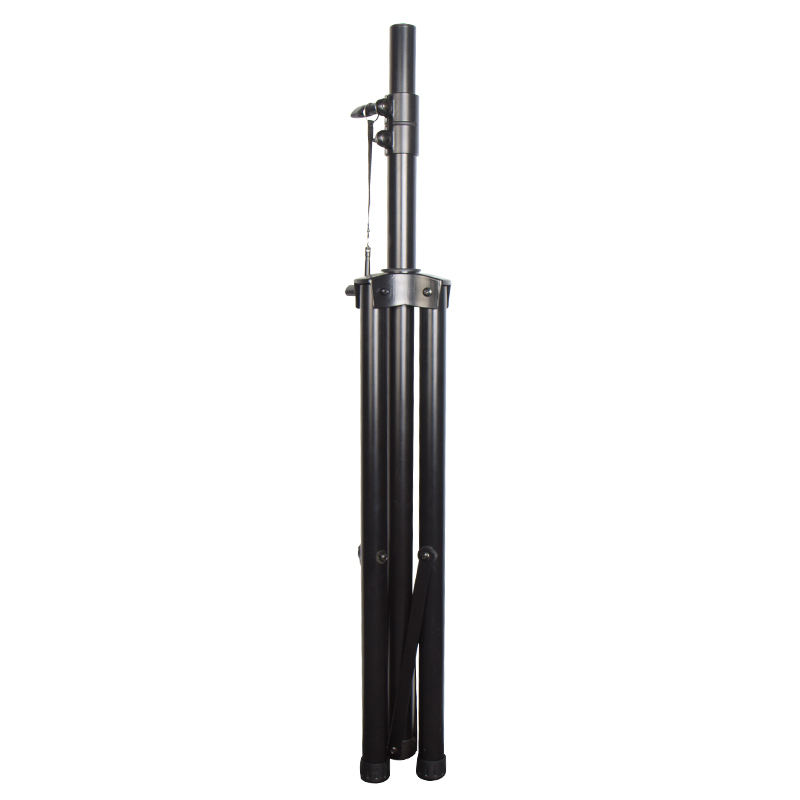
Two stands can share a comparable capacity figure while differing completely in clutch design, and the difference shows up in rental fleets within a season. For a buyer assembling a wholesale programme, the mechanism line of the spec sheet is where that future service load is visible in advance.
The Five Lines of a Spec Sheet That Matter Most
1. Height range — and where it is measured
Height ranges such as 1.0–1.8 m on a tripod stand, or the 15–90 cm options across a wooden monitor stand series, define what the stand can do acoustically. A tweeter at ear height behaves differently from one a metre higher, so match the range to the venue type before anything else. Also note the minimum height: monitor positions and low-profile installs often fail on stands whose lowest setting is too high, not on their maximum.
2. Upper shaft diameter and mount
The 35 mm upper shaft is the de facto standard for PA cabinets, but variants matter. Some stands in our range are supplied with an M20 top screw hole so cabinets and mounting hardware can be secured directly. Confirm the shaft standard against the cabinets in your programme — an adapter is a workaround, not a specification.
3. Base geometry and footprint
Tripod legs, a fixed steel column base, and a weighted plate base distribute forces differently. A tripod with a wide steel leg bracket handles uneven floors better; a heavy fixed base resists tipping on flat stages and suits standing deployments such as DJ booths and ceremony setups. If your customers work outdoors, ask how the base accepts ballast or stabiliser accessories — this is a question the spec sheet alone will not answer.
4. Platform material and surface
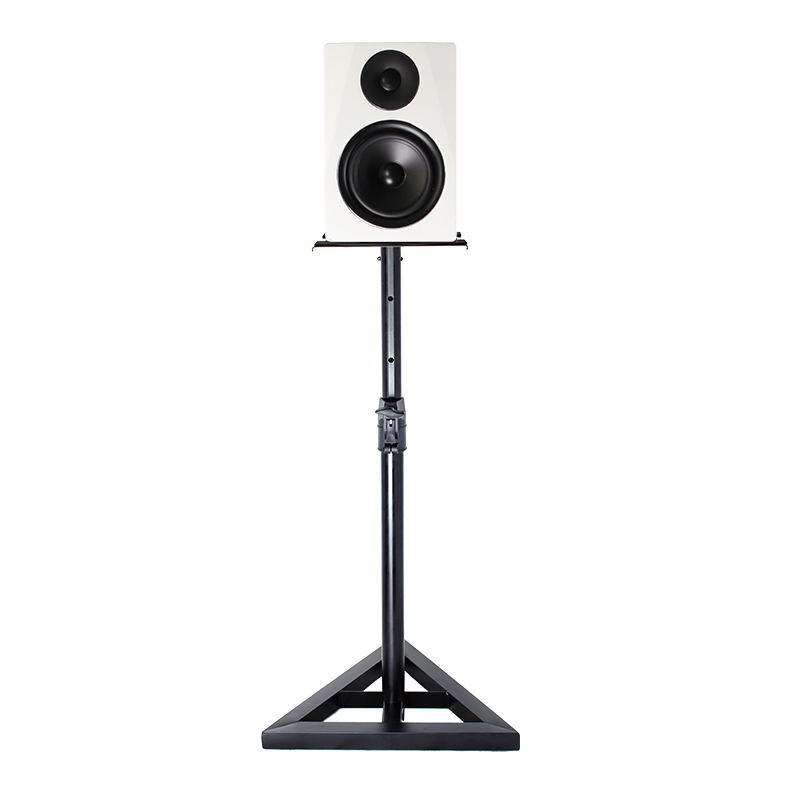
For monitor and bookshelf-style stands, read the platform line carefully. Our SS041 wooden monitor stands pair an HDF wood platform with a heavy steel base, a 23 × 24 cm top plate, and two large skidproof EVA pads, offered in four heights and several wood finishes. The pads and the platform stiffness both affect how the cabinet couples to the stand — details that show up in sound and in customer returns alike.
5. Duty cycle and service context
A stand specified for a fixed install is adjusted a handful of times in its life. A rental stand is adjusted dozens of times a weekend. The same rated figure sits behind both, but the wear profile is entirely different. When you brief a supplier, describe the duty cycle — rental, install, retail — and let them point you to the series built for it, rather than filtering only on the capacity line.
How to Handle the Capacity Conversation With a Supplier
Professional buyers turn the capacity line from a catalogue number into a usable engineering input with three questions:
- “Under which conditions is the figure defined?” — working height, pole extension, indoor or outdoor use.
- “Can you provide the rated value in writing for this exact model?” — model-specific, not series-level, and documented so it can be passed on to your own customers.
- “Which models in the range do you recommend for the heaviest cabinets we run?” — this surfaces the auto-lock and air-cushion series that exist precisely for demanding use.
One discipline matters more than any single answer: never transfer a figure from one model to another. A value established for a heavy-duty tripod does not describe a compact monitor stand from the same catalogue, even when the products look similar in photographs. Each model stands on its own documented specification.
A Pre-Order Checklist for Importers and Wholesale Buyers
- Confirm shaft diameter (35 mm, or M20 screw mount) against your cabinet programme.
- Check clutch type: standard pin, auto-lock safety pin, or crank-up — matched to duty cycle.
- Verify height range at both ends against the venues your customers serve.
- Review base style against floor conditions, and ask about ballast options for outdoor work.
- For monitor stands, confirm platform size, pad material, and finish options.
- Request the model-specific rated capacity in writing, with its defining conditions.
- Ask for real production photos of the exact model before approving samples.
Working With the Factory Side
LESOUND manufactures speaker stands and the wider support range — microphone, keyboard, guitar and lighting stands — under the Yinyu brand, alongside cables and professional headphones, and supplies them to importers and wholesale programmes in more than sixty countries. Because the stands come from our own production line, spec-sheet questions of the kind above can be answered model by model, and OEM buyers can have their own documentation aligned with what the product actually does.
If you are building a stand programme and want the specification discussion to start from real drawings rather than catalogue summaries, review the range on our speaker stands page, and see how the stands pair with DJ booth setups or lighting stands in complete stage packages. For buyers comparing support hardware across categories, our microphone stands and keyboard stands pages follow the same documentation approach.
Post time: Oct-12-2026