


Ask where most of the world’s microphone stands, speaker stands and keyboard stands are made, and the answer keeps pointing to one corner of eastern China. Ningbo and the wider Yangtze River Delta region have spent decades building the tooling shops, metal workshops and component suppliers that professional audio hardware depends on. For LESOUND, that industrial base is not an abstract advantage — it is the reason a stand can move from a sketch to a revised, tooled, finished product without the design loop ever leaving the city. This article explains what the local supply chain actually enables for buyers of pro audio stands, and what to check when you source from this region.
Why Ningbo Grew Into a Base for Pro Audio Stands
A microphone stand looks simple, but it is a stack of processes: tube bending, stamping, welding, die casting, machining, surface treatment, plastic injection and final assembly. Very few places in the world have all of those trades within a short drive of each other. Ningbo does.
The city and its surrounding districts have long been a national centre of metalworking. Mold and die shops, stamping houses, foundries and powder-coating lines cluster together here because they have supplied each other for generations. When a stand factory needs a new casting for a clutch housing, or a revised stamping die for a tripod leg joint, the toolmaker is often in the same industrial zone, not on another continent. That proximity is what turns a six-week revision cycle into a few days of work.
For professional audio hardware specifically, the region also accumulated know-how. Factories here have made stands, cables and headphones for export programmes since the early 2000s, so the supplier base understands what touring gear goes through: repeated height adjustments, rough handling in transit, and long sessions on stage where a slipping clutch or a wobbling base is immediately visible to the audience.
The Component Ecosystem Around the Factory
No stand factory is an island. A finished boom stand contains standard fasteners, cast or zinc-alloy joint bodies, rubber feet, plastic knobs, friction washers, springs and packaging. In Ningbo, nearly all of these inputs are available from specialised local suppliers who serve dozens of hardware manufacturers at once.
This matters to buyers in three practical ways. First, component suppliers here see problems across many customers, so they iterate fast — a better knob texture or a stronger washer design spreads through the cluster quickly. Second, short supply lines mean a missing batch of castings can be chased down in person rather than over email. Third, quality problems are traceable: if a batch of joints fails on the assembly line, the sub-supplier is close enough to audit the same day.
What Vertical Manufacturing Changes for Buyers
Overseas buyers usually compare factories on catalogues and quotations. The deeper difference between a fully integrated Ningbo factory and a trading company is how much of the product the factory actually controls — tooling, processes, inspection and design revisions.
When one team owns the tube work, the castings, the clutch machining and the finish, several things follow:
- Design revisions happen quickly. A change to a joint geometry can go from CAD to a first sample without waiting on an external toolmaker’s queue.
- Accountability is single-sourced. If a clutch slips or a thread wears, there is no argument between a parts vendor and an assembler about who owns the fault.
- Consistency improves over time. Process knowledge — how much torque a knob should take, how a finish should cure — stays inside the company instead of leaking away with a subcontractor.
An Example: One Clutch Knob, Several Revisions
Small details show this best. The clutch knob — the part a user grips dozens of times per show — looks identical across brands, but its feel separates a mature design from a copy. On the Yinyu stand range, the knob has gone through repeated revisions: a reshaped lever for a surer grip, a tighter tolerance between the knob and the clutch body so there is no play when tightened, and a surface texture that stays grippy with cold or sweaty hands on stage.
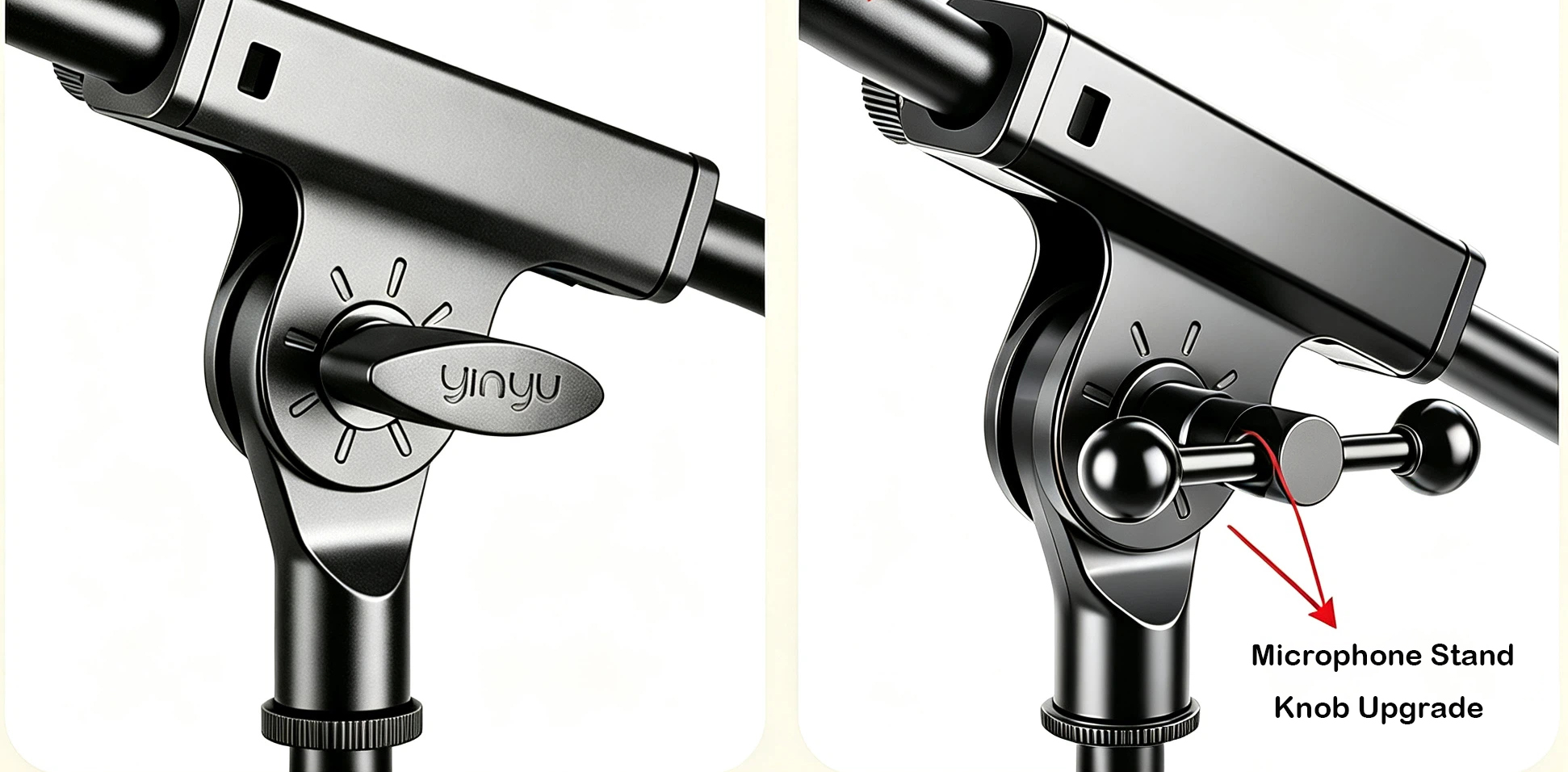
None of those changes is dramatic on a specification sheet. Each one, however, required new tooling or a machining adjustment, and each one was carried out locally because the design office, the tool room and the assembly line sit in the same operation. That is the practical meaning of a local supply chain: iteration is cheap enough to actually happen.
From Steel Tube to Finished Stand
Walking through a Ningbo stand factory, the process typically runs like this. Steel or aluminium tube arrives from regional mills and is cut to length. Bending machines form tripod legs and boom arms. Stamping presses produce base plates, leg housings and brackets; castings for clutches and joint bodies arrive from nearby foundries. Welding and deburring follow, then powder coating or paint lines apply the finish. After curing, stands are assembled, torque-checked at the critical joints, and packed.
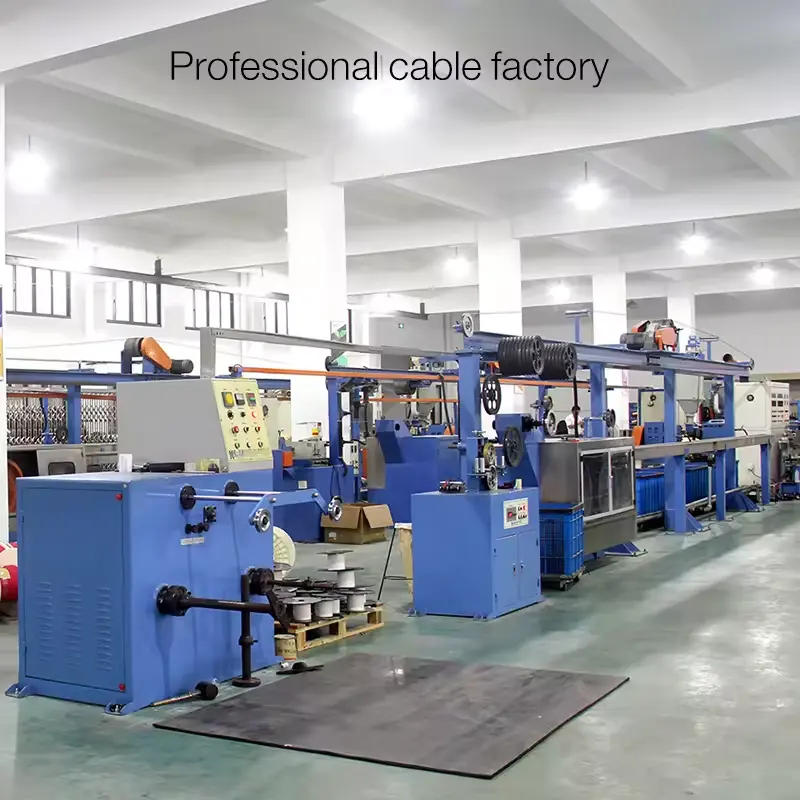
Keeping those steps under one roof — or under a tight network of local partners — is what allows a factory to hold tolerances consistently. When tube work, finishing and assembly are split across distant suppliers, every handoff is a chance for dimensional drift, and the buyer pays for it in rejected batches. In a concentrated industrial zone, the handoffs are measured in kilometres, and problems are corrected before they accumulate.
Consistency Across a Full Stand Programme
For distributors and importers, the supply chain’s depth shows up in range breadth. A single factory with its own tooling can carry a coherent stand programme — the same finish, the same clutch philosophy, the same hardware across categories — instead of stitching together products from several unrelated workshops.
LESOUND’s stand range is built this way. The microphone stands line covers tripod, round-base and boom designs; speaker stands and keyboard stands share the same tube and joint suppliers; guitar stands, lighting stands and music stands extend the programme into the rest of a dealer’s wall. For DJ and mobile-event buyers, the folding DJ booth and table series uses the same steel fabrication lines. Cables — the other half of a typical order — are produced in the same operation, which simplifies consolidated shipments for buyers who combine audio cables with stands in one container.
The benefit is not only visual consistency. When one engineering team defines how a clutch should clamp or how a pin should lock across every category, spare parts stay interchangeable, packaging is standardised, and a buyer’s quality feedback applies to the whole programme rather than to one product.
What Buyers Should Verify When Sourcing Stands in Ningbo
The regional cluster is strong, but it is not uniform. Buyers evaluating suppliers here — in Ningbo or anywhere in the Delta — should look past the catalogue and verify how the factory works:
- Tooling ownership. Ask who owns the moulds and dies for your products, and what happens to them if the relationship ends. Clear tooling ownership protects your programme.
- In-process inspection. Ask where inspection points sit: incoming tube, post-welding, post-finish, pre-pack. A factory that only inspects at the end finds problems late.
- Finish adhesion and corrosion checks. Powder coating quality varies widely. Ask how adhesion and salt-spray performance are tested, and how often.
- Thread standards. Confirm 5/8-inch and 3/8-inch threaded fittings and any adapters in the box, because mixing standards across a stand programme creates support headaches later.
- Packing design. Stands ship assembled or semi-folded; ask about carton strength and how units are protected against scuffing in transit.
- Spare-part availability. Knobs, clutches and feet wear out. A factory that keeps these parts in production makes your after-sales work simple.
None of these questions requires a laboratory visit. They can all be settled in a factory audit or a detailed technical exchange, and a factory confident in its processes will answer them directly.
How LESOUND Works With Overseas Buyers
LESOUND designs and manufactures its stand range in Ningbo, supplying both OEM programmes for overseas brands and the company’s own Yinyu stand line. The same engineering team handles custom modifications — colour, finish, branding, clutch or base changes — as well as smaller wholesale orders for buyers building their first stand programme. Cable products are made in the same operation, so combined stand-and-cable orders ship from one floor.
If you are planning a stand programme — microphone, speaker, keyboard, guitar, lighting or music stands — or want to review the current Yinyu range, contact LESOUND with your requirements. Seeing how the local supply chain works from the inside is usually the fastest way to judge what a supplier can actually deliver.
Post time: Oct-29-2026