


A base microphone stand for stage is chosen for one reason, which is that it stands on its own. A tripod can be tripped over and a base stand can’t, because the weight sits on the floor in a disc rather than on three legs reaching out.
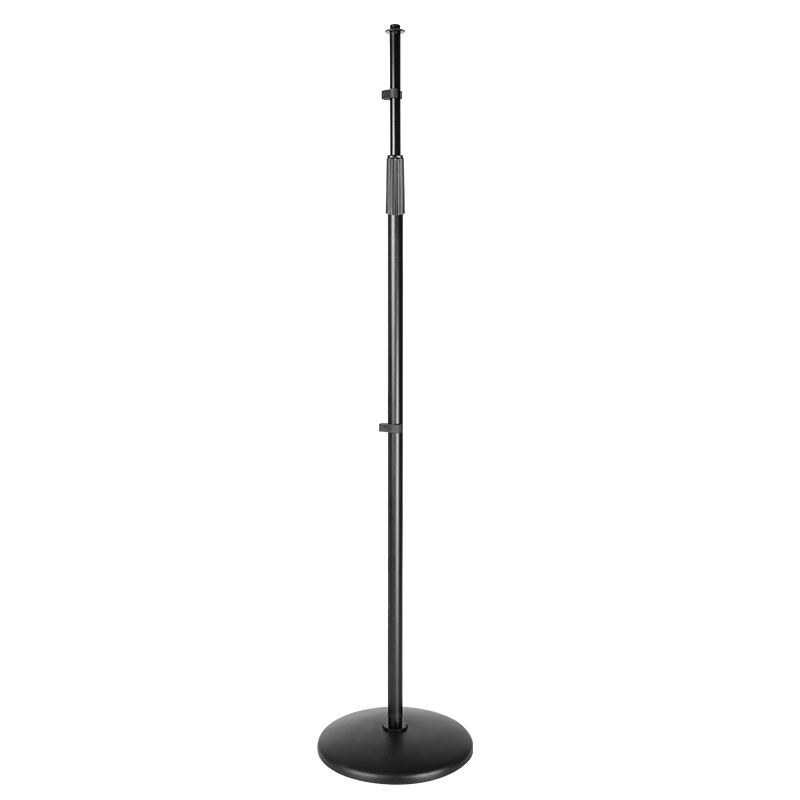
Everything else about the product follows from that base, including how heavy it’s to move and what it does to the floor.
What a base stand is for
A round base stand suits a fixed position where the microphone has to stay put: a conference table, a lectern, a drum kit, a school hall. Ask the customer where the stand lives, because a base stand that has to be carried to a different room every night is the wrong tool.
A tripod carries better and a base stand sits better. Ask which one the market has been buying, because switching a customer between the two is a conversation rather than a swap.
The base, and the weight that keeps it up
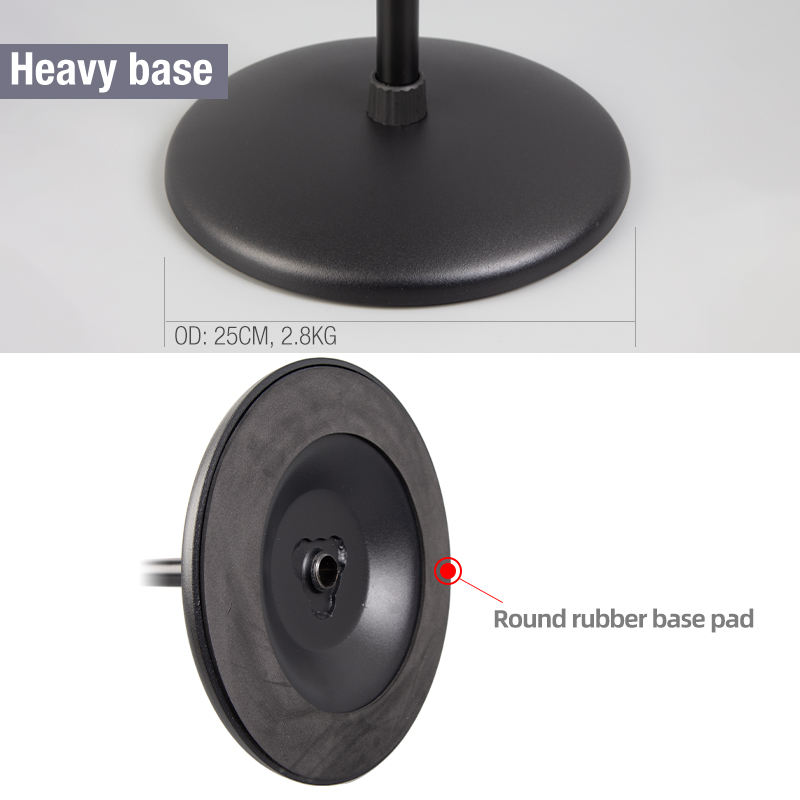
The base is a disc with weight in it, and the weight is what stops the stand walking when a cable is pulled. Ask what the base weighs, how wide it’s, and whether the weight is cast in or added. A base that’s wide and light tips where a narrow heavy one doesn’t.
Ask what the base is finished with as well, because a bare metal base marks a wooden floor and a rubber ringed one doesn’t. That’s the detail a school notices and a club doesn’t.
Height range, and where the mic actually sits
Ask what the height range is and how far the top of the range really goes. Most base stands are bought for one purpose and the customer only needs a slice of the range, so ask which slice rather than the full span.
Ask how many height positions the clutch offers, because a stand that only works at the very top of its travel is at its least stable where it’s used. That’s the same trap as a tripod, and it’s harder to see on a base stand.
The clutch, and the hand that works it
A clutch is tightened and released dozens of times a night. Ask what it’s made of, how many turns it takes to release, and whether it can be re-tightened when it wears. A plastic clutch on a steel tube slips within a season and the customer reports it as a stand that sags.
Round base or tripod legs
A tripod takes up floor space in three directions and a base takes it in one. On a small stage or a crowded table that difference matters more than any other spec, and it’s the one buyers forget to think about until the stand is in the room.
Ask whether the factory makes both off the same tube and clutch. A supplier with both can advise honestly and a supplier with one will always recommend the one they have.
Boom or straight, and the load
A boom on a base stand puts weight out to the side, and the base has to take that moment as well as the stand’s own weight. Ask what boom length the base is rated for and whether the base needs to be heavier for a long arm. A base sized for a straight stand and sold with a boom is a tipping risk.
What to test on a sample stand
- Set it to the height the market uses and pull a cable across it.
- Tighten and release the clutch twenty times and check the grip.
- Check the base for rocking on a hard floor.
- Screw a boom on and check the stand stays upright.
- Look at the finish where a hand grips it.
Where a base stand gets used
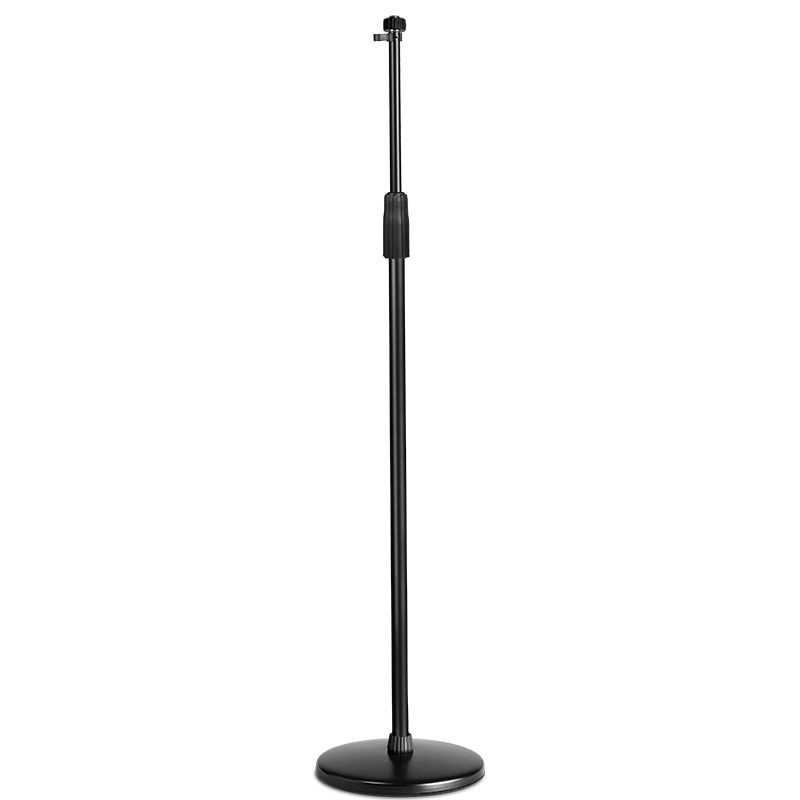
Conference rooms, schools, churches and drum risers buy them, and each one wants a different base weight. A church wants one that won’t be knocked over, and a rental house wants one that doesn’t cost a van’s payload.
Feet and the floor that marks
Ask what sits between the base and the floor. A rubber ring protects a wooden stage and a felt pad protects a polished one, and the two aren’t the same. Ask which the market needs, because a marked floor is a complaint about the stand.
Packing a weighted base
A base stand is heavy in the base and light at the top, which is the worst shape for a carton. Ask how the base is packed, whether the tube is separated from it, and whether the carton is reinforced at the bottom. A base that arrives with a bent tube is a base that gets refused.
What ships with a base stand
A room kitting out a lectern or a desk usually buys the accessories beside it. The same order often carries a Yinyu mic stand for a position that has to move, a OEM desktop microphone stand where the mic has to reach across a desk, and a OEM desk microphone stand for a podcast corner.
Audfine headphones go out with most of these orders, because the person buying a stand for a mic is the person who monitors it.

Five questions before the order
How heavy is the base?
Ask for the figure. A heavy base stays where it’s put and it costs freight, and the customer needs to know which they’re buying.
What’s the clutch made of?
Ask, because the clutch is the part that wears and the part the customer describes as a stand that sags.
Can it take a boom?
Ask what arm length the base is rated for. A base sold with a boom it wasn’t sized for tips the first time the arm swings out.
What protects the floor?
Ask whether there’s a rubber ring or a pad. A bare base marks a wooden stage and that’s a complaint about the stand.
When a base stand is the wrong choice
If the customer moves the microphone between rooms every night, a base stand is the wrong product and the honest answer is a tripod. Ask how the stand travels before you sell it, because a customer who buys the wrong one and struggles with it buys the next one from somebody else.
What a drum riser does to a base stand
A base stand on a drum riser is standing on a platform that moves. Ask whether the kit comes with its own riser, because a riser turns every kick into a small earthquake and the base has to survive it. A heavier base helps and a wider one helps more, since the movement arrives sideways as well as down.
Ask what the customer’s riser is made of as well. A solid timber riser moves less than a folding one, and a stand that’s steady on the floor of the hall can walk across the deck once the riser is under it.
One base, two column lengths
Ask whether the same base is offered with a short column and a tall one, because one base casting can serve two products and two castings cost more than either. A supplier who quotes both from one tool is offering a range rather than a single item, and the price comes down as the volume rises.
Ask what changes when the column gets longer. A tall column on the base of a short one is the tipping combination, and an honest supplier will say so before you find out for yourself.
A gooseneck instead of a column
Some buyers want a short fixed column with a gooseneck on top so the microphone can be aimed without moving the base. Ask whether the factory makes the gooseneck and whether it’s a threaded fit or a crimped one, because a threaded gooseneck can be replaced and a crimped one can’t.
Ask how the gooseneck behaves when it’s left bent for months. The ones that won’t hold a position are the ones that reach the buyer as a sagging microphone, and that’s filed as a complaint about the stand rather than about the gooseneck.
The thread plate, and the insert that strips
At the top of the column there’s a thread for the clip, and that thread is a small part under a lot of wear. Ask whether it’s cut into the column itself or seated in an insert, because an insert can be replaced and a stripped column can’t.
Ask what the insert is made of. A steel insert outlasts an aluminium one in a room where the clip comes off every night, and that detail shows up as a return two seasons later rather than at sample stage.
Ordering base stands for a term
A school or a college tends to buy on a calendar rather than on a trend. Ask when the customer’s year starts, because an order that has to land before term has a fixed ship date and the base is the heaviest thing in the carton.
Ask whether the customer wants the bases and the columns in one carton or two. Splitting them protects the column and costs a little more to pack, and a school that has had a bent column before will usually pay the difference.
What a rental house wants from a base
A rental house lives on turnaround, so it wants stands that come back rather than stands that sound good. Ask how the base is joined to the column and whether the joint can be tightened on site, because a base that has to go back to a workshop for a wobble is a base that sits in the corner.
Ask whether the customer labels the stands and where the label lands. A label on the column peels and a label on the base gets scuffed, so ask which surface the customer actually uses before you print anything.
Weighted bases and the courier
The weight sits at the bottom, which is the worst place for a carton, because the whole mass rides on one corner when the box is dropped. Ask whether the base is boxed separately inside the master carton and whether the tube has its own sleeve.
Ask what the master carton weighs loaded. A heavy base stand passes the courier’s handling limit sooner than the buyer expects, and a carton over the limit gets rolled rather than lifted.
Send the height and the room
Tell us where the stand sits, the height the microphone works at, and whether a boom is going on it. Those three lines settle the base weight, the clutch and the packing.
Ask for a sample with the base the market uses, because the base weight is the part you can’t judge from a photograph.
Base stands in this range carry the Yinyu name and are made by Ningbo Lesound Electronics in Zhejiang, where the base, the tube and the clutch are assembled and checked together.
Post time: Oct-13-2026