


An audio cable jack to xlr usually sits between a small device and a large one. A camera, a phone, a laptop or a headphone output on one side, and a mixer, a powered speaker or an interface on the other. Which end is which decides nearly everything about how the lead gets built.
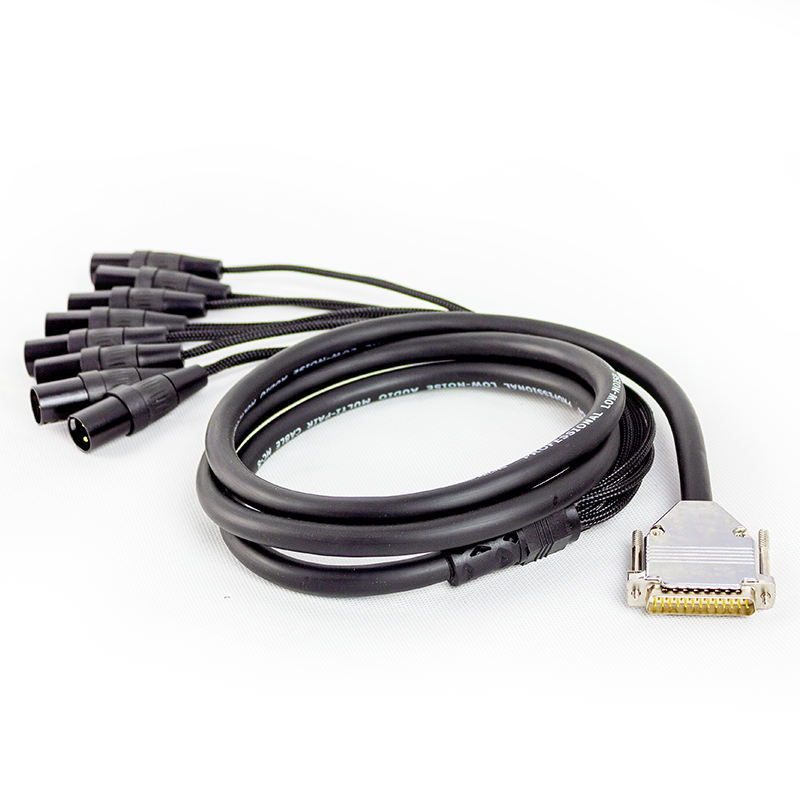
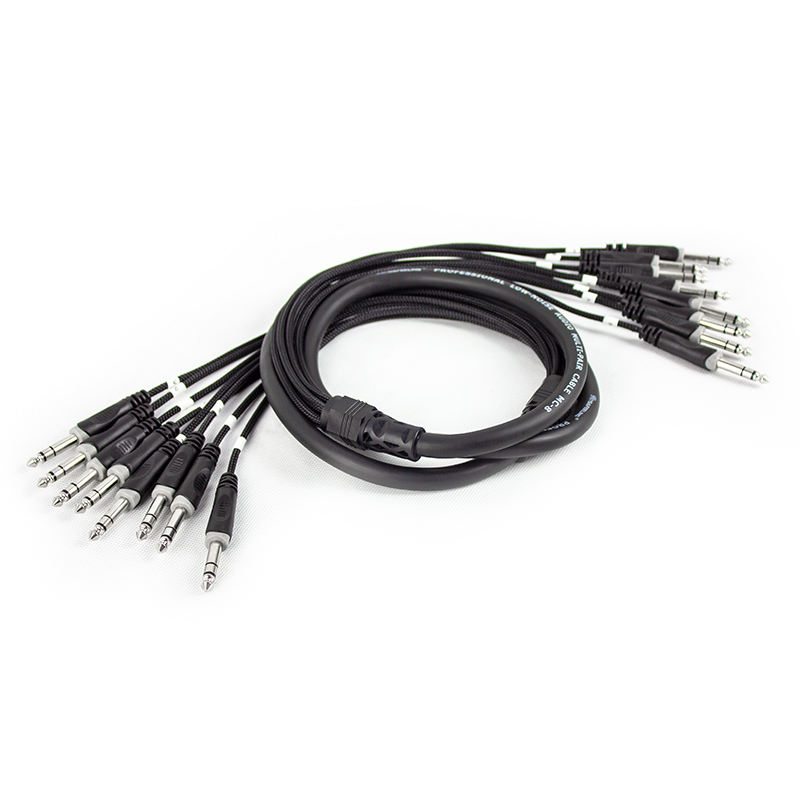
It’s a short product with a lot of variation hidden inside it, which is why it’s worth settling the details before a sample is made rather than after.
Which end carries the signal, and which way
A lead like this can go two directions, and the two are built differently. Either the small jack is the source and the XLR is the destination, or the XLR is the source and the jack is the destination. The connectors look the same from outside and the wiring inside isn’t.
So ask the customer what sits at each end before anything else. It’s a thirty second question that saves a sample order and a returned trial.
Phantom power, and the warning nobody reads
Mixing desks can send phantom power down an XLR line, and a lead that presents that voltage to a small jack output can damage the device on the other end. A properly built lead isolates the wrong contacts for the direction it’s used in. Ask the factory how they handle it, and ask them to say which direction the sample is safe for.
A male XLR on the far end, and what it implies
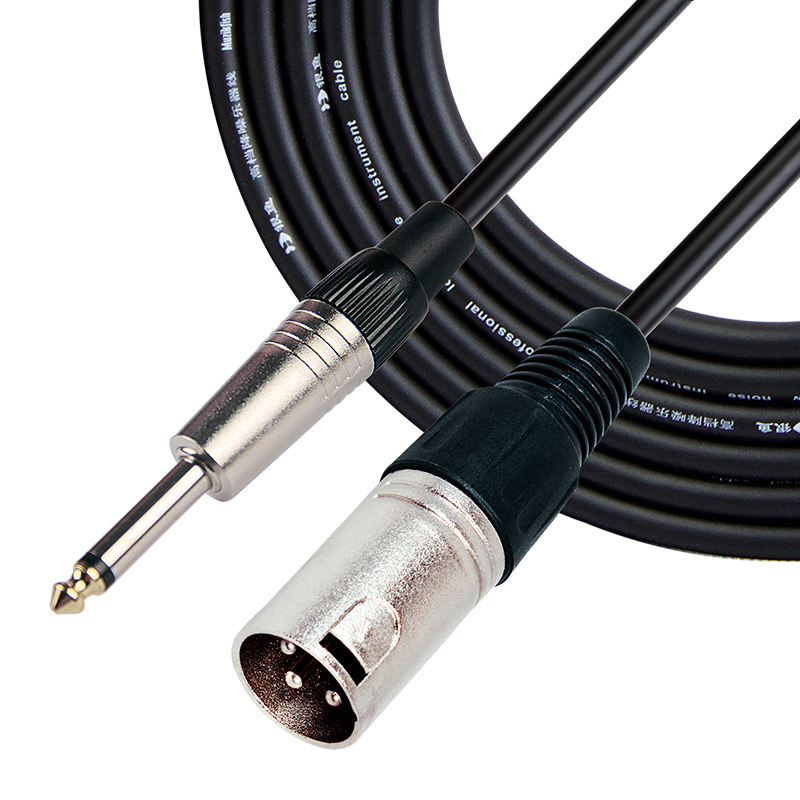
The gender on the XLR end tells you which direction the lead is meant to run, because a male connector plugs into a female socket on the equipment. If the customer’s device has a male output, the lead needs a female connector, and the sample will be useless if it arrives with the wrong one. Ask for the gender in writing.
Small jack contacts and the two wiring conventions
The small jack comes in versions with two, three and four contacts, and the same physical plug can be wired several ways. Which contact carries the signal, which carries the return and which is left alone changes how the lead behaves with a given device. Ask for the wiring contact by contact rather than a description of the plug.
Balanced or not, and how to tell from the device
One end of this lead is almost always unbalanced, and the other may be either. Ask what the customer’s device expects, and if they don’t know, ask for the model. A lead built for the wrong assumption gives a signal that works and a noise floor that doesn’t.
Strain at the jack, which is where they break
The small end fails first, because it sits on a desk or hangs off a camera and gets pulled sideways. Ask how the boot grips the jacket, whether the exit is straight or angled, and how much of the plug is moulded rather than assembled. An angled exit on a short lead survives a desk far better than a straight one.
What to test on a sample lead
- Plug it into the customer’s actual device, not a bench substitute.
- Check for hum with the gain up and nothing playing.
- Flex the jack end and listen for the crackle that predicts a failure.
- Confirm the XLR gender matches the socket it has to enter.
- Ask what the factory would change if the customer wanted it quieter.
Spares and the repair that saves a run
On a moulded plug there are no spares, which is worth saying out loud to the customer before the order. Ask whether the factory also builds an assembled version, and whether the boot can be bought separately. A market that repairs its own leads will pay more for the version that opens.
Bagging short leads so the plugs don’t scuff
Short leads get bagged, and the bag decides whether the plugs arrive scuffed. Ask whether the XLR end is capped and whether the two connectors are separated inside. On a lead this length, two metal ends in one bag will find each other before the shipment lands.
What ships with a jack to xlr lead
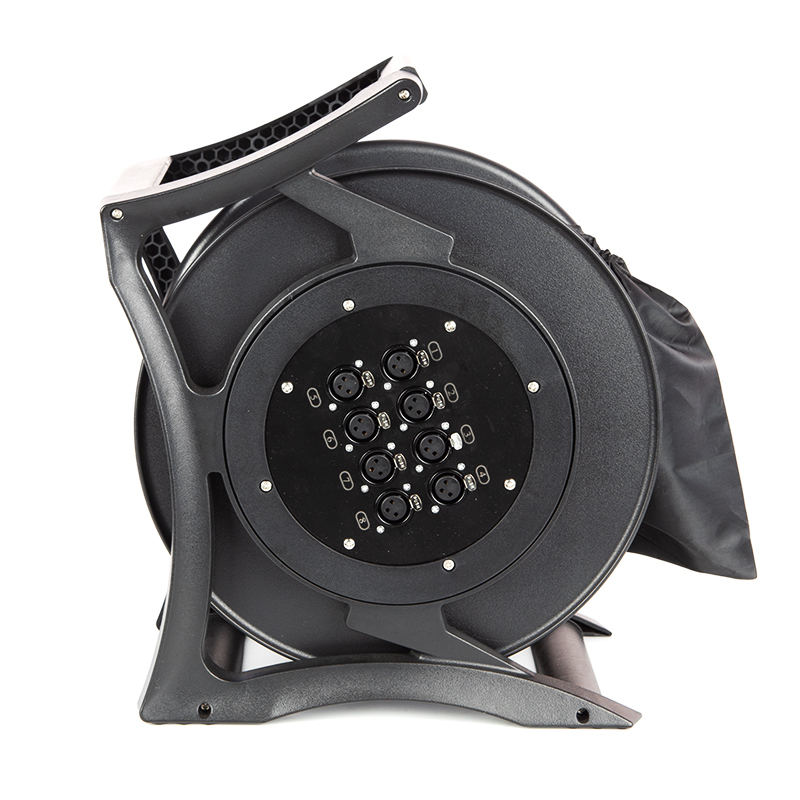
Someone wiring a small studio buys these by the handful. The same order often includes a Yinyu low noise audio snake cable for the speakers, a OEM audio cable for the vocal line, and a OEM low noise instruments cable where the run has to reach across a room.
A desk that small will usually take Audfine headphones at the same time, since the same order covers a whole signal path.
Four questions worth answering early
Which end is the source?
Settle the direction before the sample, because it changes the wiring and the gender on the XLR end.
Will anything on the other end send phantom power?
Ask, because a small jack output doesn’t enjoy being fed a voltage meant for a condenser capsule.
What’s the jack wiring, contact by contact?
Ask for it in writing. The same plug serves several conventions and the wrong one gives a quiet or noisy channel.
Is the plug moulded or can it be repaired?
Ask which one the market expects. Moulded survives harder use, and an assembled plug can be opened years later.
Length, and the adapter people forget
Short leads often need an adapter somewhere along the way, and an adapter is the weakest link in the chain. Ask whether the factory can supply the lead in the exact connector pair the customer needs, so no adapter is required at all. That single change removes the most common source of a bad connection.
Where these short leads get used
They sit in podcast setups, video rigs, small studios and schools, and the buyer is usually not a professional. That changes what matters. A pro looks after a lead, and a hobbyist leaves it hanging off a desk. Ask which market you’re serving before you argue about the shell.
Camera and phone outputs, and the plug that fits
A camera or a phone output is usually a small socket on the side of a device that gets put down on its edge. Ask whether the customer needs a right angle plug, because a straight one turns a camera on its side into a broken socket. It’s the most common failure on a lead used this way.
Gain structure, and why the lead can’t fix it
A customer who says the lead is quiet is usually describing a level mismatch between two devices rather than a fault in the cable. Ask what the gain looks like at each end before you agree to change anything, because a remake won’t fix it and a second complaint will follow.
Adapters, and the one that introduces noise
The adapter in the middle of a chain is where noise usually enters. Ask whether the factory can supply the exact connector pair so nothing sits between the two plugs. Every adapter adds a joint, and every joint is somewhere for a screen to lose contact.
Colour coding a bag of short leads
Short leads get lost in bags, and colour is the cheapest way to stop that. Ask whether the factory can supply a mixed bag with a colour per length or per use. It’s a small option that turns a commodity into something a customer asks for by name.
What a customer means by a bad lead
When a customer says the lead is bad they usually mean one of three things. It hums, it crackles when it moves, or one channel is missing. Each one points at a different part, and asking which it’s before you replace anything saves a shipment and a long conversation.
What a trial order should look like
Don’t trial with one lead. Ask for three in the lengths you sell most, built as your market’s direction, taken from a single run. One sample tells you what the factory can do on its best day, and three from the same run tell you what they’ll actually ship.
Keep one of the three back as your reference. When the container lands, the lead you kept is the only honest way to answer a customer who says it isn’t the same as the sample.
Testing a lead the way the customer will
A lead tested on a bench passes and a lead on a desk fails, and the difference is movement. Ask the factory to test yours with the jack flexed, the gain up and nothing playing, because that’s the combination the customer notices. A quiet lead under those conditions is a lead that doesn’t come back.
The two mistakes that come back most
The first is a lead built for the wrong direction, which costs a whole trial order. The second is a jack wired to the wrong contact, which costs a customer’s trust, because it works and it doesn’t work properly. Both are catchable at the sample stage and neither is visible from a photograph.
Ask the factory to write the direction and the wiring onto the sample paperwork. A supplier who’ll put it in writing is a supplier who’ll hold it on the run, and that’s worth more than a small difference in unit cost.
Send the device pair and the distance
Tell us what sits at each end, which direction the signal runs, and how far apart they’re. Those three lines decide the wiring, the gender and the gauge.
Ask for a sample built for your market’s direction rather than the factory’s default, because their default was set by their biggest customer.
Leads of this kind are badged Yinyu and produced by Ningbo Lesound Electronics in Zhejiang, where the plugs, the cable and the moulding run on one line.
Post time: Oct-13-2026