


A DJ table is the part of the rig the audience never studies but the performer feels every set. It holds the controller, the laptop, the mixer and sometimes a pair of players; it sets the working height; and it decides whether cables end up tidy or tangled on the floor. Choosing one well is less about a single headline number and more about how the structure, the adjustability and the cable routing fit the way a given setup is actually used. This guide walks through the three things that matter most when specifying or buying a DJ table.
Start With Working Height
The first question is simply how tall the table should be. A controller sits best around waist to lower-chest height for most performers, which keeps the wrists neutral during a long set and leaves the head clear to read the crowd. A fixed-height table that happens to land at the wrong level forces a compromise: too low and the performer hunches, too high and the elbows ride up and the shoulders tire.
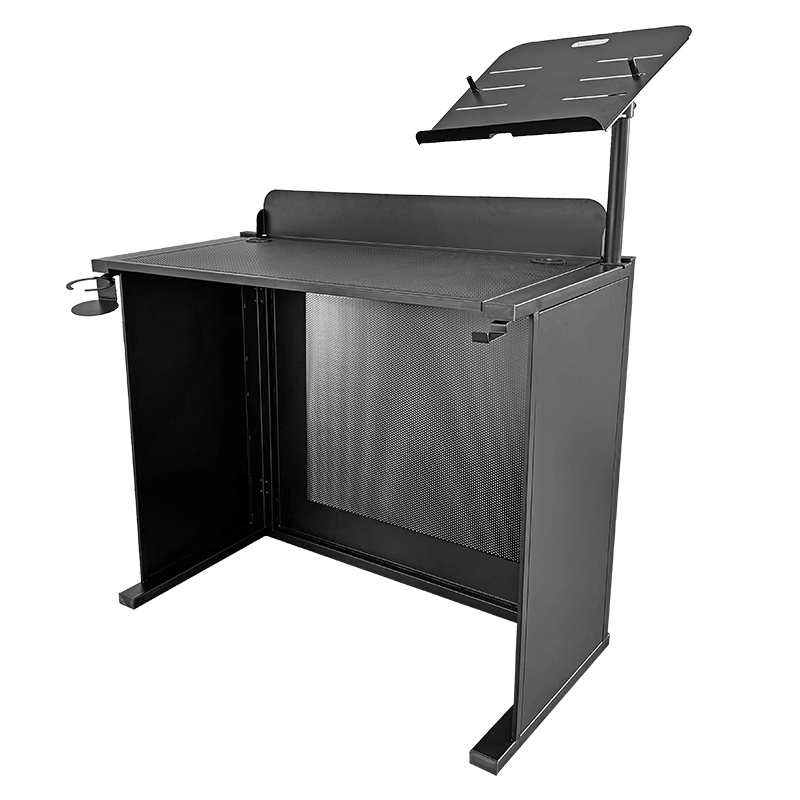
Adjustable legs solve this directly. The Yinyu DJ table range, for example, uses steel legs with an adjustable height from 66 cm to 100 cm, locked by a pin mechanism that releases and secures with a small ring. That span covers a seated laptop DJ, a standing club performer and most of the positions in between, so one table works across different venues and different operators. When comparing options, check the adjustment range against the people who will actually use it, not just the spec sheet.
Load: Read the Structure, Not Just a Number
“Load” is the second thing buyers ask about, and it is also the easiest to misread. A printed capacity figure only means something in the context of how the table is built, and two tables with similar numbers can behave very differently on the road. The structural signals worth checking are the ones you can see and verify.
Leg material and lock. Steel legs with a positive locking mechanism give a stable base that resists racking when gear is placed off-centre. A pin-locking leg that clicks into place is easier to trust than a friction joint that can creep during transport. Look for legs that lock audibly and stay put when the table is lifted by one side.
Tabletop construction. A DJ table top takes point loads from players and controllers and distributed load from a laptop. A plywood deck, such as the 20 mm top used on the Yinyu adjustable model, stays rigid without being heavy, which matters when the same table has to be carried between gigs. Thinner tops can flex under heavier gear; very thick tops add weight that defeats a “portable” brief.
How to specify load safely. Rather than quoting a single capacity and hoping it covers every build, ask the supplier for the rated figure in writing and match it to the heaviest realistic configuration — controller plus laptop plus a player or two. A responsible manufacturer will state a rated capacity for a given model; confirm it against your actual gear list before purchase. If a listing avoids giving a rated figure at all, treat that as the signal it is.
The point is not to chase the biggest number. It is to make sure the structure in front of you is honest about what it can hold and that the number, when given, comes from the manufacturer’s own specification rather than a marketing claim.
Cable Access Is Where Tables Are Won or Lost
The third factor — cable access — is where a good DJ table earns its keep night after night. A flat working surface with no way to route cables pushes every lead to the edges, where it drops toward the floor and becomes a trip hazard and a tangle.
Two details separate a thoughtful design from a flat board. The first is a mesh or perforated top with grommet holes, so power and signal leads drop through the surface instead of running over it. The Yinyu steel DJ tables use a flat mesh removable top with two grommet holes positioned for exactly this. The second is a dedicated cable management port, which keeps the main loom organised as it leaves the table toward the floor or the facade.
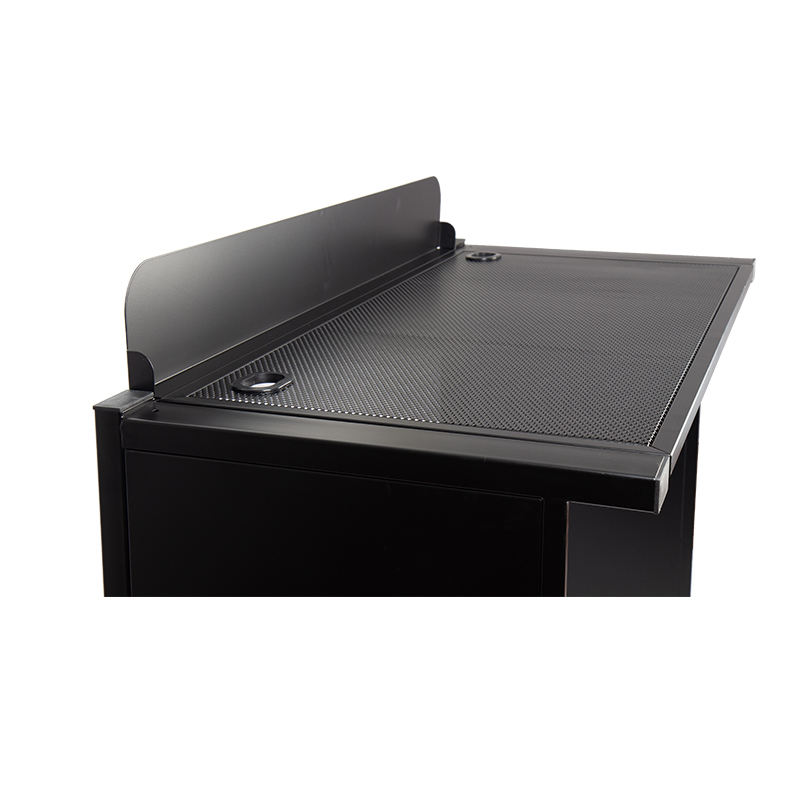
Routing also has a signal-integrity side. Keep power leads away from audio cables where the path allows it, and let the table’s ports do the separating rather than letting everything pile in one bundle. For the cables themselves, see our overview of pro audio cables and the specifics on audio cables built for stage use.
Fold, Transport and Store
A DJ table spends most of its life in a case or a van, not on stage, so the fold matters as much as the setup. Look for legs that fold flat against the top, a carry handle built into the structure, and a carrying bag included so the table is protected in transit. The Yinyu adjustable model folds the legs and locks them, then travels in a bag; the full-steel folding tables collapse to a flat panel around 119 × 107 × 15 cm, which slides behind other gear without dominating the load.
For mobile performers, a table that sets up in under a minute and breaks down just as fast is worth more than one with extra features that slow the changeover. Pair it with a DJ booth when the show calls for a front panel, or keep it standalone for tight corners and small rooms.
Fit the Table to the Rest of the Rig
A DJ table does not sit alone. It meets the booth in front, the stands around it and the cable loom beneath it. Matching heights across the setup avoids a row of mismatched surfaces that look improvised on stage. The same logic applies to the support gear: a stable speaker stand and a dependable microphone stand follow the same rule as the table — read the structure, confirm the rated capacity, and route the cables with intent.
For players who also run a laptop and a controller on a raised surface, a music stand or a small shelf clipped to the table keeps set notes and a phone in view without crowding the gear. The aim is one coherent workspace, not a collection of separate purchases.
Why LESOUND Builds DJ Tables This Way
LESOUND is the manufacturer behind the Yinyu line of stands and DJ furniture, producing these products in-house for both branded and OEM programmes. Building the table, the facade and the stands in one facility means the heights, the materials and the finish are designed to work together, and it means a buyer can request colour and configuration changes without juggling several suppliers. For brands that want their own name on the product, the same tables are available as OEM builds with the buyer’s labelling.
The practical takeaway for a specifier is simple: decide the height range you need, confirm the rated capacity from the manufacturer’s specification for your actual gear, check that the cable routing is real and not cosmetic, and make sure it folds and travels without drama. Get those four right and the table disappears into the show — which is exactly what good support gear should do.
Conclusion
Height, load and cable access are the three pillars of a useful DJ table. Adjustable steel legs cover most performers; a rigid plywood top and a positive leg lock tell you more about real-world load than a lone figure; and a mesh top with grommet holes plus a cable port turn a tangle into a tidy run. Browse the full DJ table range to see how these details come together, and contact LESOUND to discuss OEM or wholesale configurations for your market.
Post time: Sep-24-2026