


If you’re sourcing auto lock tripod lighting stand, a spec sheet only gets you so far.


We build these in our own workshop, so you can compare real units instead of guessing from a catalogue. Over the years most of the questions we get are the same ones, so this page answers them in order. Nothing here is theory. It’s what comes up on a real order, from the first sample to the second container.
That includes the questions buyers are too polite to ask. The cheapest quote usually comes from the supplier with the least experience of your market.
What to check before you commit to a supplier
Start with the parts buyers complain about later. On auto lock tripod lighting stand, that tends to be the build and the finish rather than the headline number. A locking pin holds the setting even when the stand gets knocked between sets.
Then confirm what’s actually in the box. Tier count is the buyer’s first question, because a second tier changes the footprint.
Ask for photos of the exact unit you’ll receive. Not a render.
A short video call beats ten emails, and it’s how most of our long term dealers started. You don’t need a factory tour to spot a problem. You need to see the piece in someone’s hand, hear how they talk about it, and check whether the answers come fast or get vague. Send a photo of the problem and we can usually answer the same day. If you sell into several markets, ask for one carton design with language neutral artwork.

How the Auto Lock Tripod Lighting Stand handles the details
Take our auto lock tripod lighting stand as the working example. Rubber feet protect a wooden stage and stop the stand sliding when a player leans on it.
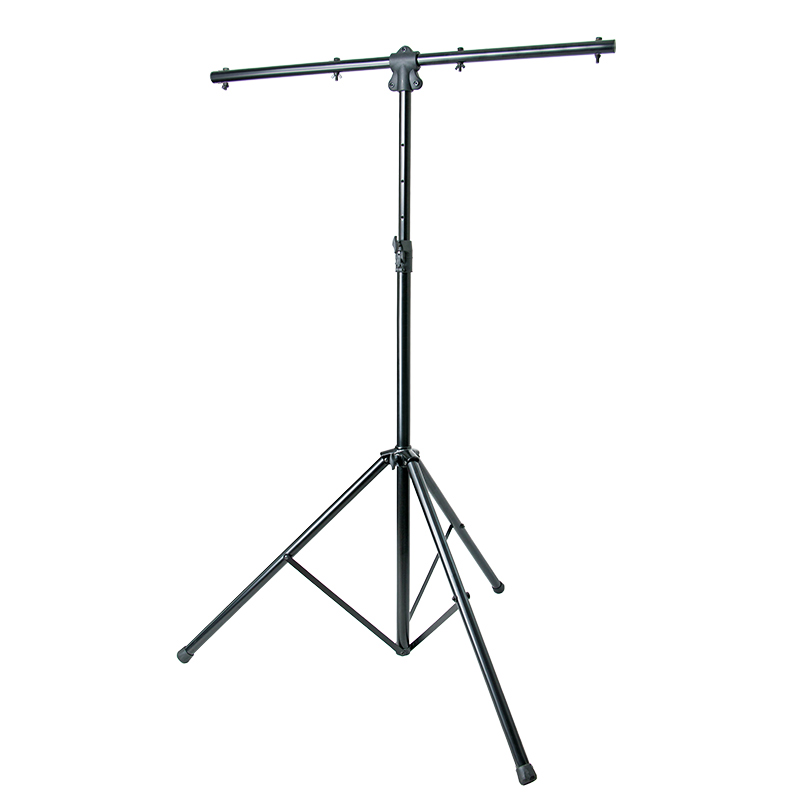
Lighting stands need a wider base than the load suggests, because a top heavy pole tips. You can see the full spec and photos here: auto lock tripod lighting stand. If your market needs a different finish or a different carton, we handle that as an OEM run rather than forcing you onto a catalogue item. That’s the part dealers care about most, because a catalogue item is hard to defend on a shelf where three other sellers list the same thing.
We’d rather tell you what we can’t do than take an order we’ll disappoint on.
That sounds obvious, but it’s the reason buyers come back. Distributors care about the range, not the single item, so they ask what else travels well with it.
A spec checklist you can send to any supplier
Copy this into an email and send it to three suppliers. The one who answers all eight points without hedging is the one worth sampling. A sample settles the finish question faster than any number of photos.
- Ask for the load rating and what it refers to.
- Confirm the height and width range, and whether they adjust independently.
- Ask which joint carries the load, and how it’s reinforced.
- Check whether the feet are rubber and replaceable.
- Ask for the folded depth, because that decides the carton and the cupboard.
- Confirm whether a locking pin holds the setting.
- Ask for the finish spec if the item sits in a shop window.
- Request the assembled size, not just the folded one.
If a supplier can’t answer point two or point five in writing, that’s your answer about the supplier, not about the product. Height and width adjust independently on the better models, which matters for a two tier rig.
What each question is really telling you
Buyers who’ve run a few containers stop trusting the headline number and start reading the answers. Here’s the short version of what we hear on a first call, and why it matters later.
| The question | Why it decides the order |
|---|---|
| What is the load rating, and what does it refer to? | A rating without a definition is a marketing number, not a spec. |
| Where is the joint that carries the load? | That joint decides how the item behaves after a year of load ins. |
| Which parts are replaceable? | Replaceable pads, feet and bands turn a warranty claim into a spare part order. |
| What changes between the sample and the bulk run? | Any honest answer has at least one line, and you’d rather hear it now. |
| What is the master carton quantity? | It changes your landed cost per unit and your warehouse labour. |
| Is the finish matched to a reference or to a colour code? | A reference piece survives a change of salesperson. A colour name does not. |
| How is the item inspected before it leaves? | Consistency is a process. If there’s no process, consistency is luck. |
| What’s in the box apart from the product? | Clips, adaptors and instructions are the difference between a sale and a support ticket. |
None of this replaces a sample. It just makes sure the sample you get is the one you actually asked for. Ask for photos of the actual batch, not of a sample from last year.
The questions that land on our desk first
Price breaks, lead time, and whether we’ll put their logo on it.
The honest answer is that all three depend on volume, so we quote once we know the quantity and the destination port. Trial orders exist to test the supplier, not the product. The product you can see in a sample.
For buyers who need something moving quickly, we keep a ready to ship line. For custom projects, we run the tooling and sample rounds ourselves. The joints are the part that fails first on a cheap stand, so that’s where we spend the material.
If your market runs on a retail shelf, ask for a barcode ready box.
What else ships alongside it
Most orders don’t stop at one item. Buyers pairing this up usually look at Yinyu foldable and adjustable guitar chair, OEM portable music stand and OEM round drum throne with memory lock as well, because the same workshop and the same carton planning apply. It saves you a second supplier conversation, and it usually means one consolidated shipment instead of two freight bills.
Mixing suppliers looks cheaper on paper until the second container arrives three weeks late. Fold flat designs pack into a van without taking the whole boot.
If your customer repacks, ask for a plain outer carton and keep the branding inside.
How an OEM order actually runs, step by step
Nobody sends you a container on day one, and you shouldn’t let them.
- You send the item, the quantity and the market you’re selling into.
- We come back with a quote, a packing spec and a realistic production window.
- If the item is a catalogue model, we send a sample from a production batch.
- If it’s a custom project, we agree the drawing and the finish before tooling starts.
- You approve the sample. We photograph it and keep it on file as the reference piece.
- Production runs against that reference, and we inspect before the goods leave the workshop.
- We send photos of the actual batch and the packing list before the container is loaded.
- If anything drifts, you hear it from us before the deposit clears, not after it lands.
The whole sequence exists so that the expensive decisions happen while they’re still cheap to change. If the sample and the quote disagree, ask before you order. It usually means someone guessed.
Factory direct, not a trading desk
You talk to the people who make the thing.
If something is off on a sample, we adjust the line instead of forwarding your complaint. That’s the whole difference, and it shows up in the second order. A trader can quote lower because they carry no tooling and no stock. Ask what happens when the spec drifts on run three, and the gap usually closes fast.
LESOUND ELECTRONICS is based in China, and we’ve supplied Yinyu and Audfine lines to importers, distributors and Amazon sellers. We handle OEM and ODM work as standard, and we can quote DDP if you’d rather not manage the freight yourself.
Mistakes importers make on a first order
Almost all of them come from moving too fast on the cheap parts of the process.
- Ordering to the exact minimum on a first run, then having nothing to sell while the second run ships.
- Approving a sample that came from a display shelf rather than a production batch.
- Leaving the carton spec until after the artwork is finished, which usually means redrawing both.
- Comparing quotes without comparing what’s inside the box.
- Treating a fast reply as proof of capacity. Ask for the production calendar instead.
- Skipping the second sample round on a custom mould, then paying for it in the bulk run.
- Assuming the incoterm is the same as last time. It rarely is unless it’s written down.
- Letting the finish question slide because the price looked good.
- Buying the accessory separately when the same factory already makes both.
- Only checking the first and last unit of a shipment instead of the same three points every time.
None of these cost much to avoid. They just need to be on a checklist before the deposit rather than after. Returns on marketplaces are a cost line, so a clear instruction sheet reduces them.
Packing, cartons and the paperwork
This is the section buyers skip and then argue about later.
Mailer boxes cost more per unit but cut damage claims on small items.
Buyers who sell online ask for the unit weight in the retail box, not just the product weight. A supplier who asks about your market is usually a supplier who has shipped there before.
Traceability sounds heavy, but a dated batch label is normally all you need.
How to get a quote moving
Tell us the item you’re looking at, your target quantity and your market.
We’ll come back with a quote and a realistic lead time. If you want a sample first, that’s fine, most buyers do. Custom tooling means a longer first run, so plan the calendar around that rather than the price.
Anything that can’t be met gets flagged before the deposit, not after.
Common questions from importers
Do you support OEM and ODM for auto lock tripod lighting stand?
Both. Send your logo, your packaging idea and the quantity you expect. We’ll come back with what’s possible on the finish, the carton and the timeline. OEM usually means your brand on our existing tooling. ODM means we adjust the design itself.
Can I order a small trial batch before a full container?
Yes. Most buyers start with one sample, then a small trial run, then scale. If the item is on our ready to ship line it moves faster. Music stands live in school cupboards, so the fold and the finish both have to survive that.
How do you keep quality consistent between the sample and the bulk run?
We hold the approved sample against the production run. Bench height is a comfort question, and comfort is what a player remembers after three hours. If the finish or the tolerance drifts, we catch it before it ships rather than after it lands.
What do you need from me to quote?
The item you’re looking at, the quantity, and your destination port or city. If you already have a target price, say so, because it tells us which build level to quote instead of guessing. We can quote Yinyu foldable and adjustable guitar chair as well as auto lock tripod lighting stand for buyers who need the whole set up.
Can you put my own brand on the product and the box?
Yes. Send your logo, your artwork idea and the quantity you expect. OEM normally means your brand on tooling we already have. ODM means we adjust the design itself, which adds a tooling stage and a sample round. Guitar stands are usually rubber coated at every contact point, because finish damage loses the sale.
Do you work with small importers or only large distributors?
Both. A first order is usually a sample, then a small trial run, then a container. The process is the same whatever the size, which is why most of our long term dealers started with one carton. A frame keyboard stand carries the weight on the frame, not on a single central joint.
Can I mix several items in one shipment?
Yes, and most importers do. Mixing items from one workshop means one consolidated shipment and one set of documents instead of two, which is usually the cheaper option once you add the second freight bill. Our quotes include the packing spec, because that’s the part that surprises people later.
What if the finish doesn’t match what I approved?
We hold your approved sample against the production run. If the finish or the tolerance drifts, we catch it before the goods ship rather than after they land. That’s the whole point of keeping a reference piece on file Take a look at our OEM portable music stand if that’s the part you’re unsure about. If you need the finish matched to a previous order, send us the old unit.
Let’s talk about your order
Email us and let’s go through the details. We’ll tell you what we can do and what we can’t, which saves time for both sides.
Send the product name and your quantity, and we’ll reply with pricing, packing options and the next shipping window.
Post time: Sep-23-2026