


Most of what decides a desktop microphone stand for podcast order is settled before anybody talks about price. On this one the question we get asked most is about mounting threads and clip compatibility, so that’s where this page starts.
We build these in our own workshop, so the answers below come from units, not from a catalogue. Where a number depends on your setup we say so instead of quoting an average.
The thread is the whole product on a mount
A desktop microphone stand for podcast either fits the stand and the microphone your customer already owns, or it’s useless. Thread size and clamp range are the two numbers that decide it, and both are cheap to confirm before a container.
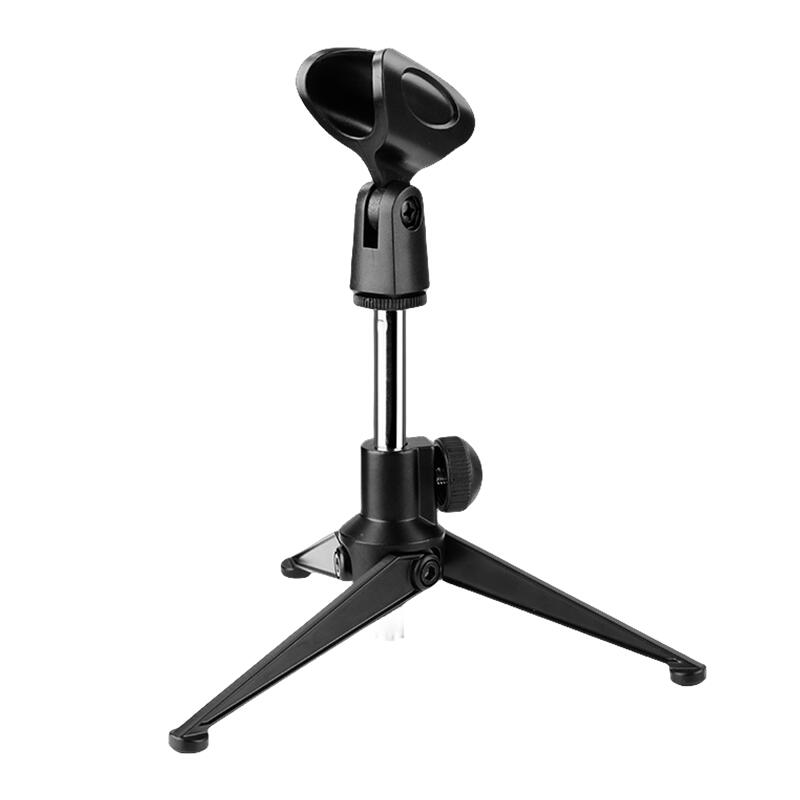
This is the accessory category where a wrong choice is most visible. The customer doesn’t blame the thread, they blame the product, and the review doesn’t distinguish between the two.

How to check compatibility before you commit
You don’t need a drawing to settle most of this. You need the thread on the stand and the diameter the clamp has to open to. Send both and the fit stops being a guess.
- Ask for the thread size in writing, and ask what it’s measured across.
- Check the clamp jaw opening against the thickest desk edge or shelf your customer uses.
- Confirm whether an adapter is included, because the adapter is often the difference between fitting and not.
- Ask whether the part rotates or locks. A clip that swivels under a heavy microphone will drift.
- Confirm the material of the jaw. Plastic jaws fail at the hinge, metal ones rarely do.
- Ask for a photograph of the part mounted on a real stand rather than a render.
How we build a desktop microphone stand for podcast
We build the common thread sizes and we can match a non standard one, so the starting point is the clip or the mount you already stock rather than our catalogue. The range is here: desktop microphone stand for podcast.
We would rather tell you that a part won’t fit than take an order that produces a return. If your market needs a different thread or a different jaw, we handle that as an OEM run.
Why this category produces so many small returns
Because the buyer checks the photograph rather than the thread. Two clips look identical and take different mounts, and nothing on the listing says which is which.
The fix is unglamorous. Put the thread size in the copy, put the clamp range in the copy, and check it against the stand your customer actually owns. That single habit removes most of the returns in this category.
| What to confirm | Why it decides the order |
|---|---|
| Thread size | It either matches the stand or it doesn’t. There’s no middle case. |
| Clamp jaw opening | Whether it grips the surface the customer has. |
| Adapter included or not | Often the difference between fitting and returning. |
| Locking or swivelling | Whether the part holds position under a heavy microphone. |
How a stand order runs from height range to pallet
Stands and cables carry the Yinyu name, headphones and studio gear carry Audfine, and the two lines come out of the same workshop. That matters on an order like this, because one team handles the tooling, the sample round and the carton.
- Confirm the base type first. A tripod, a round cast base and a desk base solve three different problems.
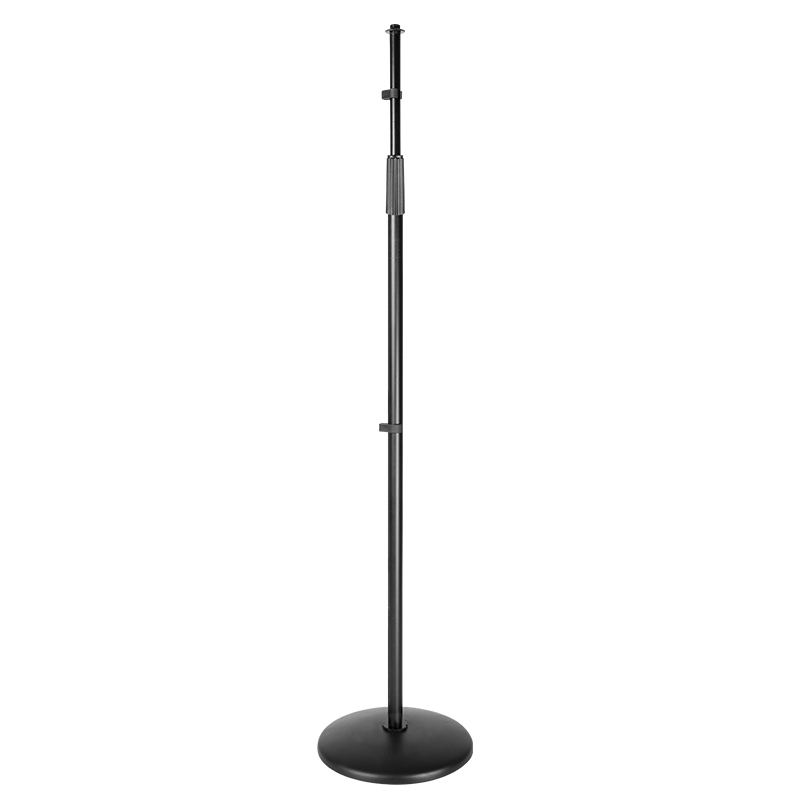
- Agree the working height range and the boom length, because those decide whether the stand suits a standing vocalist or a seated podcaster.
- Check the thread on the boom tip against the clips and shock mounts your buyers already own.
- We build a sample and load the heaviest microphone you expect to use on it.
- You check the clutch and the leg locks under load, not just in the catalogue shot.
- Production runs against the approved sample, and we test the lock on every unit before packing.
- We send photos of the batch and the master carton before the goods leave.
- Any drift in the finish or the thread you hear about while the deposit is still in the workshop.
What we would check on your stand sample
Load the heaviest microphone you expect it to carry, then adjust the height with the weight on. The clutch is where the cheap builds announce themselves.
Check the leg locks and the base joint too. A stand that stays put on a showroom floor still creeps on a stage that gets knocked.
Cartons and the small parts
The fittings are what goes missing on site, not the stand. Ask how the clips, adapters and threads are packed so a single box carries a complete set.
Confirm the master carton quantity as well. It changes your landed cost per unit and how much labour a warehouse spends on it.
Spares, repairs and the second order
The parts that wear on a stand are the clutch and the leg locks. If those can be ordered on their own, a stand that has had two years of use is a repair rather than a replacement.
That’s also the cheapest way to test a supplier. Ask for a clutch as a spare part and see whether it arrives as a real component or not at all.
A checklist you can send to any stand supplier
Send this to three suppliers before you commit. The one who answers every point without hedging is the one worth sampling.
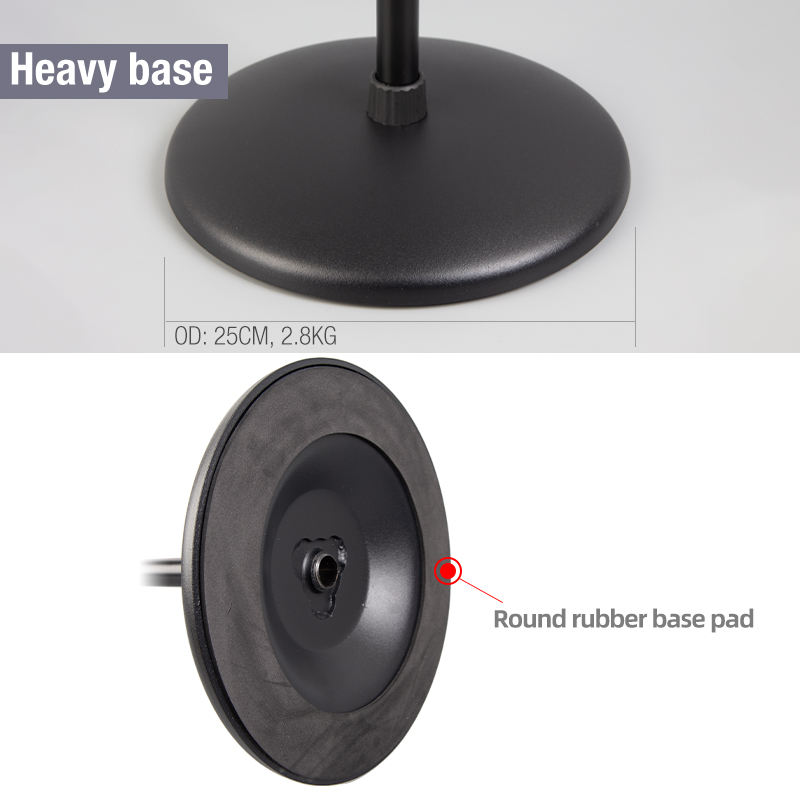
- Ask for the base weight and the base diameter in writing, then match them to your stage.
- Confirm the thread size on the top of the pole, and whether an adaptor is included.
- Ask which part moves first when the boom is loaded, and whether it can be tightened.
- Check whether the height range covers both your seated and standing use.
- Ask for the collapsed length, because that’s what decides the carton.
- Confirm whether the clip is included or sold separately.
- Ask how the clutch is assembled, and whether it can be replaced.
- Request photos of the base underside, not just the front.
If a supplier can’t answer point two or point five in writing, that’s your answer about the supplier rather than about the product.
Labels, cartons and the retail paperwork
A stand that sells at retail needs the model on the carton and a clear maximum load in the manual. That one line prevents the support emails that cost more than the carton does.
Ask how the fittings are listed on the packing list, because a stand that arrives without the adapter generates a return even when the stand itself is perfect.
If your market needs a language other than English on the instruction sheet, say so before the print run rather than after it.
See the product running before you order
Drawings only go so far with this kind of gear, so we film the units in the workshop and on site. This is the closest thing to standing next to the item before you commit.
There’s more on Steven Zeng, including exhibition footage and setup clips for the rest of the range. If you want a specific angle filmed before you order, ask and we’ll shoot it.
What tends to be ordered alongside it
Most orders don’t stop at one item. Buyers working on this usually look at Yinyu microphone boom stand, OEM base microphone stand and OEM round base microphone stand, because the same workshop and the same carton planning apply. It’s one consolidated shipment instead of two freight bills.
Questions buyers ask us before they order
Will this fit a standard microphone stand?
Tell us the thread on the stand and we’ll confirm it before you order. Standard is a real thing, but it’s also the word that causes most of the returns in this category.
Can you build a non standard thread?
Yes. Send us the mount or the clip you already stock and we’ll match it as an OEM run.
Will the stand hold a heavy condenser microphone without creeping?
Tell us the microphone weight and we’ll tell you which base and which clutch suits it. We would rather sell you the heavier base than have the boom drop in the middle of a session.
Is the thread the standard one my customers already use?
We build the common thread sizes and we can match a non standard one. Send us the clip or the mount you already stock.
Can I mix stands with other items in one shipment?
Yes, and most importers do. Mixing items from one workshop means one consolidated shipment and one set of documents instead of two, which is usually cheaper once you add the second freight bill.
Do you work with small importers or only large distributors?
Both. A first order is usually a sample, then a small trial run, then a container. The process is the same whatever the size, which is why most of our long term dealers started with one carton.
What do you need from us to quote?
The item, the quantity and your destination port or city. If you already have a target price, say so, because it tells us which build level to quote rather than guessing. We handle OEM and ODM work as standard and we can quote DDP if you would rather not manage the freight yourself.
Tell us what you’re building
Send the product name and your quantity, and we’ll reply with pricing, packing options and the next shipping window. Quoting a desktop microphone stand for podcast is faster when you include the detail that decides the build.
If you want a sample first, that’s fine, and most buyers do. Ask for it in the shipping carton rather than a product box, because the carton is the part that surprises people later.
The stands in this range come from LESOUND ELECTRONICS in Zhejiang, and whoever answers your first message is the same team that ships the second order.
Post time: Oct-13-2026