


A studio monitor headphones over ear is bought for a job rather than for pleasure, which changes every question a buyer should ask. The customer isn’t choosing a sound they like. They’re choosing something that lets them hear what they’ve recorded, for hours at a time, without adding character of its own.


That makes the pad, the clamp and the cable more important than they’re on a consumer pair, and those are the parts buyers ask about last.
Closed or open, and the room it’s used in
A closed back keeps the sound in and the room out, which is what a tracking session needs. An open back lets the room in and keeps the ear cooler, which is what a long mixing session wants. Ask which the customer’s work needs, because the same buyer often needs both and stocks only one.
It’s worth telling the customer plainly, because a studio that buys the wrong one blames the headphone rather than the choice.
The pad, and the part that wears first
Pads compress, flake and eventually change the sound. Ask what the pad is made of, whether it’s replaceable, and whether it’s held on by a lip or by adhesive. A replaceable pad turns a two year product into a five year one and it’s the cheapest thing a buyer can ask for.
Clamp, and the weight that shows up late
Ask what the headband is made of and how the clamp is set. A headphone that grips hard enough to stay put during tracking becomes uncomfortable an hour into a mix. A headphone that’s comfortable for an hour slides off during a take, so the two jobs genuinely want different settings.
Impedance, and what drives it
Ask what the market plugs into. A console, an interface and a phone all present a different load, and the customer hears the mismatch as a headphone that’s quiet or one that hisses. Ask for the figure and ask the factory what they’d recommend for each of those sources.
The cable, and the joint at the cup
Ask whether the cable is fixed or detachable, where it enters the cup, and whether it’s coiled or straight. A studio headphone gets its cable snagged on a chair arm more than a consumer one does, and a detachable cable turns that into a replacement rather than a repair.
What to check on a sample pair
- Press a pad against the ear and listen for the sound changing.
- Check whether the headband holds its setting after an hour.
- Compare the two cups for level with a mono test tone.
- Ask whether the pads can be ordered as a separate line item.
- Ask what the factory measures before a pair leaves the line.
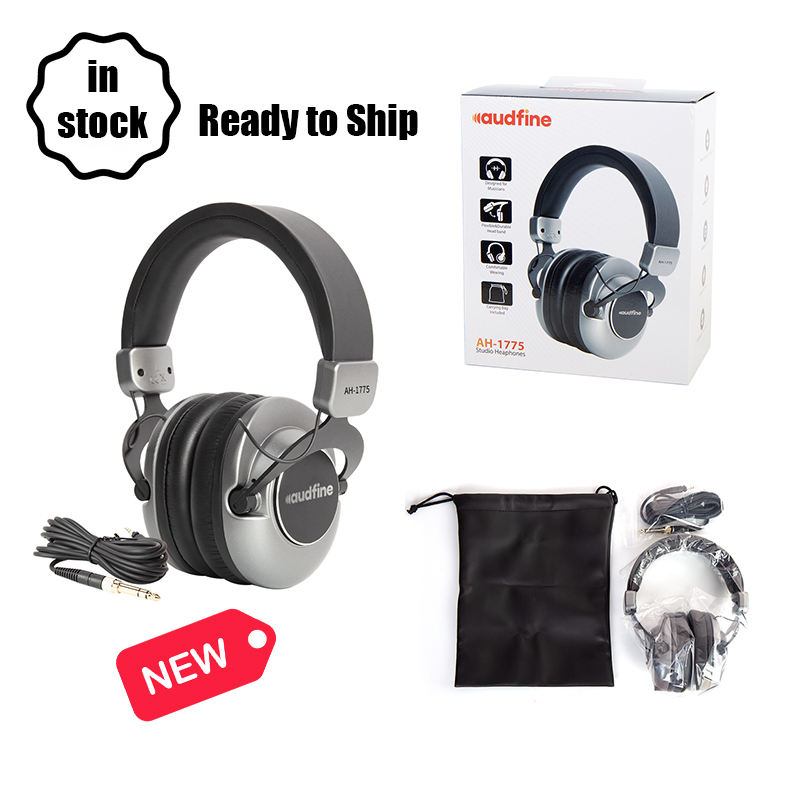
Where a monitor headset actually gets used
Tracking, mixing, editing and teaching all use the same words and want different products. Ask which one the customer’s buyers do, because a tracking headphone with a heavy clamp is the wrong thing to sell somebody editing a podcast for six hours.
Pads as a spare part
Ask whether pads can be ordered separately and whether they’re the same pad fitted in production. A spare pad from a different tool fits badly, and a badly fitted pad changes the sound, which the customer reports as a driver fault.
What ships with a monitor headset
A studio buying monitoring usually buys the rest of the chain. The same order tends to include a Audfine stereo headphones for mixing, a OEM monitor headphones where a closed back is needed for tracking, and a OEM studio headset for instrument work at a piano or a drum kit.
All of these carry the Audfine name, so a studio desk ends up branded once rather than three times. The leads running to and from that desk sit under the Yinyu name, which means the whole chain arrives from one workshop.

Four questions worth settling early
Closed back or open back?
Ask what the customer’s work is. Tracking wants closed and long mixing sessions usually want open.
Are the pads replaceable?
Ask, because pads are the first part to wear and a replaceable pad keeps the headphone in service.
What’s the impedance, and what drives it?
Ask the figure and match it to the console, the interface or the phone the customer actually uses.
Is the cable detachable?
Ask where it enters the cup and whether it can be replaced, because that joint is where most pairs fail.
Flat response, and what it really means
Every monitor headphone is described as flat and none of them is, because the ear and the room are part of the system. Ask how the factory would describe the low end and the top end, and check that against what the customer expects. A buyer who understands the compromise sells fewer pairs and keeps more customers.
What the drivers do at each end
A monitor headphone is judged on the low end and the top end, and the two are set by different parts of the design. Ask the factory how they’d describe each, and check that against the work the customer does. A pair that’s tight at the bottom flatters a mix that hasn’t got one.
The headband, and how the load is spread
Ask how the headband is structured and whether there’s a suspension strap. A single band concentrates the load on one line across the head, and a suspension strap spreads it over a wider area. For a session that runs to six hours, that’s the difference between a headphone that’s used and one that sits on a stand.
Folding, and whether it matters on a desk
Ask whether the cups rotate and whether the headphone folds. A studio pair that folds is easier to store and it’s another joint that can loosen. Ask what the market does with them between sessions, because a pair that lives on a desk doesn’t need to fold at all.
The plug, and the adapter studios lose
Ask what plug the headphone carries and whether an adapter comes in the box. A studio that has to find a small to large adapter locally will use whatever is in the drawer, and an adapter from the drawer is usually a mono one, which makes a stereo headphone sound wrong.
Where the cable is likely to be snagged
Ask where the cable leaves the cup and whether there’s a strain relief. A studio headphone gets its cable caught on a chair arm or a desk edge more often than a consumer one, and the entry point is where that load lands each time.
Two pairs, and why studios buy them
Ask whether the market buys in pairs for a single position. A studio often keeps an open back pair for mixing and a closed pair for tracking, and selling both from one supplier keeps the desk consistent rather than mixing brands.
What the customer hears as a fault
Most returns on a monitor headphone are one of three things: a pad that’s collapsed, a cable that’s noisy at the entry, or one cup quieter than the other. Ask the factory which they see most, because the answer tells you which spare to keep and which build to insist on.
What a reorder tells you about the line
A studio that reorders a year later expects the same sound. Ask how the drivers are matched between runs and whether the pads come from the same supplier. A pad from a different source changes the sound slightly, and a studio hears that before they see it.
What a long session does to the ears
Ask what the pads do to the ear after a few hours. A pad that presses the ear against the driver becomes uncomfortable long before the headband does, and the fix is usually depth rather than softness. It’s worth asking the factory how deep the cup is.
The case, and whether one is included
Ask whether a case is included or sold separately. A studio that pays for a case protects the headphone and a studio that doesn’t puts it in a drawer, and the state of the pads after a year is decided that day rather than at the factory.
How a pair is matched at the factory
Ask how the two cups are matched and whether it’s checked per unit. A pair with one cup slightly louder than the other is a pair the customer notices on a mono test and can’t describe in words, which is the hardest kind of complaint to close.
What the customer compares it against
A studio buyer usually has something already and is replacing it or adding to it. Ask what they’re comparing against, because a headphone that’s better in one respect and worse in another needs the difference explained before the sale rather than after.
Where a studio stores its spares
Ask the customer where pads and cables go between uses. A studio with a box of spares keeps a headphone working for years, and a studio without one replaces the whole pair. Selling the spares is a service rather than an upsell.
What the pads do to the sound over time
A pad that’s compressed lets the driver sit closer to the ear, and the customer hears that as a headphone that’s got brighter and thinner. Ask what the pad material is and how it recovers, because the slow change is the one nobody attributes to the pad.
Whether the pair is sold as a set
Ask whether the two cups are packed as a matched pair and whether that’s on the label. A studio that gets a matched set treats it differently from one that gets two loose cups, and the difference costs almost nothing at the packing bench.
Send the job and the room
Tell us what the customer does with the headphones, how long they wear them, and what they plug into. Those three lines settle the cup, the pad and the impedance.
Ask for a sample of the version your market will actually buy, because a factory’s favourite model and its best seller are often two different things.
Monitoring headphones in this range are badged Audfine and produced by Ningbo Lesound Electronics in Zhejiang, with the drivers, the pads and the cable assembled and checked together.
Post time: Oct-13-2026