


Walk into any rental warehouse or school media department and ask which piece of audio gear fails most often. The answer is rarely the driver or the headband. It is the cable. A fixed-cable headphone turns that one worn-out cord into a reason to retire the entire unit, while a detachable-cable design turns the same event into a two-minute swap at the bench. For buyers who purchase monitoring headphones in volume, that difference shapes the total ownership picture more than almost any line in a spec sheet.
This article looks at detachable-cable headphones from the buyer’s side: what the design actually changes in daily service, how the accessory and spare-parts conversation should go with a factory, and which specification details matter when you are ordering for studios, rental fleets, classrooms or broadcast facilities. As a worked example, we use the DH-1772B platform from LESOUND, a 50mm monitoring headphone family built around a detachable braided cable.
The Cable Is the First Thing That Fails
Cables live a hard life. They get rolled over by chair wheels, yanked around corners, coiled too tightly at the end of a session and stepped on during load-out. Inside the jacket, copper strands work-harden at the strain points near the plug and the earcup, and eventually a connection opens up. On an open-plan studio floor or in a school cart, a headphone that goes silent mid-session is usually suffering from a broken conductor, not a dead driver.
With a fixed-cable unit, that fault has no field remedy. The unit either goes back to the factory, goes to a repair bench for soldering inside the cup, or sits in a drawer until someone writes it off. With a detachable design, the diagnosis takes seconds: plug in a known-good cable, and if the sound returns, the fault is isolated to a part that can be swapped on the spot. The headphone never leaves the room.
This is why serviceability has become a purchasing criterion in its own right, sitting alongside frequency response and comfort. A fleet of headphones is an asset, and the design of the cable interface largely determines how much of that asset stays in circulation.
What a Detachable Design Actually Changes
Fewer whole-unit write-offs
The arithmetic is simple. If a cable fault retires a fixed-cable headphone, the entire value of the unit — drivers, frame, headband, earpads — leaves service along with it. If the same fault is solved by a spare cable, the expensive part of the headphone stays working for years. Over a fleet of fifty or a hundred units, the difference compounds quickly, especially in environments where cables are handled by many different people every day.
Faster turnaround at the bench
For rental and installation companies, downtime is the real expense. A detachable cable turns most cable-related faults into a swap that happens during the session, not after it. The failed cable then goes into a small bin for inspection or connector replacement, and the headphone goes straight back onto the shelf. Technicians can stock a handful of spare cables instead of maintaining a repair workflow for each model.
A cleaner upgrade path
A detachable interface also separates two lifecycles that used to be welded together. The headphone body ages slowly; the cable and the earpads age quickly. When those wear items are replaceable, a buyer can refresh a fleet with accessory orders instead of replacing hardware, and can even offer different cable lengths or terminations for different rooms without changing the headphone itself.
Inside the DH-1772B: A Worked Example
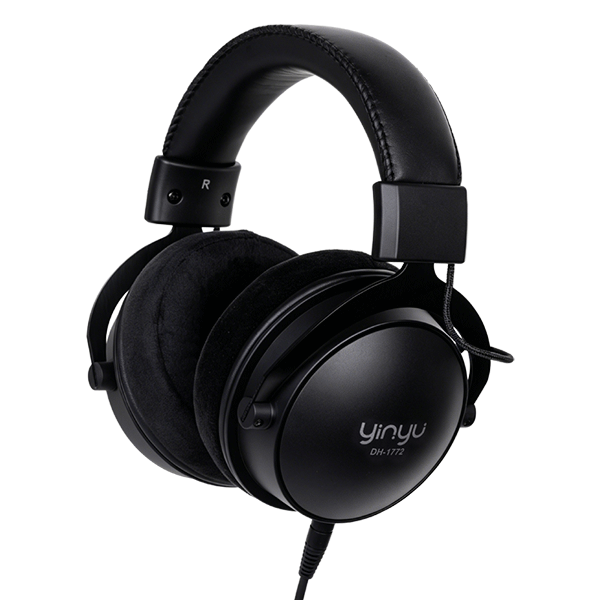
LESOUND builds monitoring headphones around this serviceable architecture. The DH-1772B, a variant of the DH-1772 platform with flannel earpads, illustrates how the pieces fit together:
- Drivers: 50mm neodymium drivers in a tuned, circumaural ear cup.
- Frequency response: 10 Hz to 35 kHz, with a tuned low end.
- Sensitivity: 99 ± 3 dB.
- Impedance options: 32 Ω, 80 Ω and 250 Ω available within the same platform — the 32 Ω version for portable and everyday monitoring work, the 80 Ω and 250 Ω versions for professional audio devices (see our earlier piece on impedance in studio headphones).
- Power handling: 400 mW rated, 1800 mW maximum.
- Cable: 3-metre braided OFC cable, detachable, with an anti-loss connector design at the cup.
- Fit: circumaural cups with soft skin-friendly pads and an adjustable headband; flannel earpads on the B variant.
Two details in that list deserve a closer look from a serviceability standpoint. First, the cable itself is a braided OFC construction — the same conductor and shielding principles that matter on any signal cable, covered in our article on OFC conductors and braided shielding. A replacement cable should be an upgrade in feel and durability, not a downgrade, and braid jackets tolerate repeated coiling far more gracefully than thin PVC. Second, the anti-loss connector design addresses the other half of the problem: on a detachable system, a cable that works loose and gets lost is nearly as disruptive as one that fails, so the mechanical retention at the cup matters as much as the electrical contact.
The Spare-Parts Conversation to Have With Your Factory
Define the connector standard at the cup
Detachable is not automatically interchangeable. Before committing to a model, ask the factory exactly what connector sits at the earcup, how it locks, and whether spare cables can be ordered in the same termination for years, not just alongside the initial production run. A proprietary interface is acceptable only if the factory commits to supplying spares as long as your fleet is in service. This is one of the practical checkpoints in our OEM buyer checklist for studio headphones.
Check strain relief, not just the plug
On any detachable cable, failures concentrate where the cord meets the plug shell. Ask how the strain relief is built — over-moulded, potted, or a field-serviceable clamp — and how the cup-side socket is reinforced. A well-made detachable cable should survive being the most-handled part of the system, because that is precisely what it will be.
Treat earpads as consumables
Cables get the attention, but earpads are the part every user touches. Skin oils, hygiene requirements and daily wear mean pads need periodic replacement in any shared-use environment. The DH-1772B’s options list reflects this: extra earpads and extra cables can be ordered with the units, and the platform offers a choice of pad materials — the B variant’s flannel pads sit alongside the standard soft skin-friendly pads. When you specify a headphone for a school, a language lab or a rental shelf, put pad replacements on the same purchase plan as spare cables from day one.
Decide which options genuinely help
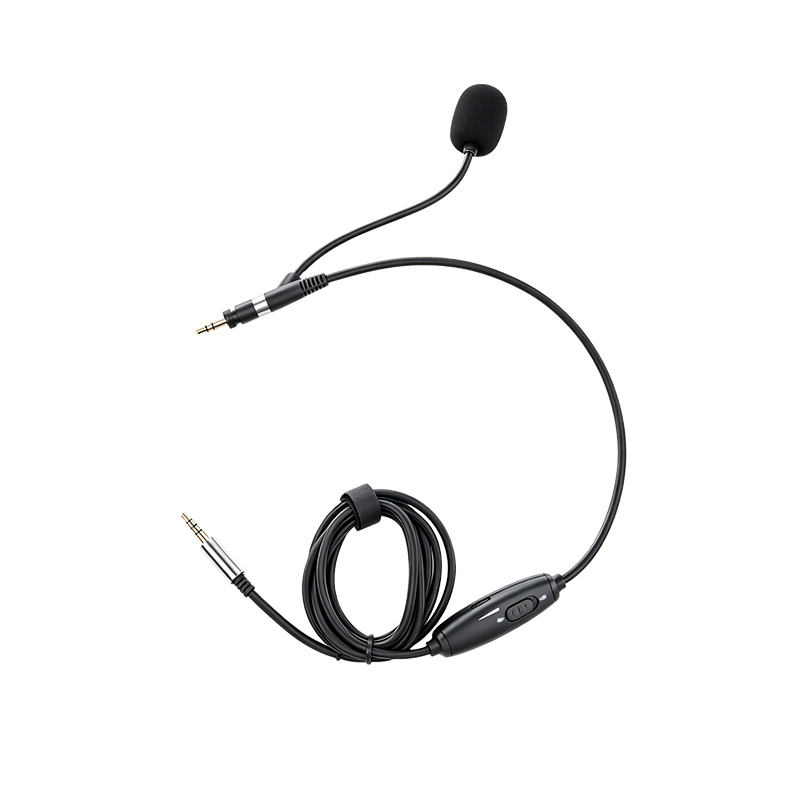
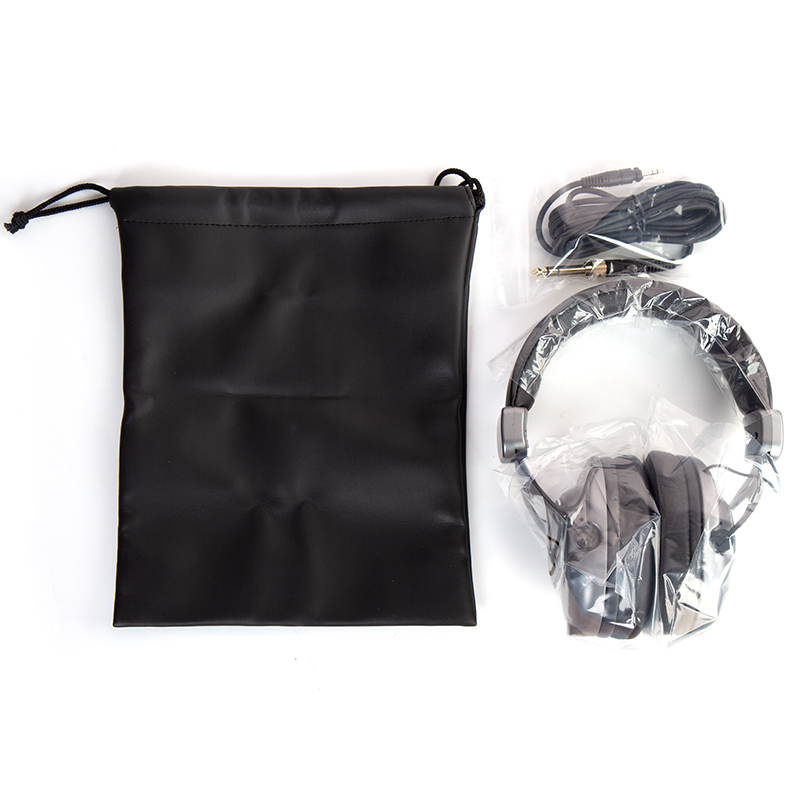
Factories can attach a long tail of accessories to a headphone programme, and not all of them pull their weight. The options attached to this platform are a useful menu: a solid carrying case or a soft carrying bag for transport protection, a customised box for retail presentation, a plug-in microphone cable that converts the monitoring headphone into a communication headset for conferencing or teaching, and a gold-plated 6.35 mm to 3.5 mm adapter so one headphone covers both mixer and portable-device outputs. Each of these maps to a real deployment scenario; the test is whether your end users will actually use it.
Who Benefits Most From a Detachable-Cable Spec
Rental and live production
High handling frequency, many users, tight schedules. Cable swaps happen between acts, and spare cables ride in the same case as the headphones.
Education and training rooms
Dozens of students, one storage cart, no technician on site. A detachable design plus a box of spare cables lets a teacher keep a class running without sending units away.
Studios and post facilities
Long sessions, multiple rooms, shared headphones. Isolating a fault to the cable in seconds protects a billed session, and pad replacement keeps hygiene standards presentable for clients.
Broadcast and conferencing
Continuous daily duty with communication requirements. Here the optional microphone cable turns the same headphone body into a talkback or commentary headset, which is why the plug-in mic option earns its place in this segment.
A Short Buyer Checklist
Before you place an order for monitoring headphones, put these five questions in writing:
- What connector standard is used at the earcup, and how does it retain the cable?
- Can spare cables be supplied in the same termination over the life of the fleet, and in what quantities?
- How is the strain relief at the plug constructed?
- Which earpad materials and replacement pads are available for the model?
- Which carrying cases, adapters and optional cables should ship with the units for your specific environment?
The Bottom Line
Serviceability rarely photographs well, which is why it gets less marketing attention than driver size or frequency response. But for anyone buying monitoring headphones by the fleet, it is the feature that decides how long the purchase keeps paying for itself. A detachable braided OFC cable, an anti-loss connector, replaceable earpads and a sensible options list turn a headphone from a disposable tool into a maintained asset. That is the argument behind the DH-1772B platform, and it is a conversation worth having with any factory you evaluate. To see the wider range the company builds in this category, visit the LESOUND headphone line, and for the cabling side of a fleet deployment, the cables catalogue and audio cables section cover the connectors and conductors that pair with it.
Post time: Nov-02-2026